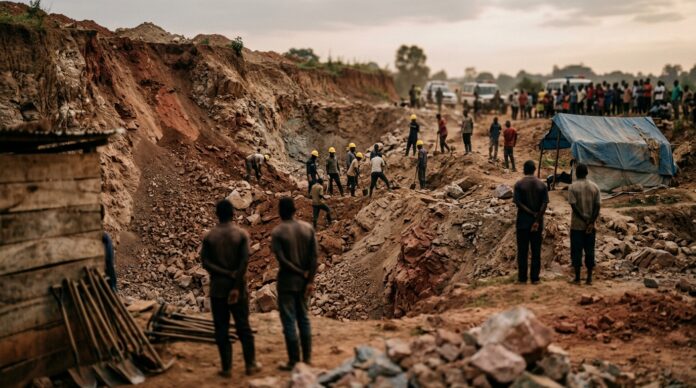
Uganda’s explosives regulation is faltering as a severe financial crisis threatens safety standards in mining and quarrying zones. A recent report by the Parliamentary Committee on Defence and Internal Affairs has revealed that efforts to regulate commercial explosives and enforce safety protocols are on the verge of collapse.
According to the committee, the Ministry of Internal Affairs is facing a sh13.3 billion budget shortfall for the 2026/27 financial year, specifically hindering the implementation of the Explosives Act of 2023. This funding gap is effectively “crippling” the government’s ability to monitor explosives used in the country’s expanding mining, rock blasting, and large-scale infrastructure projects.
The Explosives Act, 2023, was originally enacted to modernize Uganda’s outdated management system and align it with modern security and industrial demands. While the law introduced robust licensing systems, increased inspection powers, and heavy penalties for illegal possession, these provisions remain largely on paper.
Without the necessary financial backing, the Ministry has been unable to fulfill core mandates such as licensing storage facilities, issuing blasting permits, conducting security assessments, and inspecting active explosive sites.
The statistics regarding planned inspections are particularly alarming. The committee report notes that out of 110 planned site inspections for the upcoming fiscal year, the Ministry’s limited budget can only cover 15. Similarly, only 15 out of 100 expected security assessments will be conducted, leaving dozens of sites handling dangerous materials without any government oversight.
Committee members warned that this creates a “dangerous gap” in monitoring companies, particularly in quarry operations and road construction where explosives are used daily. The report emphasized that failing to support this critical function could severely compromise national security and public safety.
The lack of regular inspections also encourages companies to relax safety standards, leading to improper storage and an increased risk of accidental disasters. Beyond the lack of field oversight, the construction of a modern regional explosives magazine in the Central Region—intended to centralize and secure the storage of these materials—has also stalled due to the lack of funds.
One committee member noted that if operators continue to handle explosives without strict scrutiny, the country faces a high risk of catastrophic incidents. To address these vulnerabilities, the Committee on Defence and Internal Affairs has recommended an additional allocation of sh73.3 billion for the 2026/27 budget. These funds are intended to facilitate rigorous site inspections, strengthen licensing and enforcement, hire and train specialized staff, and complete essential safety infrastructure. In its conclusion, the committee argued that investing in preventive regulation is far more cost-effective than dealing with the aftermath of an explosives-related disaster, noting that failure to act could result in irreversible loss of life, property, and national stability.