Development expert Joe Studwell says Ethiopia came closest to the East Asian playbook – but if it opens finance too early, it may forfeit the very tools that made its export push plausible.
Development is not a mystery but a sequence. This was Joe Studwell’s message over the past decade in his books How Asia Works and, more recently, How Africa Works. Start with smallholder farming, because that is where the labour is. Lift yields and rural incomes, and you create mass demand. Then build export manufacturing, because that is how you absorb labour at scale and earn the foreign exchange that stops growth from suffocating on imports. None of this is new. What is striking is how often the debate proceeds as if it never happened.
For Studwell, a visiting fellow at the Overseas Development Institute (ODI Global) think tank, the anxiety now is less theoretical. Ethiopia, he argues, is one of the few African states that tried to assemble the “Asian” machinery in full view – and may now be loosening it at the wrong moment.
“I get mixed messages,” he tells The Africa Report. Some contacts say Addis is “taking all the guidance from the World Bank ”, others say “industrial policy is still very much in place”. But if liberalisation means opening finance before the domestic industry can stand, Studwell’s warning is blunt: “If Ethiopia is genuinely opening up, I would say that would be a disaster.”
That matters because Ethiopia was not a desk-bound case study for him. He was “surprised” by how often he saw How Asia Works in the hands of senior African officials. Ethiopia and Rwanda asked him to visit and talk through East Asian development – a sign, he says, of “developmentally very serious people” who were “very hungry in learning terms”. He does not romanticise either country, but he came away impressed.
Monopoly politics dressed as development
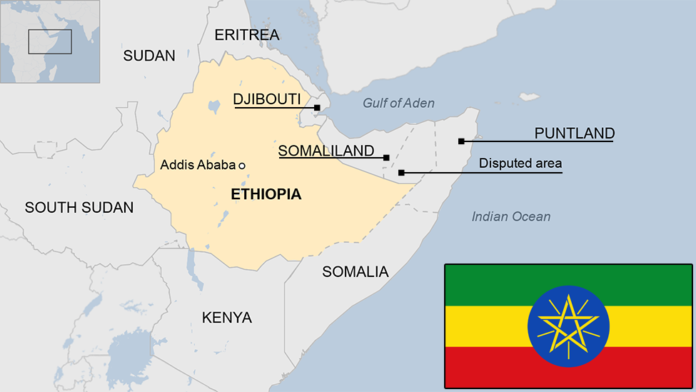
In Ethiopia, those pieces were tangible. The state tried to align finance, infrastructure and industrial policy around one objective: exports. It built industrial parks, courted manufacturers and invested in the hard logistics of a landlocked exporter – power, roads, the Djibouti corridor.
It created an export coordination committee modelled on South Korea. It ran a managed financial system so credit could be channelled to forex earners. It also showed a China-like pragmatism about who runs what. “When the Chinese came along and wanted to run a zone, they let them,” Studwell says. Hawassa “filled up pretty fast”.The problem is that Ethiopia was never Korea. “This was not a country like China or Korea … not a mono-ethnic proposition,” Studwell says. Federalism, he adds, is “very expensive”: “tremendous pressure to put [a factory] in each state when that doesn’t make any economic sense.” Geography compounds it. After Eritrea detached, Ethiopia was landlocked: “When you’re setting out to export, this makes it all very difficult.” A demanding model becomes a boulder pushed uphill.Design choices in the parks then became a second vulnerability. Many firms arrived with little capital at risk. “They were just leasing these sheds. They could just walk away and take their kit with them,” Studwell says. When the civil war in Tigray began, some did. “People like PVH … the anchor tenant, left.” The more footloose the investor, the faster the exit when politics turns.
Even in the absence of war, exporting lives or dies on unglamorous execution. Ethiopia’s rail corridor faced “teething problems” and delays; some were almost comic – “camels wandering across the railway line” – but they were the sorts of details that decide whether a logistics promise becomes a logistics system. Still, Studwell’s verdict on the build-out is generous: “Overall, I think the Ethiopians did a great job.” Just look at the GERD hydroelectric dam, built largely on domestic financing. Which is why he fears that Ethiopia will change the rules just as the physical base becomes important.
The sharper cautionary tale is METEC. For Studwell, it is a case study in how industrial policy decays when it loses discipline. “It was a colossal failure,” he says, “for one very simple reason … competition. METEC had no competition.” It was insulated, handed colossal mandates and then asked to deliver. “They were supposed to also do all the mills for the sugar … and none of them got built by METEC.” Industrial policy without selection pressure becomes entitlement – monopoly politics dressed as development.
No clear plan to scale value chains
A subtler weakness sits alongside it. Asked whether Ethiopia had a clear plan to climb value chains in the Mauritius style, Studwell says he did not see it pre-war. “No, I didn’t … get that feeling.” His explanation is triage: a poor country trying to industrialise becomes forex-constrained, so “all the focus was on … clothing and footwear” – jobs and foreign exchange first.
That may have been rational. It also makes the timing of liberalisation more dangerous. If Ethiopia has not yet built the domestic ladder – firms that learn, reinvest and move up to more sophisticated products – opening finance early risks pulling away the scaffolding before the building stands.
Studwell’s model depends on keeping key levers aligned with exports. Cheap power is one indirect subsidy: even when supply was short, “the price was a fraction of anywhere else in Africa”. Add directed credit and a managed exchange rate, and a state can tilt the system towards manufacturing. Remove those tools too soon, and the economy slips into the familiar groove: consumption finance, imports and a chronic forex squeeze.None of this survives without continuity. Developmental states need a grip on the levers long enough for firms and investors to believe the plan. Ethiopia’s transition in 2012 from prime minister Meles Zenawi to Hailemariam Desalegn did not hold that grip. Studwell recalls senior Tigrayans speaking of Hailemariam as if they “let him be prime minister” while advising from the shadows – “[which seemed] incredibly … arrogant and disrespectful”.
The weakness, he argues, was structural: “that’s a function of the ethnic backstory.” In that era, elite networks were not inclined to relinquish control of the security state, a dynamic that helped set the stage for confrontation.
Today is different: Abiy Ahmed’s camp holds the centre in Addis. The wider point remains: contested coalitions make long-horizon policy brittle.
Build a competitive industrial base first
Studwell offers Rwanda as an analogy of the same mechanism in another setting. In the early post-1994 years, he says, some Hutu ministers were prominent, but power ran through parallel lines of authority. Formal inclusion co-existed with informal control structures. At best, he argues, it distracts from delivery; “at worst, it totally undermines the capacity of governments to function”.
Back to the present, then, and the fork. Ethiopia has built real institutional capability and remains geopolitically important. Studwell sounds “reasonably optimistic” because of “how much they’ve gotten done” and the “real capability” of Ethiopian institutions. But he will not pretend to certainty from afar: he wants to “go to Addis” to see what is really happening. His warning, though, is already clear. “Now is not the moment for Ethiopia to be opening its financial system and changing its plan.”He points to South Korea’s forced opening in 1997 – around “a $15,000 GDP per cap” country – as a reminder that timing is the point. That was a late-stage opening after a competitive industrial base had been built. Ethiopia is nowhere near that stage, and its state-led strategy has struggled to embed the discipline that made the Asian model work.
For now, Ethiopia remains the test. Studwell hoped it would show African reformers how to marry agricultural intensification, export manufacturing and controlled finance without ideological squeamishness. That hope has not died. But the message is narrower – and more urgent. Sequencing matters. Discipline matters.
METEC shows what happens when intervention becomes a monopoly. The value-chain gap shows what happens when triage becomes inertia. The political story shows how quickly coherence can fracture. And the liberalisation fog shows what happens when a country that has built the levers starts to loosen them before it has built the base that makes them unnecessary.