
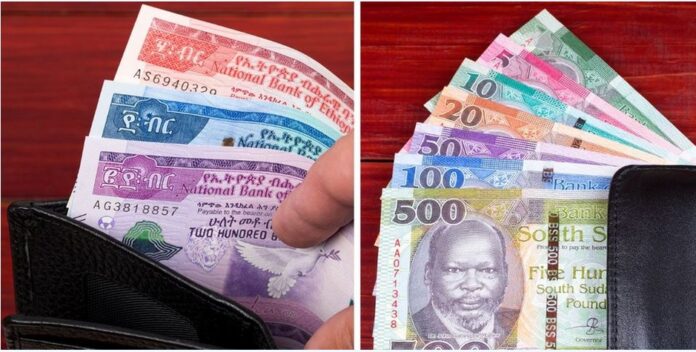
The Ethiopian birr and South Sudanese pound were Africa’s weakest currencies in 2025, each depreciating by around 18 per cent and 15 per cent year-on-year, respectively, according to the World Bank’s Africa Economic Update (Spring 2026).
The report attributes the birr’s decline to pressures from Ethiopia’s foreign exchange market liberalization, including a widening premium in the parallel market that reached the high teens by December 2025. The National Bank of Ethiopia has responded with measures to foster a more competitive forex market, such as raising limits on current-account transactions.
For South Sudan, the pound’s slump stemmed mainly from war-related disruptions to its oil pipeline through Sudan, slashing foreign exchange inflows and fueling triple-digit inflation from mid-2024 to mid-2025. Structural issues like oil revenue mismanagement and fiscal indiscipline compounded the pressures.
The World Bank noted these currencies underperformed amid broader regional trends, where stronger performers like Ghana’s cedi gained over 40 per cent, driven by gold exports and IMF-backed reforms. In contrast, Ethiopia’s reforms — including the shift to a market-based rate since July 2024 — have seen the birr weaken from about 57 to 154 per USD by early 2026.
Recent data shows the birr trading at around 157 ETB per USD as of late March 2026, down 21 per cent over the past year, while the South Sudanese pound hit a record low near 4,544 SSP per USD in December 2025.
Economists say currency weakness reflects dollar shortages, import reliance and external shocks, risking imported inflation despite recent domestic disinflation gains. The report warns geopolitical tensions, like Middle East conflicts, could exacerbate pressures through higher oil and fertilizer costs.
Both nations face challenges in stabilizing their currencies amid fragile recoveries. Ethiopia leads East African exports but grapples with forex gaps, while South Sudan’s oil dependence amplifies vulnerabilities. The World Bank urges structural reforms to boost reserves and productivity for lasting stability.