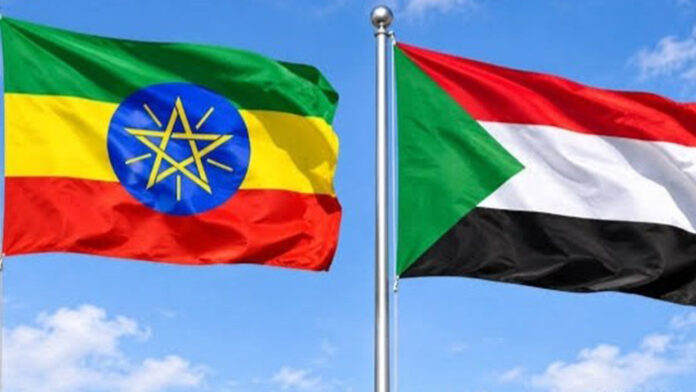
Ethiopia and Sudan have closed each other’s consulates near their shared border and expelled diplomats in a sharp escalation of tensions between the two neighbouring countries, according to situation reports published on 5 November 2026.
The tit-for-tat diplomatic breakdown unfolded on 4 November, with each capital accusing the other of interfering in its internal conflicts. The Sudanese government accuses Ethiopia of supporting the Rapid Support Forces (RSF), the paramilitary group locked in a devastating civil war with the Sudanese Armed Forces (SAF). Ethiopia, in turn, alleges that Sudan is backing fighters in its Tigray region, where renewed hostilities have erupted between Tigray People’s Liberation Front (TPLF) forces and joint Ethiopian National Defence Force (ENDF) and Tigray Peace Forces.
Ethiopia acted first, closing the Sudanese consulate in Asosa, located in Benishangul-Gumuz Regional State, and ordering six staff members to leave the country within 48 hours. Sudan responded in kind, ordering the closure of the Ethiopian consulate in Gedaref.
The diplomatic rupture underscores how the overlapping conflicts in the Horn of Africa are increasingly drawing in neighbouring states, either through alleged proxy support or through the spillover of refugees and instability across porous borders.
Both countries are already grappling with severe internal crises. In Ethiopia, renewed fighting in Tigray — including clashes in Bizet Woreda, Eastern Tigray, on 2 November — has forced recently returned families to flee again, while blockades along vital transport routes are preventing humanitarian agencies from delivering aid. A senior TPLF commander, Col. Semere Teklu of the Army 92 unit, was reportedly killed in the Bizet Woreda battle, and two other high-ranking TPLF officers were captured. Flyers urging young people to join TPLF forces have appeared in Mekelle. The World Health Organization’s Director-General, Tedros Adhanom Ghebreyesus, has warned that renewed fighting and drone attacks are pushing northern Ethiopia’s fragile healthcare system toward collapse.
Sudan, meanwhile, continues to suffer from its brutal civil war. On 4 November, two people were killed and ten injured in an SAF airstrike on a water source in the Um Badr area of North Kordofan state. Between 3 and 4 November, the RSF launched a drone attack on Ed Damazin, the capital of the Blue Nile region, targeting military infrastructure and civilian property. Brigadier General Haroun Mersal, a senior commander of Sudan’s Joint Force, was killed on 3 November in the Kordofan region. In West Darfur, the RSF has detained dozens of medical personnel and professors in El Geneina, according to the Sudan Doctors Network, while Doctors Without Borders warns that thousands of unvaccinated children in Darfur are contracting preventable diseases such as measles and whooping cough. In Khartoum, bread prices have doubled in a week amid rising wheat and fuel costs, flour shortages and the weakening Sudanese pound.
The consulate closures come amid broader regional realignments. During the Russia-Africa Summit, Sudan proposed establishing a “free economic zone” on its Red Sea coast to host Russian logistical and storage facilities — a move likely to be watched closely by Ethiopia and other regional actors.
The expulsions also add to an already dire humanitarian picture. More than 65,000 refugees are displaced in Yemen, including some 9,500 Somalis and Ethiopians at the Kharaz camp, while funding cuts have left the Bentiu and Malakal camps for displaced people in South Sudan without clean water, sanitation and healthcare, affecting more than 150,000 people, according to Médecins Sans Frontières.