Somalia has turned to Tanzania for strategic insights into public service modernisation, as officials from Mogadishu embark on a three-day working visit to Dodoma to study Tanzania’s advancements in digital governance, merit-based recruitment, and citizen-centred service delivery.
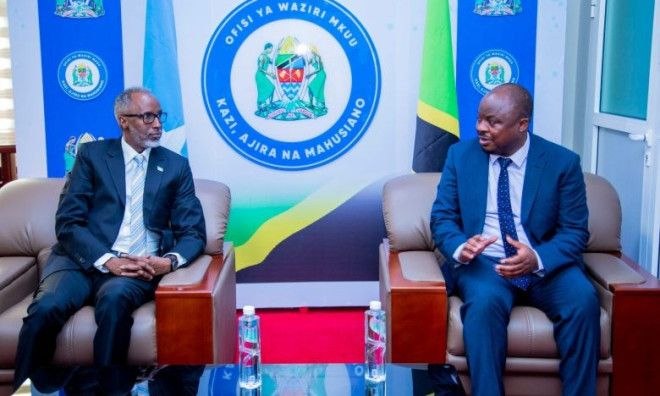
The delegation from Somalia, led by the Minister of State in the Prime Minister’s Office, Mr Hirsi Jama Ganni, was received over the weekend by Tanzania’s Minister of State in the President’s Office (Public Service Management and Good Governance), Mr Ridhiwani Kikwete. The high-level bilateral engagement centres on sharing institutional experiences, addressing governance challenges, and exploring practical frameworks to build more responsive, transparent, and accountable public institutions across the African continent.
During the discussions, Mr Ridhiwani outlined Tanzania’s deliberate policy trajectory aimed at overhauling its civil service management. He emphasized that the nation’s public sector has undergone systematic structural adjustments to align operational capacities with the demands of the digital age, ensuring that governance structures remain agile and capable of meeting the evolving needs of citizens.
“Our public service has undertaken reforms to modernise operations, strengthen governance and align structures with the digital world to better meet citizens’ needs,” Mr Ridhiwani stated. He noted that such cross-border collaborations are timely as emerging African democracies strive to reinforce institutional resilience through shared knowledge.
A primary pillar of Tanzania’s reform agenda has been the accelerated digitalisation of government operations. Over recent years, the government has rolled out a suite of integrated digital platforms designed to optimize internal administration and external service delivery. These technological interventions include the Human Capital Information Management System (eWatumishi), the Performance Management Information System (e-Utendaji), and the Human Resource Assessment System. Additionally, platforms such as the Ajira Portal have streamlined transparent recruitment processes, while citizen feedback mechanisms like the e-Meesha platform ensure continuous public engagement and accountability.
To eliminate bureaucratic bottlenecks and institutional silos, these diverse systems have been interconnected through the Government Enterprise Service Bus (GovESB), significantly enhancing interoperability, data sharing, and efficiency across government ministries and agencies.
These systemic transformations have not gone unnoticed on the global stage. Tanzania’s digital innovations have accumulated significant international accolades. Notably, the e-Mrejesho platform secured the United Nations Public Service Innovation Award in 2024, followed by its successor, Version 2, which clinched the eGovernment category at the World Summit on the Information Society Awards. Furthermore, Tanzania secured a coveted spot in Group A of the World Bank’s GovTech Maturity Index, establishing its standing among nations with high GovTech maturity and positioning itself as one of only five African countries to achieve the distinction.
On his part, Mr Ganni acknowledged Somalia’s ongoing domestic efforts to rebuild and reform its administrative architecture. He expressed strong confidence that adopting tested policy frameworks and technological solutions from Tanzania would accelerate Mogadishu’s institutional recovery.
“We are implementing reforms in our public service and want to learn best practices in policy and the use of technology in service management,” Mr Ganni noted, signaling a deepening partnership between the two nations aimed at fostering regional administrative excellence.