Victoria Falls, Zimbabwe
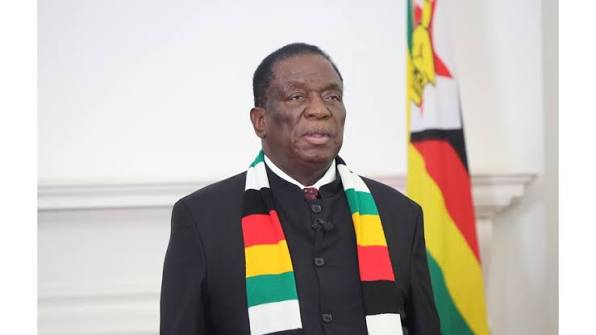
President Emmerson Mnangagwa has called on African countries to move beyond rhetoric and turn the continent’s vast solar potential into concrete projects, jobs and economic transformation, as the International Solar Alliance (ISA) held its Eighth Regional Committee Meeting for Africa in Victoria Falls.
Addressing ministers, senior officials and development partners from across the region, Mnangagwa said Africa’s solar resources must be treated as strategic assets for industrialisation, modernisation and expanded access to essential services, in line with the African Union’s Agenda 2063.
“We remain deeply committed to advancing Africa’s critical role in the global energy transition agenda,” Mnangagwa said. “Our solar resources must be viewed as vital instruments to industrialise, modernise, and scale up access to essential services… Our transition must be just, inclusive, and leave no one and no place behind.”
The Zimbabwean president commended Indian Prime Minister Narendra Modi and French President Emmanuel Macron for their continued support for solar partnerships with Africa, and urged governments to leverage regional financing platforms, shared infrastructure and regional electricity markets to accelerate deployment.
The meeting saw the signing of Country Partnership Frameworks with Zimbabwe, Senegal and Seychelles, designed to align ISA support with national solar priorities and investment plans.
ISA Director General Ashish Khanna said Africa is “ready to move from megawatts to gigawatts of solar”, citing growing political will, better alignment between governments and development partners, and falling costs for solar and storage technologies.
He announced three Africa-focused platforms launched during the meeting: a Solarising Africa strategy, framed as an implementation blueprint rather than a report, identifying four priority areas: distributed renewable energy, solarised agriculture, e-mobility and utility-scale solar. The strategy outlines a pathway to scale solar capacity from around 20–22 GW today to 150–200 GW by 2030, 500 GW by 2040 and 1 TW by 2050.
The operationalisation of the Africa50 DRE Fund, sponsored by ISA, was also confirmed. The fund is designed to mobilise concessional, institutional and private capital for distributed renewable energy projects across Africa, focusing on building bankable project pipelines and supporting private-sector-led deployment for rural communities, farmers, MSMEs and other productive energy users.
In addition, ISA launched a Community of Practice on Solarisation of Agriculture in Africa, to enable countries to exchange knowledge on solar irrigation and agrivoltaics (Agri-PV).
Under the agriculture initiative, the Zimbabwe Declaration was attested by Uganda, Zimbabwe, The Gambia, Ghana, Senegal and Rwanda, reaffirming a shared commitment to advancing solar water pumps and Agri-PV solutions.
ISA also launched the Rwanda Agrivoltaics Rapid Outlook, a national assessment of Rwanda’s Agri-PV opportunity, and a Solar Water Pump e-Learning Programme to make practical knowledge on solar pumping more accessible to farmers.
First Lady Dr Auxillia Mnangagwa is scheduled to launch ISA’s Solar Universal Gender Assessment Tool (SOUGAT) under the Solar for She initiative. The tool is designed to help member countries integrate gender considerations into national solar policies by assessing political will, participation, capacity, implementation and impact.
She will also dedicate a Solar Technology Application Resource Centre (STAR-C) at Chinhoyi University of Technology to support training and technical capacity building for Zimbabwe’s solar sector.
ISA also extended its Memorandum of Understanding with GOGLA, continuing cooperation on decentralised solar solutions and expanding access to affordable and reliable energy across member countries.
In her opening remarks, Seychelles Environment and Energy Minister Marie-May Jeremie, chair of the Eighth ISA Africa Regional Committee, said Africa’s energy transition is gaining momentum but deployment remains far below the continent’s potential.
“Solar energy, storage and stronger grids can play a critical role in improving energy security, reducing dependence on imported fuels, and supporting development across agriculture, health, education and enterprise,” Jeremie said. “Through stronger partnerships, credible project pipelines, capacity building and innovative financing, we must translate Africa’s abundant sunlight into bankable projects and measurable development outcomes, moving from ambition to implementation.”
India’s Ambassador to Zimbabwe, Bramha Kumar, said India’s own energy transition demonstrates what sustained commitment and collective action can achieve, and that New Delhi remains committed to sharing its experience with Africa through the ISA framework.
Zimbabwe Energy Minister July Moyo said reliable and sustainable energy is a critical enabler of the country’s economic transformation, particularly in food security, industrial development and value addition across mining and agriculture.
“We recognise the vital role that solar energy can play in strengthening energy security, supporting economic growth and creating an enabling environment for investment,” Moyo said.
The two-day meeting, held from August 25 to 27 in Victoria Falls, brought together ministers, senior officials, ISA member and signatory countries, development partners and industry stakeholders to advance cooperation on solar deployment across Africa, with a focus on translating solar resources into projects, investment and implementation.