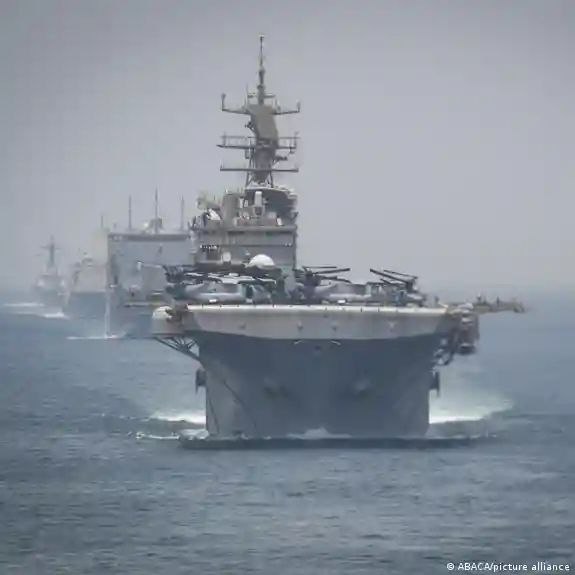
Across the Horn of Africa, escalating geopolitical tensions and overlapping conflicts have elevated the strategic significance of Eritrea. Ruled autocratically by President Isaias Afwerki since its independence 32 years ago, the small nation controls over 1,000 kilometers of coastline along the Red Sea. This vital territory includes the crucial ports of Assab and Massawa, positioning Asmara at the center of international attention as regional and global powers compete for maritime influence.
The geopolitical weight of Eritrea is heavily tied to its geography. Situated near the narrow Bab al-Mandeb Strait—where the Red Sea narrows to less than 30 kilometers across from war-torn Yemen—Eritrea commands a critical global trade corridor. With Houthi militant attacks disrupting merchant shipping and creating severe security risks on the opposite Yemeni coast, maritime traffic increasingly relies on stable regional channels. Experts note that the waters off the Eritrean coastline currently offer a rare expanse of uncompromised security in an otherwise volatile zone.
This unique stability has drawn the gaze of outside powers, including Gulf states and regional heavyweights like Egypt and Saudi Arabia. Recent diplomatic engagements in Cairo—involving Egypt, Somalia, Eritrea, and a high-ranking US envoy—highlight Asmara’s growing role in coordinating regional security and facilitating commercial transit. Furthermore, as tensions involving Iran threaten vital chokepoints like the Strait of Hormuz, alternative Red Sea trade and oil pathways place Eritrea’s geographic assets in high demand.
However, Eritrea’s domestic structure remains a double-edged sword. While absolute authoritarian control has shielded the country from internal civil warfare, creating an island of relative calm compared to neighbors like Sudan and Ethiopia, it lacks constitutional checks or a clear succession plan. Analysts warn that the extreme centralization of power under the 80-year-old autocrat makes the state highly vulnerable to future instability should leadership change abruptly.
Locally, Asmara’s foreign policy is heavily shaped by friction with its neighbors, particularly landlocked Ethiopia. Ever since Eritrea’s secession in 1993 stripped Ethiopia of direct maritime access, Addis Ababa has aggressively pursued sovereign port access—most notably through demands championed by Prime Minister Abiy Ahmed.
This friction has strained fragile relations and prompted Eritrea to proactively forge diplomatic counterweights. By cultivating ties with Egypt, Somalia, and various regional actors, alongside establishing direct trade corridors like its recent freight agreement with Cairo, Eritrea is actively cementing its footprint.
At the same time, the nation grapples with severe internal pressures. Decades of strict one-party rule, mandatory national service, and widespread human rights violations have forced roughly a fifth of the population—at least 700,000 citizens—into exile since independence. Even as Eritrea leverages its geography to become an indispensable diplomatic and commercial pivot in the Red Sea corridor, its long-term viability remains tightly bound to internal political reforms that have yet to materialize.