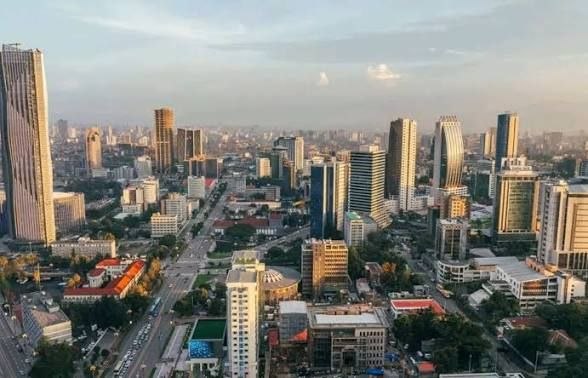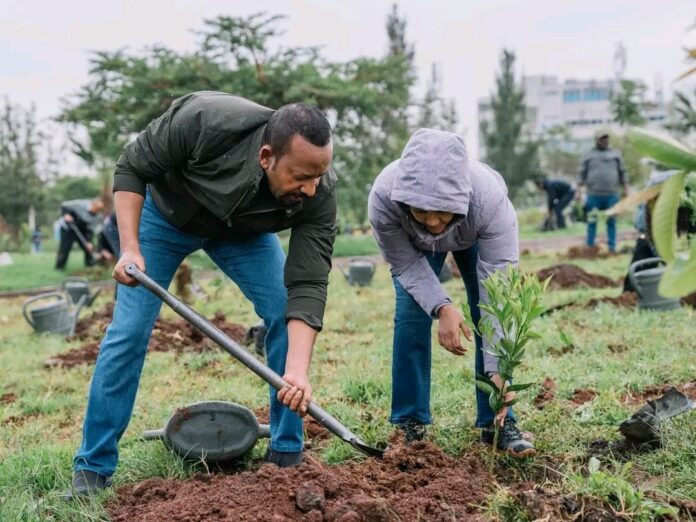
Ethiopia has successfully achieved its ambitious goal of planting 805.3 million tree seedlings in a single day. This mass mobilization surpassed last year’s record of 714 million seedlings, setting a new global benchmark for reforestation efforts and engaging over 26.2 million citizens in a 12-hour campaign.
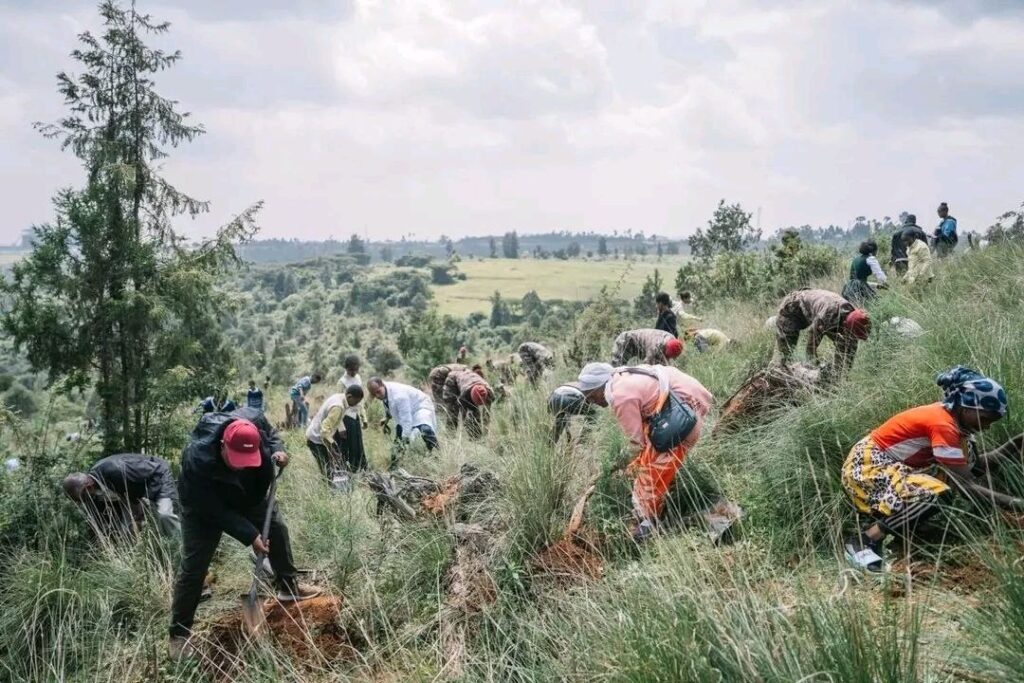
This historic campaign was conducted under the fitting motto “Let Us Plant Hope,” chosen for a nation that faced severe deforestation over the past century. Citizens from all walks of life—including government workers, private sector employees, students, and members of the diaspora—turned out in large numbers despite persistent heavy rain throughout the day.
Prime Minister Abiy Ahmed noted that the majority of the activities took place while overcoming the difficult challenge of planting seedlings in wet conditions, demonstrating the nation’s unwavering commitment to environmental restoration.
This year’s success is part of the broader Green Legacy Initiative (GLI) launched in 2019 under the leadership of Prime Minister Abiy Ahmed. Over the past seven years, the initiative has reached a monumental milestone with 48 billion seedlings planted nationwide, successfully increasing Ethiopia’s forest coverage from roughly 17% to over 23%.
This initiative has become a leading national environmental protection program aimed at restoring degraded lands, expanding the country’s lost forest cover, combating deforestation to strengthen climate resilience, protecting biodiversity, and ensuring sustainable development through mass tree planting and ecosystem restoration.
Ethiopia has set a target of planting 50 billion trees by the end of 2026, and with the addition of over 8 billion new seedlings this year, the country is well on track to surpass this goal.
The urgency of Ethiopia’s reforestation campaign becomes clear when examining the country’s environmental history. Studies show that Ethiopia lost over 90% of its forest cover during the 20th century due to agricultural expansion, population growth, overgrazing, timber harvesting, and urban expansion.
Research has shown a strong correlation between population growth and the decline in forest cover—for instance, in Dara Woreda, an 87.2% increase in population between 1990 and 2020 corresponded to a 63% degradation of forest cover during the same period.
More than 50% of Ethiopia’s highlands have become critically degraded, and historically the country loses an estimated 1.5 to 2 billion tons of topsoil annually. This has led to a continuous decline in agricultural output and food security.
A significant portion of the planted seedlings consists of multi-purpose fruit trees, including avocados, mangos, and papayas, which are now generating income for farmers and even enabling fruit exports to international markets. The program has created more than 1.5 million green jobs in nursery management, seedling production, and agroforestry, and over 120,000 nurseries have been established across the country.
Data indicates that the Green Legacy Initiative has also yielded measurable environmental benefits. According to the Ministry of Agriculture, soil erosion—once a major threat—has significantly decreased. Previously, an estimated 1.9 billion tons of fertile soil were lost annually; today, through the Green Legacy Initiative, average losses have dropped to 208 million tons.
This has helped protect farmland and prevent siltation in dams. Women-led climate resilience programs have rehabilitated over 8,600 hectares of degraded land in eastern Ethiopia, improving water retention and restoring agricultural productivity, according to the Ministry of Agriculture.
To ensure the sustainability of the Green Legacy Initiative, Ethiopia took a historic step in December 2024 when parliament ratified a proclamation establishing the GLI and a Degraded Land Rehabilitation Special Fund. The law allocates 0.5 to 1 percent of the federal annual budget to restoring degraded lands, while regional states contribute based on their capacity.
The United Nations has praised the initiative’s “immense contribution” to climate adaptation efforts and its alignment with the Paris Agreement, the 2030 Agenda for Sustainable Development, and the African Union’s Agenda 2063.
Kashim Shettima, the Vice President of Nigeria who participated in the massive tree-planting campaign in Addis Ababa in 2025, described it as “an inclusive, impactful, and visionary model,” urging other African countries to follow Ethiopia’s example.
With 6.5 billion seedlings already planted this Ethiopian fiscal year, the country is on track to meet its goal of 8 billion by the end of the season. This momentum has positioned Ethiopia as a continental leader in climate action as it prepares to host the upcoming COP32 climate summit in Addis Ababa.
However, experts caution that success must be measured not only by the number of trees planted but also by their survival and long-term ecosystem impact. A recent academic review of the Green Legacy Initiative noted that while the program has brought enhanced vegetation cover and specific livelihood benefits, these improvements remain inconsistent and are limited by poor seedling survival rates, inadequate post-planting management, and restricted monitoring.