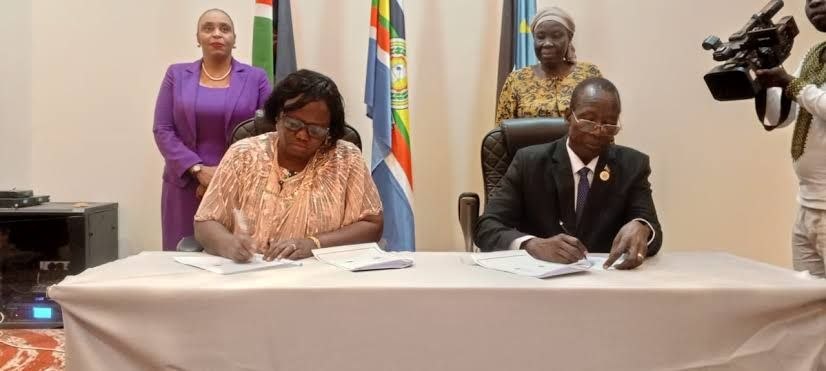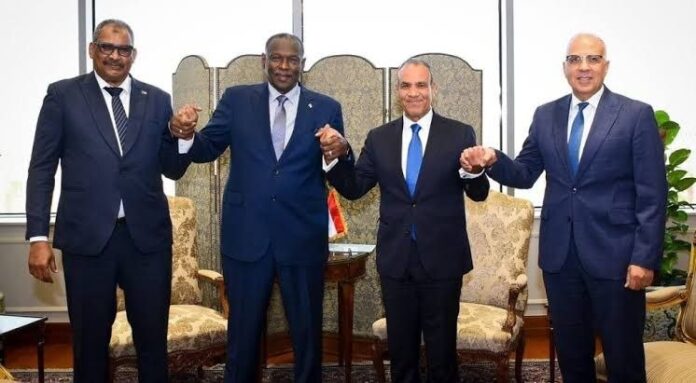
Sudan and Egypt have formally agreed on a comprehensive 16-month joint strategy to restore and rehabilitate the Jebel Aulia Dam, a critical water infrastructure facility located 44 kilometers (27 miles) south of the Sudanese capital. The bilateral project will begin with the urgent construction of a temporary bridge to re-establish vital transit links disrupted by ongoing armed conflict.
According to an announcement released on Saturday by Sudan’s Ministry of Agriculture and Irrigation, the initiative follows a series of high-level technical meetings in Khartoum. Officials from Sudan’s irrigation department met with delegates from the Joint Permanent Technical Commission for Nile Waters (PJTC)—a long-standing bilateral body that manages shared water resources between Sudan and Egypt—to evaluate engineering requirements and finalize operational timelines.
The primary crossing mechanism over the historic dam was severely damaged in November 2023 following shelling by the paramilitary Rapid Support Forces (RSF). While the Sudanese military confirmed that the primary body of the dam remained largely intact, the destruction of the bridge severed a key transport artery across the White Nile.
Under the newly ratified plan, engineers and construction teams will focus initial efforts on constructing a temporary bridge. Expected to be completed within the first four months, this crossing will restore traffic flow and civil transit across the river while major engineering teams prepare for full structural restoration.
Daw al-Bait Abdul Rahman, undersecretary at Sudan’s Ministry of Agriculture and Irrigation, stressed the imperative to fast-track repairs. Rahman noted that the facility experienced substantial operational degradation while under the control of RSF forces, who utilized the dam structure to move heavy armor and operated its mechanical flow mechanisms without required engineering oversight or regular maintenance protocols.
During the first four months of the restoration timeline, efforts will center on temporary bridge construction, site de-risking, and restoring initial transit access. The subsequent five to sixteen months will focus on lock mechanism fixes, mechanical overhauls, and full structural recovery.
The restoration strategy relies heavily on a comprehensive field assessment conducted jointly by Sudanese and Egyptian technical teams. The inspection highlighted critical damage to the dam’s navigation lock and mobile bridge assemblies, prompting urgent maintenance recommendations to secure operational safety before expansive physical repairs begin.
In Cairo, Egyptian Minister of Water Resources and Irrigation Hani Sewilam received a detailed technical dossier outlining the structural condition of the facility. Following the briefing, Minister Sewilam directed Egyptian engineering teams to maintain continuous technical coordination with their Sudanese counterparts and accelerate the supply of essential repair equipment and materials.
Sewilam reiterated Cairo’s commitment to supporting Sudan’s water infrastructure stability, citing long-standing bilateral agreements that govern shared hydrological resources along the Nile basin.
Constructed between 1933 and 1937, the Jebel Aulia Dam serves as a cornerstone of central Sudan’s agricultural and economic infrastructure. It holds up to 3.5 billion cubic meters of water, regulating regional flow along the White Nile.
In addition to its water storage capacity, the dam provides continuous irrigation water for surrounding farming communities and agricultural projects. Furthermore, it aids local hydroelectric power generation and sustains vibrant local fishing industries.
Restoring the facility to full functional capacity is considered essential for stabilizing regional food security, supporting local energy grids, and preserving civil transport channels south of Khartoum as reconstruction efforts commence.