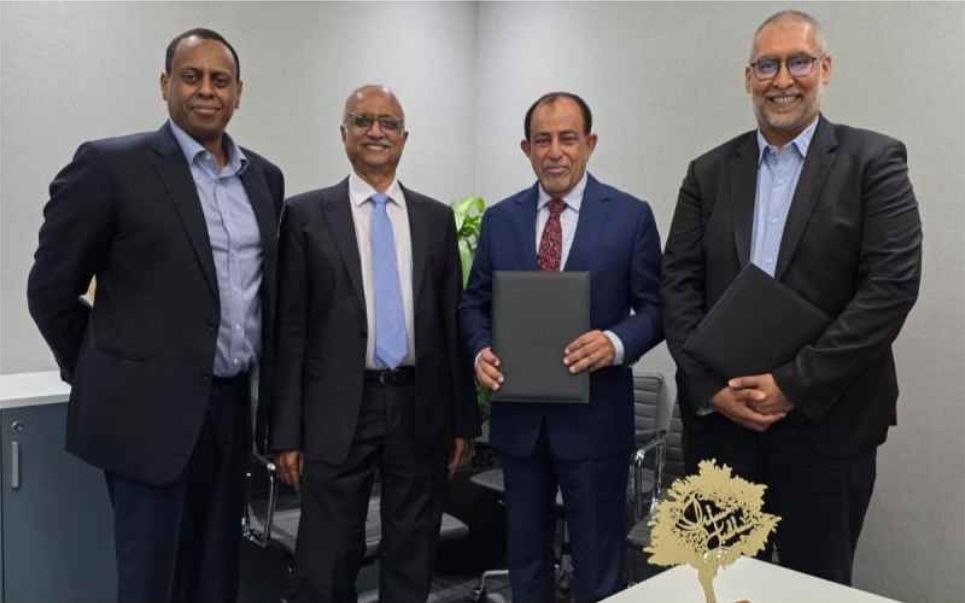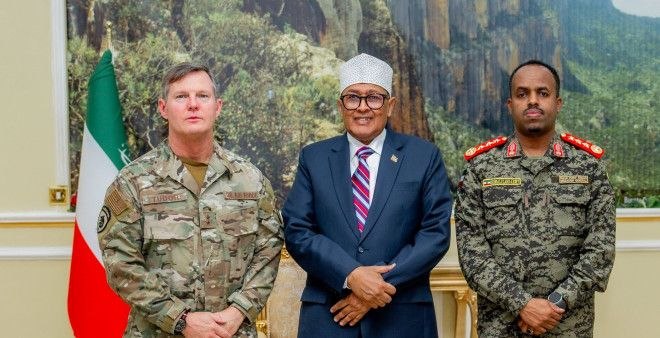
Somaliland President Abdirahman Mohamed Abdillahi “Irro” convened a high-level meeting with a visiting United States military delegation in Hargeisa. The discussions were led by Major General Claude K. Tudor Jr., Commander of U.S. Special Operations Command Africa (SOCAFRICA). The strategic dialogue focused on strengthening practical defense cooperation, combating mutual security threats, and aligning stability efforts across the Horn of Africa and adjacent maritime choke points.
According to an official statement released by the Somaliland Presidency, the discussions focused primarily on safeguarding key international shipping routes across the Red Sea and the Gulf of Aden, intensifying joint counterterrorism initiatives, and building resilience against fast-moving regional security risks.
Throughout the meeting, President Irro underscored Somaliland’s unique geographic relevance along the Horn of Africa. Featuring an extensive coastline spanning over 850 kilometers (530 miles), Somaliland overlooks some of the world’s most congested and vital maritime lanes, which serve as crucial conduits leading toward the Bab el-Mandeb Strait. President Irro stated that Somaliland’s coastline is part of regional and international security, emphasizing that securing these waters is indispensable for the uninterrupted flow of global commerce.
President Irro reiterated Somaliland’s full readiness to deepen institutional ties with U.S. defense apparatuses. He highlighted a strong commitment to joint operations against pressing cross-border challenges, notably transnational terrorism, armed piracy, illicit arms trafficking, and organized criminal syndicates operating in the surrounding seas.
In response, Maj. Gen. Tudor affirmed that the United States and Somaliland share tightly aligned security priorities. The SOCAFRICA commander signaled Washington’s commitment to enhancing practical cooperation, highlighting three immediate focus areas: establishing robust intelligence-sharing communication channels to track and mitigate threats posed by violent extremist groups targeting commercial shipping, synchronizing tactical coordination and operational workflows between defense personnel, and facilitating capacity building through professional military education, specialized technical training, and skill development for local security units.
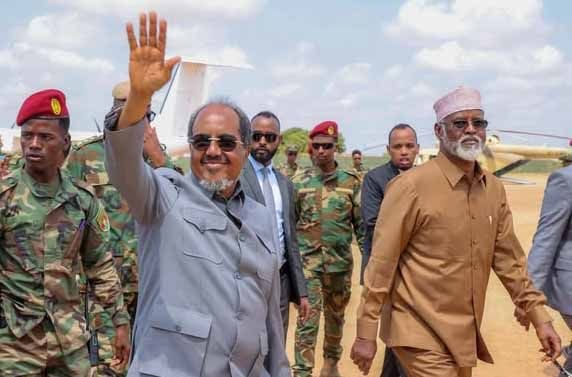
This high-level encounter comes as global powers increase their focus on the Horn of Africa. Rising regional volatility, sea-lane disruption, and persistent insurgent activity have underscored the critical need for resilient, proactive maritime partnerships. Interestingly, the delegation’s arrival in Hargeisa coincided with parallel military talks in Mogadishu, where General Dagvin R.M. Anderson, Commander of U.S. Africa Command (AFRICOM), met with Somali President Hassan Sheikh Mohamud to discuss ongoing counterterrorism offensives and federal security initiatives.
These simultaneous engagements illustrate Washington’s nuanced approach to regional diplomacy. While the U.S. maintains pragmatic defense cooperation with Somaliland to preserve stability along crucial sea lines of communication, Washington formally maintains its single-Somalia policy—recognizing the territorial integrity of the Federal Republic of Somalia while continuing informal, high-level engagement with Somaliland.