The Kenyan High Court has declared the Ksh. 12 billion Ngong–Riruta metre-gauge railway project unconstitutional, ruling that its initiation and implementation violated constitutional and statutory requirements. The judgment, delivered by Justice Gregory Mutai, imposes significant legal sanctions on the government for failing to adhere to mandatory legal standards.
The court detailed that the project was launched without a proper legal foundation. Justice Mutai stated that the railway construction proceeded without parliamentary approval, a competitive procurement process, adequate public participation, or a formal feasibility study. Because these actions were taken in violation of fundamental legal requirements, the court ruled the project itself lacked legal validity.
In particular, the court declared the use of the Railway Development Levy Fund (RDLF) to finance the project unconstitutional. The court clarified that the use of this fund before March 27, 2026, was illegal, and noted that subsequent amendments to the law could not be applied retrospectively to validate earlier constitutional violations.
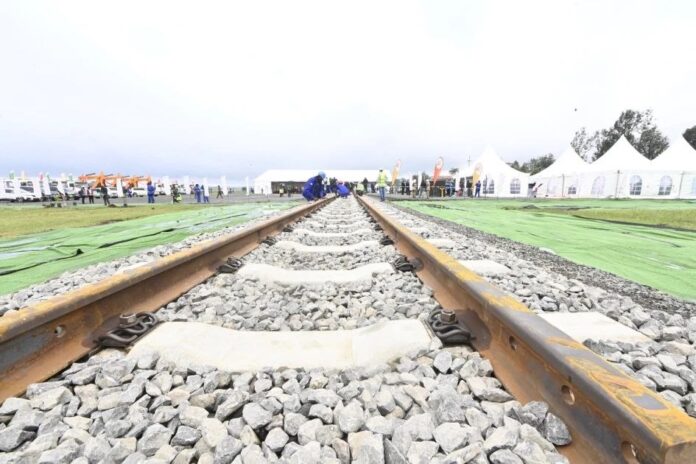
Although it is reported that 40 percent of the railway construction is complete, the court rejected this as a defense. The judge emphasized that the government may only continue the construction after rectifying all legal gaps. This means the government must conduct a completely new tender process, secure parliamentary approval, complete a formal feasibility study, and carry out meaningful public participation.
The court faulted the Kenya Railways Corporation and other government agencies for failing to disclose key project documents, specifically the feasibility study, route alignment, and financing arrangements. The court criticized these entities for failing to fulfill their duty to make this information public. Legal experts note that public consultations conducted after the project had already begun could not remedy the constitutional defects, as these should have been completed prior to the project’s inception.
This case was brought to court by Busia Senator Okiya Omtatah and the Karen Langata District Association. The petitioners argued that the project’s funding was used against the public interest and that affected stakeholders were never meaningfully consulted before construction began.
The court ordered the government to either conduct a fresh, transparent, and competitive tender for the remaining works within 90 days or demonstrate that existing contracts can withstand constitutional scrutiny. Additionally, the court ruled that agreements made without the involvement of affected landowners and residents are unacceptable.
The conservatory orders issued on January 20, 2026, halting the construction of the railway, will remain in force for one year or until the government fully complies with the court’s directives, according to the judge.
This decision is expected to have a significant impact on government development projects. It raises serious questions about government financial management and the transparency of project implementation, with legal analysts noting it serves as a lesson for future projects. As other political developments continue in the country, observers say the court’s decision demonstrates the responsibility of the state to maintain public trust and accountability.