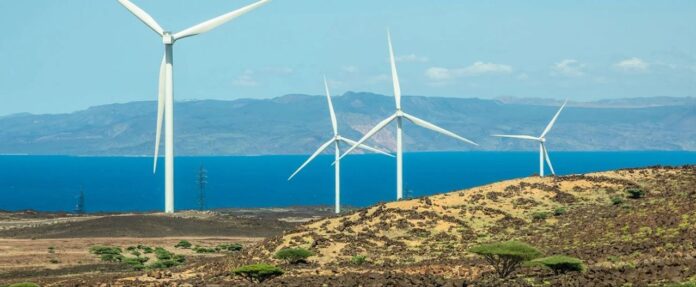
The Board of Directors of the African Development Bank (AfDB) Group officially approved a financing package of up to $110 million on July 15, 2026. This investment is set to catalyze the development of the 300 MW Aysha Wind Project, a landmark initiative that stands as Ethiopia’s first wind-based Independent Power Producer (IPP) and, upon completion, the nation’s largest wind power installation.
The Aysha Wind Project, with an estimated total cost of $508 million, represents a critical shift in Ethiopia’s power generation strategy. While the country has historically relied heavily on hydropower—which currently accounts for 96% of its energy mix—this project introduces essential diversification. By integrating wind energy, the national grid will gain greater resilience against climate-related hydrological variability, ensuring a more reliable and consistent supply of electricity for the population.
The AfDB’s $110 million contribution is structured across three key financial windows: $80 million from the ADB window, $20 million from the Clean Technology Fund, and $10 million from the Sustainable Energy Fund for Africa. Furthermore, the Bank is playing a pivotal role in mobilizing an additional $381.1 million in debt from other development finance institutions, showcasing a robust collaborative effort to solve complex infrastructure financing challenges.
The project is being developed, owned, and operated by AMEA Power. Located in the Somali Region of eastern Ethiopia, the greenfield project involves the comprehensive design, construction, and long-term operation of the wind farm. The technical scope includes the construction of a 5-kilometer transmission line and critical upgrades to the existing Aysha II substation.
Under a 25-year Power Purchase Agreement (PPA), Ethiopian Electric Power (EEP) will serve as the sole off-taker, underscoring a strong public-private partnership (PPP) framework. This model is expected to provide a “replicable template” for future power sector investments in the region, as noted by Wale Shonibare, the Bank Group’s Director for Energy Financial Solutions, Policy, and Regulations.
The project is projected to generate approximately 1,189 Gigawatt hours of clean electricity annually, contributing significantly to Ethiopia’s goal of achieving universal electricity access by 2030. Beyond power generation, the plant offers substantial climate benefits, with estimates suggesting it will avert roughly 1.39 million tons of CO_2 emissions over the 25-year agreement period.
The economic impact is equally significant. During the construction phase, the project is expected to create up to 1,525 direct jobs, with an additional 30 permanent roles dedicated to ongoing operations. Furthermore, the ripple effect of increased electricity capacity is projected to support roughly 35,645 indirect supply chain and related jobs, fueling GDP growth across the region.