African leaders and development partners are pushing for a fundamental shift in how the continent manages its vast mineral wealth, calling for critical minerals to become a cornerstone of industrialisation, economic transformation, and job creation.
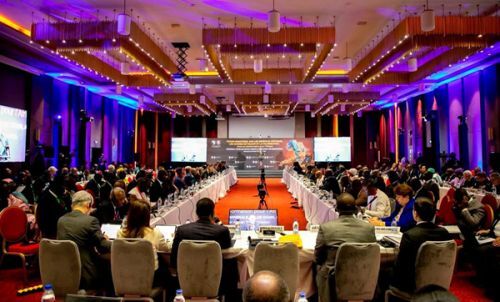
The call was made during the Ministerial Forum on Critical Minerals, Value Chains, and Beneficiation held in Abidjan on July 10, 2026, which brought together ministers, continental institutions, private sector actors, and international partners.
In a joint statement issued at the end of the forum, participants underscored the urgency of moving beyond the long-standing model of exporting raw materials. Instead, they urged African countries to invest in local processing, value addition, and regional value chains to capture a greater share of the economic benefits from their resources.
Africa holds an estimated 30 percent of the world’s critical mineral reserves, including cobalt, lithium, graphite, rare earth elements, platinum group metals, copper, manganese, and nickel. Despite this, much of the continent’s output is exported in raw form, limiting its ability to generate jobs, build industrial capacity, and retain technological expertise.
Officials warned that this extractive model continues to shift economic gains abroad while weakening Africa’s position in global supply chains. Fragmented national approaches further reduce bargaining power, reinforcing the need for coordinated regional strategies.
Participants highlighted several priorities to unlock the sector’s potential, including investments in energy and transport infrastructure, improved geological data, coherent policy frameworks, investor-friendly regulations, and stronger governance of natural resources.
The forum, organised by the African Development Bank Group, drew participation from ministers responsible for mining, energy, industry, and natural resources, alongside representatives from the African Union Commission, the UN Economic Commission for Africa (UNECA), the AfCFTA Secretariat, and international partners.
Speaking at the opening, African Development Bank Group President Sidi Ould Tah called for a “paradigm shift” in how Africa manages its mineral wealth, emphasizing the need for new partnerships that deliver tangible benefits to African populations.
“Africa is ready to make critical minerals a lever for industrial transformation,” said Mamadou Sangafowa Coulibaly, Côte d’Ivoire’s Minister of Mines, Petroleum, and Energy, as he presented the forum’s declaration.
UNECA Deputy Executive Secretary Hanan Morsy described the moment as a historic opportunity, likening it to the continent’s independence era. However, she cautioned that success would depend on strategic coordination rather than isolated national efforts.
“Africa’s advantage lies in integrated value chains under the AfCFTA, where countries specialise and collectively capture more value,” she said.
International partners echoed the importance of governance and investment climate reforms. Jeremy Wiggins, Deputy Assistant Secretary for International Affairs at the U.S. Treasury, said Africa has the potential to become a leading industrial growth story but stressed that transparent and predictable regulatory systems are essential.
“Good governance is not an obstacle to investment; it is what makes it sustainable,” he noted.
Participants also emphasized the need for technology transfer, skills development, and improved transparency in supply chains to ensure that mineral wealth translates into inclusive and sustainable growth.
The African Development Bank Group was identified as a key partner in advancing this agenda, particularly through financing infrastructure, supporting project preparation, reducing investment risks, and mobilising capital under initiatives such as the New African Financial Architecture for Development.
As global demand for critical minerals continues to rise—driven by the energy transition and digital economy—African policymakers are increasingly positioning the sector as a strategic lever to accelerate industrial development and reshape the continent’s economic trajectory.