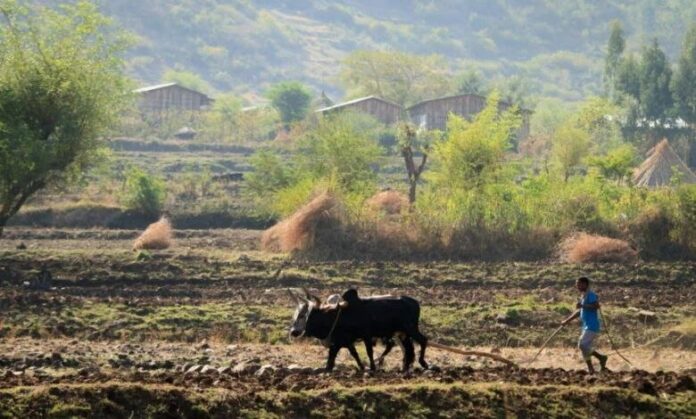
The recently released 10th edition of the Global Report on Food Crises (GRFC) 2026 paints a grim picture of global hunger, but for Ethiopia, the most alarming finding is what remains unseen. Ethiopia is among 18 countries and territories that failed to provide acute food insecurity data meeting the report’s technical requirements for 2025.
This omission has created a dangerous “data drought,” leaving policymakers in the dark and threatening the integrity of humanitarian response systems.
According to the report, published by the Food and Agriculture Organization (FAO) and the World Food Programme (WFP), Ethiopia’s absence represents a significant blind spot. In 2024, Ethiopia was identified alongside four other locations—Burkina Faso, the Republic of the Congo, and displaced populations in Algeria and Ecuador—as collectively harboring over 27 million people facing high levels of acute food insecurity.
For 2025, however, no updated estimates were available. The GRFC cites systemic hurdles, including “challenges to obtain authorization to collect or share data, limited funding and a lack of priority for data collection.” Crucially, the report warns that this lack of data does not indicate an improvement. The reported global decline in hunger—from 296 million people in 2024 to 266 million in 2025—largely reflects a reduction in the number of countries covered rather than a genuine decrease in the number of people requiring urgent action.
Ethiopia’s missing data is symptomatic of a broader, systemic crisis. The 2026 GRFC features the lowest country coverage in a decade. Out of 65 countries selected for analysis, only 47 met the stringent technical requirements for inclusion.
The decline is directly attributed to a drop in humanitarian financing, which has restricted on-the-ground assessments. The WFP, a principal data provider, conducted 30 percent fewer survey interviews globally in 2025 compared to the previous year. The report warns that the integrity of these data systems is “increasingly at risk,” emphasizing that protecting investments in food security information is critical for evidence-based decision-making.
While Ethiopia’s figures are missing, the regional context in East Africa remains dire. Sudan is experiencing a devastating conflict that has left nearly 25 million people in Crisis or worse, with confirmed Famine (IPC Phase 5) in areas like El Fasher and Kadugli. South Sudan has entered the list of the top ten largest food crises, while Kenya and Somalia have seen deteriorations driven by climate shocks, conflict, and rising food prices.
Across the 47 reporting countries, conflict remains the primary driver of hunger, affecting 147.4 million people. Weather extremes follow, impacting 87.5 million. The 2026 report also marks a grim milestone: for the first time since standard IPC reporting began, Famine was confirmed in two separate conflict-affected areas (Gaza and Sudan) in the same year.
With humanitarian financing falling back to 2016-2017 levels, the GRFC calls for a “Humanitarian Reset.” For Ethiopia, the immediate challenge is bridging the information gap. Without reliable, authorized data, millions of vulnerable people risk becoming invisible, underscoring that evidence-based data is the necessary foundation for delivering life-saving aid.