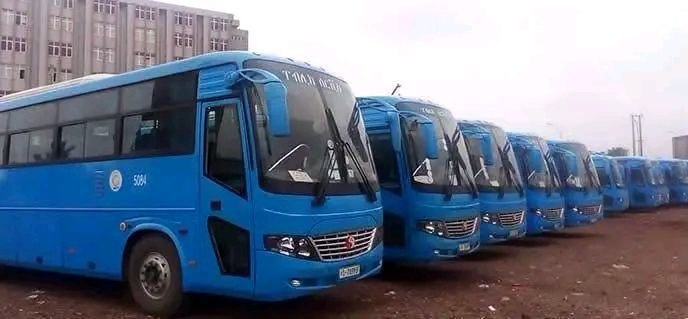
The Ethiopian Public Transport Service has launched a major tender program to procure 150 electric buses, valued at approximately 8.2 billion Birr, as part of the country’s transition toward a sustainable and modern public transportation system.
According to the institution’s Director General, Tadios Lera, each bus is estimated to cost approximately 55 million Birr. These buses are intended to serve urban public transport, tourism services, and future inter-regional transport routes.
Based on information provided by the service in early July 2026, the financial implementation is structured in two phases: 50 percent is scheduled for the current fiscal year, while the remaining 50 percent is to be completed within the first six months of the next fiscal year.
This procurement reinforces the government’s ongoing efforts to advance Ethiopia’s electric mobility. As a pioneer in Africa’s green transport revolution, Ethiopia became the first country in the world in January 2024 to ban the importation of internal combustion engine (ICE) vehicles. This policy aims to reduce the country’s annual foreign currency expenditure of over $4.5 billion spent on fuel imports.
Results show that the policy framework introduced in 2025, which extended to semi-knocked-down and completely-knocked-down units, has positively reshaped the national automotive market. According to the Ministry of Transport and Logistics, the number of electric vehicles (EVs) in Ethiopia has surged from 4,600 in early 2023 to 100,000. In 2024, EVs accounted for more than 60 percent of new vehicle registrations, positioning Ethiopia among the fastest-growing EV markets. The government is implementing a comprehensive strategy to increase this number to 500,000 and replace 95 percent of fuel-powered vehicles within the next decade.
Ethiopia’s green transport transition is supported by comprehensive policies and financial incentives. The government imposes only a 5 percent duty on imported electric vehicles, while partially assembled vehicles are exempt from customs duty entirely. Furthermore, EVs are exempt from value-added tax, excise tax, and surtax, which is encouraging consumers and businesses.
State Minister of Transport and Logistics, Bareo Hassen, noted that the government is offering favorable financial and investment incentives to both domestic and foreign investors engaged in manufacturing and assembling EVs. Currently, 15 private investors are actively engaged in assembling electric vehicles within Ethiopia.
To legally support this transition, the “Electric Vehicle Charging Station Directive No. 1034/2024” (enacted in December 2024) established a wide-reaching regulatory system for the nationwide construction of charging stations. The directive aims to optimize infrastructure development by requiring fast-charging stations every 50 kilometers and heavy-duty charging stations every 120 kilometers along major roads.
Addis Ababa has established itself as a regional leader in clean transport, operating the largest electric bus fleet in Africa. In April 2025, the Addis Ababa City Administration introduced 100 electric buses assembled at the Belayneh Kindie Metal Engineering Complex. These buses are equipped with modern information systems and fare collection technologies and are currently operating on the city’s Bus Rapid Transit (BRT) routes.
Minister of Transport and Logistics, Alemu Sime, emphasized that these electric buses not only modernize the city’s transport network but also provide zero-emission, eco-friendly, and highly comfortable travel.
The government is working to expand this experience beyond Addis Ababa. The city of Gondar has already begun using EVs for public transport, and the installation of charging stations is underway in Dire Dawa, Harar, and Jigjiga. Additionally, construction of the 15-kilometer Electric Bus Rapid Transit (e-BRT) system, which will include 20 modern stations, is expected to begin soon.
This project is designed to have the capacity to serve up to 400,000 passengers daily.Sector experts agree that transitioning to electric public transport is crucial for addressing many of Ethiopia’s economic and environmental challenges. Replacing diesel-powered buses with electric alternatives will significantly contribute to reducing carbon emissions, improving public health, saving foreign currency currently spent on fuel imports, and strengthening economic resilience through the efficient use of domestically generated renewable energy.