Local businesses in South Sudan must urgently position themselves to tap into the African Continental Free Trade Area (AfCFTA) or face the harsh reality of being left behind in a rapidly integrating continental market valued at more than $3.4 trillion.
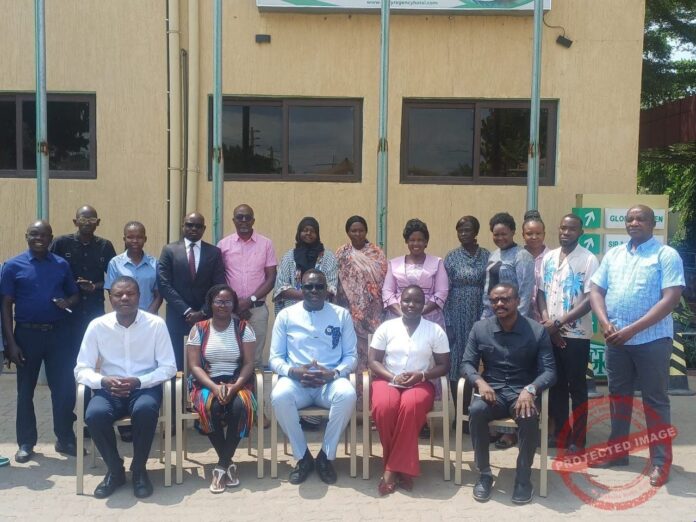
The warning was issued by economic experts and trade officials during a vital three-day sensitization workshop held in the capital, Juba. Organized by the East African Business Council (EABC) in collaboration with the South Sudan National Chamber of Commerce, Industry and Agriculture—and backed by technical support from the German development agency GIZ—the forum aimed to bridge the knowledge gap hindering domestic enterprises from entering the regional stage.
Addressing attendees at the opening session, Yowa Soso, the Acting Secretary General of the South Sudan National Chamber of Commerce, highlighted the steep uphill battle local entrepreneurs face. Soso acknowledged that severe ongoing economic hardships heavily depress attendance at capacity-building programs. For many local business owners, the immediate necessity of securing daily income-generating activities routinely supersedes long-term strategic training.
Despite a lower-than-expected turnout, Soso passionately implored the business community to look past immediate survival and actively seize the educational resources provided by the workshop. Understanding the intricate mechanisms of continental trade integration, he argued, is no longer optional but a baseline requirement for future business viability.
Lamedi Wesonga, an Economic Policy Advisor for the EABC, echoed these sentiments, characterizing the AfCFTA as a historic, transformative initiative. Wesonga emphasized that the pan-African agreement is specifically engineered to unlock a massive consumer base, paving the way for unprecedented cross-border investment, business expansion, and sustainable job creation. By progressively dismantling both tariff and non-tariff barriers, the framework aims to radically boost intra-African trade, which has historically lagged behind trade with external continents.
For South Sudan, the stakes of successful integration are uniquely high. Wieu Wieu Mou, the Deputy Chairperson of the South Sudan National Chamber of Commerce, Industry and Agriculture, pointed out that the AfCFTA offers the young nation a critical lifeline to break its heavy economic dependence on crude oil revenues.
“The AfCFTA provides South Sudan with a historic window of opportunity to diversify our export portfolio, fortify our economic foundations, and foster resilient growth,” Mou stated.
South Sudan officially signed the continental trade pact back in 2018. Mou expressed optimism that the government would soon finalize and complete the formal ratification process, a crucial legal milestone required for the country to fully leverage the trade protocols and protective mechanisms established under the framework.
To jumpstart this transition, trade officials identified several highly lucrative, non-oil domestic commodities that possess immense export potential within the African market.
Aggressively developing the value chains for these specific goods could catalyze widespread employment, significantly uplift rural livelihoods, and generate much-needed foreign exchange earnings for the macroeconomic stabilization of the country.
Throughout the remainder of the three-day summit, participants—ranging from policymakers to private sector pioneers—are slated to dissect the practicalities of cross-border commerce. Key agenda items include navigating market access requirements, understanding complex trade-in-goods protocols, and formulating actionable, localized strategies to ensure South Sudanese products can compete effectively on price and quality.