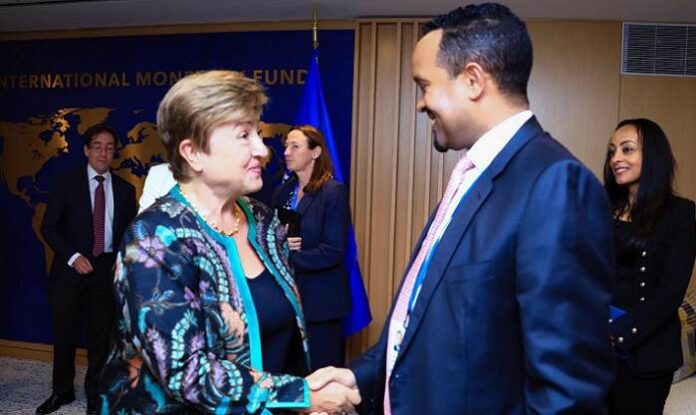
The International Monetary Fund (IMF) and Ethiopian authorities have reached a staff-level agreement on the fifth review of the country’s economic program under the Extended Credit Facility (ECF). Upon formal approval by the IMF Executive Board in the coming weeks, the agreement will grant Ethiopia access to approximately $468 million (SDR 342.05 million) in financial support, bringing the total disbursements under the four-year, $3.4 billion arrangement to roughly $2.65 billion. This breakthrough follows a productive two-week mission to Addis Ababa led by Alvaro Piris from May 6 to May 20, 2026, which was subsequently finalized through virtual discussions.
According to the IMF statement, Ethiopia’s economy has demonstrated remarkable resilience despite a major external shock caused by the war in the Middle East, which severely disrupted regional trade routes and triggered temporary fuel shortages alongside sharp price spikes for essential imports like fuel and fertilizer.
Prior to the conflict, Ethiopia’s Homegrown Economic Reform Agenda was yielding highly favorable macroeconomic outcomes, with consistent improvements in output indicators, export volumes, foreign exchange reserves, and government revenues through early 2026, alongside a steady decline in inflation. Alvaro Piris noted that while the war in the Middle East was a significant external shock, economic activity appears robust, with as-yet modest impacts on output growth and consumer price inflation.
Despite this positive momentum, the IMF cautioned that risks to Ethiopia’s economic outlook have escalated due to heightened global uncertainty and commodity price volatility, stressing that a prolonged conflict will require agile policymaking and careful resource management to shield the domestic economy.
To consolidate macroeconomic stability, the IMF outlined several critical policy paths for Ethiopian officials, emphasizing that maintaining a tight monetary policy stance remains essential to anchor inflation expectations, while authorities must continue enhancing the transparency and functionality of the foreign exchange market to support external adjustments. Additionally, the fund highlighted that strengthening domestic revenue mobilization and practicing prudent expenditure management will be vital to balancing new spending pressures.
The IMF further emphasized that long-term, private sector-led growth will depend heavily on advancing structural reforms, with key priorities including improving the local business climate, fostering market competition, and strengthening the resilience of the financial sector.
On the geopolitical and financial front, progress is being made regarding Ethiopia’s sovereign debt, as the IMF confirmed that debt restructuring discussions with official creditors are advancing in line with expectations, while separate discussions with private bondholders remain ongoing to restore long-term debt sustainability. During the mission, the IMF team met with high-level officials, including Minister of Finance Ahmed Shide and National Bank of Ethiopia Governor Eyob Tekalign, praising their continued cooperation and strong commitment to the success of the economic program.