

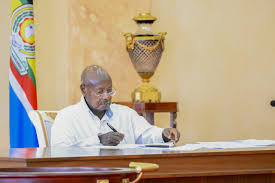
Ugandan President Yoweri Kaguta Museveni has assented to the “Protection of Sovereignty Bill, 2026,” officially making it law. This newly enacted legislation is anticipated to bring profound shifts to the country’s political landscape and foreign relations, having now completed all legislative processes to become an official statute of Uganda.
The primary objective of this new law is to provide comprehensive protection and enforcement for the sovereignty of the people of Uganda. The legislation designates the Department responsible for peace and security within the Ministry of Internal Affairs as the national implementing authority. Furthermore, it establishes strict guidelines and regulations for the registration and oversight of agents of foreign entities operating inside the country, while simultaneously regulating funding, assistance, and other forms of collaboration extended to these foreign agents.
With the Presidential assent, the Bill now holds full legal force, paving the way for relevant state institutions to integrate and execute the directive in alignment with the country’s existing legal and policy frameworks.
The enactment of the Protection of Sovereignty law is highly expected to strengthen Uganda’s capacity to safeguard its independence in national decision-making processes and shield its core domestic priorities. This reinforces the constitutional principle that the country’s governance framework and development milestones must always remain firmly anchored in national interest and intent.
Additionally, the law is anticipated to improve overall clarity in the management of state authority, enhance cross-institutional coordination, and support ongoing national efforts focused on promoting stability, accountability, and orderly governance.
Political analysts note that beyond its regulatory and political oversight functions, the law complements Uganda’s broader development agenda. Specifically, it is seen as a tool to advance economic transformation, improve public sector efficiency, and safeguard national policy space as the country continues to engage and negotiate with its regional and international partners on its own terms.
The implementation of this law is expected to place stringent conditions particularly on non-governmental organizations (NGOs) and civil society groups that rely heavily on foreign financial support. Under the new statute, any entity receiving financial or material aid from foreign governments, international organizations, or overseas individuals will be required to register as a “foreign agent” and fully disclose their sources of funding.
While proponents argue that this measure is necessary to prevent undue foreign interference in Uganda’s domestic politics, critics have raised concerns that the law could potentially restrict the operational space of civil society and limit freedom of expression.
Nevertheless, government officials have strongly defended the legislation, asserting that the law does not target any specific group but is instead designed to secure the peace, national security, and dignity of the country against external pressures. By signing this bill into law, President Museveni has reemphasized Uganda’s commitment to self-reliance and self-determination.