
In an unprecedented public health intervention, Ugandan President Yoweri Museveni has officially postponed the deeply revered and highly anticipated Uganda Martyrs Day celebrations across the country. This critical decision aims to shield the nation from severe devastation following the spread of the lethal, vaccine-resistant “Ebola Bundibugyo” virus outbreak, which has breached the Ugandan border from the neighboring Democratic Republic of the Congo (DRC).
The historic annual pilgrimage to the Namugongo shrines on June 3 is one of the largest religious gatherings on the African continent, drawing millions of Christian devotees from across the globe. However, the prospect of massive, dense crowds converging amid a highly contagious virus with no effective vaccine presents a nightmare scenario for regional epidemiologists and health officials. Consequently, the government has been forced to prioritize the biological security of its citizens over the historic religious observance.
The decision to postpone the event follows an emergency weekend summit between President Museveni and the national epidemics task force at the Nakasero State Lodge. The urgency of the meeting was dictated by the grim reality that the Ebola outbreak is no longer confined to the mineral-rich Ituri Province of the DRC, but has successfully breached the Ugandan border.
Ugandan health officials confirmed that a 59-year-old Congolese national infected with the Bundibugyo strain traveled to the capital city, Kampala, and subsequently passed away while receiving intensive care. This imported case has triggered widespread panic and anxiety regarding undetected chains of transmission within the Ugandan capital.
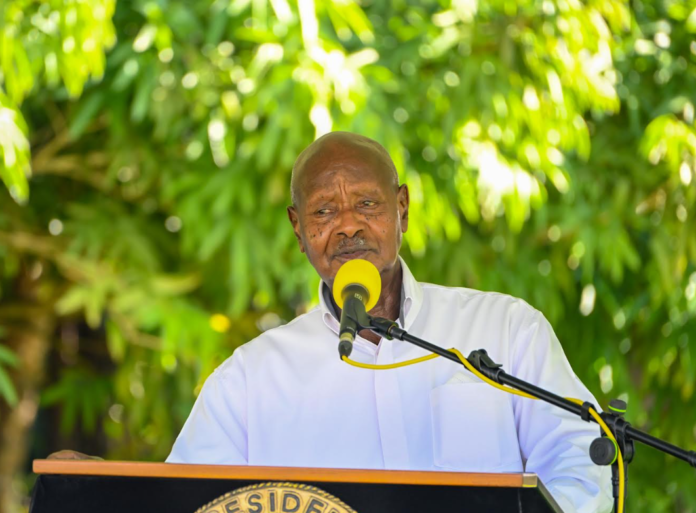
In a national address to the public, President Museveni made a direct appeal to the country’s youth, whom he affectionately terms the ‘Bazzukulu’ (my grandchildren): “This decision was made because Uganda receives thousands of pilgrims annually from eastern Congo, which is currently experiencing an Ebola outbreak. To safeguard everyone’s lives, it is essential that this important event be postponed.”
The World Health Organization (WHO) has already designated the outbreak a Public Health Emergency of International Concern (PHEIC), noting over 240 suspected cases and 80 deaths in the DRC. This Bundibugyo strain poses an exceptional threat to global health because, unlike the previous Zaire strain, it currently possesses no approved vaccine or specific antiviral treatment.
Halting the Uganda Martyrs Day pilgrimage is a highly complex logistical and cultural challenge. The event commemorates 45 Christian converts—22 Catholics and 23 Anglicans—who were executed between 1885 and 1887 under the orders of Kabaka Mwanga II of Buganda for refusing to renounce their faith. For many devotees, the pilgrimage involves walking hundreds of kilometers over several weeks as a profound demonstration of spiritual endurance.
By mid-May, thousands of pilgrims from Kenya, Rwanda, Tanzania, and crucially, the DRC, had already begun their journey toward the Namugongo shrines. The President issued a direct directive to these moving populations to immediately abort their journeys.
The postponement deals a devastating financial blow to the informal economy in Kampala, where thousands of vendors rely heavily on the influx of pilgrims for their annual revenue. In his directive, Museveni ordered: “I encourage those who had begun their journey to return home, continue observing the precautionary measures, and report anyone who is sick to the nearest medical facility. We regret any inconvenience caused, but the protection of human life must come before anything else.”
Uganda possesses some of the most battle-hardened epidemiological and medical response teams in the world, having successfully contained multiple Ebola and Marburg virus outbreaks over the past two decades. This swift action is expected to serve as a critical defensive firewall to halt the virus before it establishes a foothold in major urban centers.