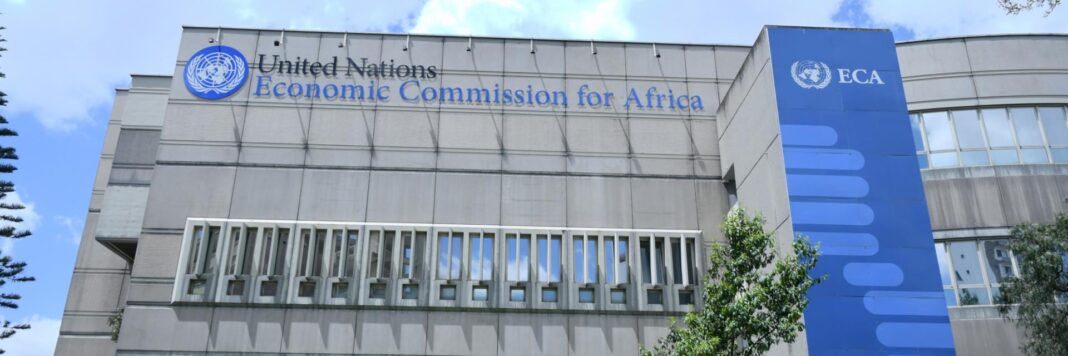

The Government of Mauritius, in partnership with the UN Economic Commission for Africa (ECA) and the Economic Development Board (EDB), convened a validation workshop on “Developing Green Value Chains in Southern Africa in the Context of the AfCFTA: A Case Study of Mauritius” at Labourdonnais Waterfront Hotel.
The workshop brought together policy makers, development partners, academia, private-sector representatives, civil society, and international organizations to deliberate on strategies for strengthening sustainable, resilient, and competitive value chains across Southern Africa.
Speaking at the event, Hambyrajen Narsinghen, Junior Minister of Foreign Affairs, Regional Integration and International Trade, highlighted the transformative potential of the AfCFTA, describing it as “the African Union’s most ambitious economic integration project.”
He emphasized the importance of shaping AfCFTA implementation around sustainability, and inclusivity.
“The question before us is not whether trade integration will happen, but what kind of AfCFTA we want, one that simply liberalizes vulnerability, or one that deliberately builds resilient, competitive, and sustainable value chains,” said Narsinghen.
He highlighted the impact of climate change, noting that floods, droughts, cyclones, and infrastructure disruptions affect trade, supply chains, and productivity across Africa.
The Minister further stressed that circular economy approaches should be viewed not merely as environmental interventions, but as strategic tools for trade resilience and economic transformation.
“For Southern Africa, the circular economy is a competitiveness strategy. It targets import dependence, resource inefficiency, and climate vulnerability while fostering innovation, industrialization, and job creation,” he added.
Speaking during the workshop, Mahen Abhimanu Kundasamy, Chief Executive Officer of the Economic Development Board (EDB), underscored the strategic importance of green transformation, sustainable industrial development, and regional integration in positioning Mauritius within emerging green industries and regional production networks.
“Sustainability is no longer a peripheral issue. It has become a central determinant of economic resilience, industrial competitiveness, investment attractiveness, and market access,” said Kundasamy.
He noted that Mauritius was among the first African countries to sign and ratify the AfCFTA Agreement, reflecting the country’s strong commitment to regional integration and deeper economic cooperation across the continent.
Kundasamy further highlighted ongoing national reforms and initiatives supporting the transition towards a greener and more competitive economy, including investments in renewable energy, sustainable manufacturing, circular economy development, digital transformation, and enterprise sustainability readiness.
“The transition towards greener and more sustainable economies is no longer optional. It is becoming an economic necessity and a strategic imperative for long-term competitiveness,” he stated.
Speaking at the same event, Eunice G. Kamwendo, Director of the ECA Sub-Regional Office for Southern Africa, underscored the importance of aligning trade integration, climate resilience, and structural economic transformation.
“Climate change is no longer a distant threat; it is a systemic constraint to development and placing a high premium on trade,” said Kamwendo. “Across Southern Africa, climate shocks disrupt production, transport corridors, ports, energy infrastructure, and logistics networks, raising costs and undermining supply chains.”
Kamwendo noted that the study explores how green and circular economy approaches build resilience, reduce import dependence, and boost long-term competitiveness when incorporated into trade, industrial, and investment strategies.
She further emphasised that AfCFTA offered a unique chance to expand trade and foster sustainable regional value chains.
“The AfCFTA presents a unique and timely opportunity, not merely to expand trade, but to do so in a manner that is resilient, sustainable, and future-oriented.” She added that, “trade integration that ignores sustainability does not reduce vulnerability — it reinforces it. Today’s workshop is a step toward trade policy that is both ambitious and resilient.”
Discussions during the workshop led participants to identify key actions, including supporting AfCFTA implementation through circular-economy interventions, reducing waste, strengthening local production systems, improving compliance with sustainability standards, and fostering regional industrial linkages.
The report also outlines opportunities for regional collaboration, including leveraging AfCFTA instruments such as the Rules of Origin, Trade in Services Protocol, and the Investment Protocol to support the movement of secondary materials, cross-border circular services, and investment in green infrastructure.
Participants emphasized the need for coordinated regional approaches, policy harmonization, investment readiness, standards alignment, and stronger collaboration across production networks and trade corridors to support sustainable industrialization, climate resilience, and inclusive economic transformation aligned with Agenda 2063 and the Sustainable Development Goals (SDGs).
The Government of Mauritius expressed appreciation to the ECA, the United Nations Development Programme (UNDP), and all stakeholders for their continued partnership and support in advancing the initiative. The workshop participants and partners were encouraged to take forward these discussions and collaborative actions to further strengthen green and circular value chains under the AfCFTA, driving sustainable and inclusive transformation across Southern Africa.