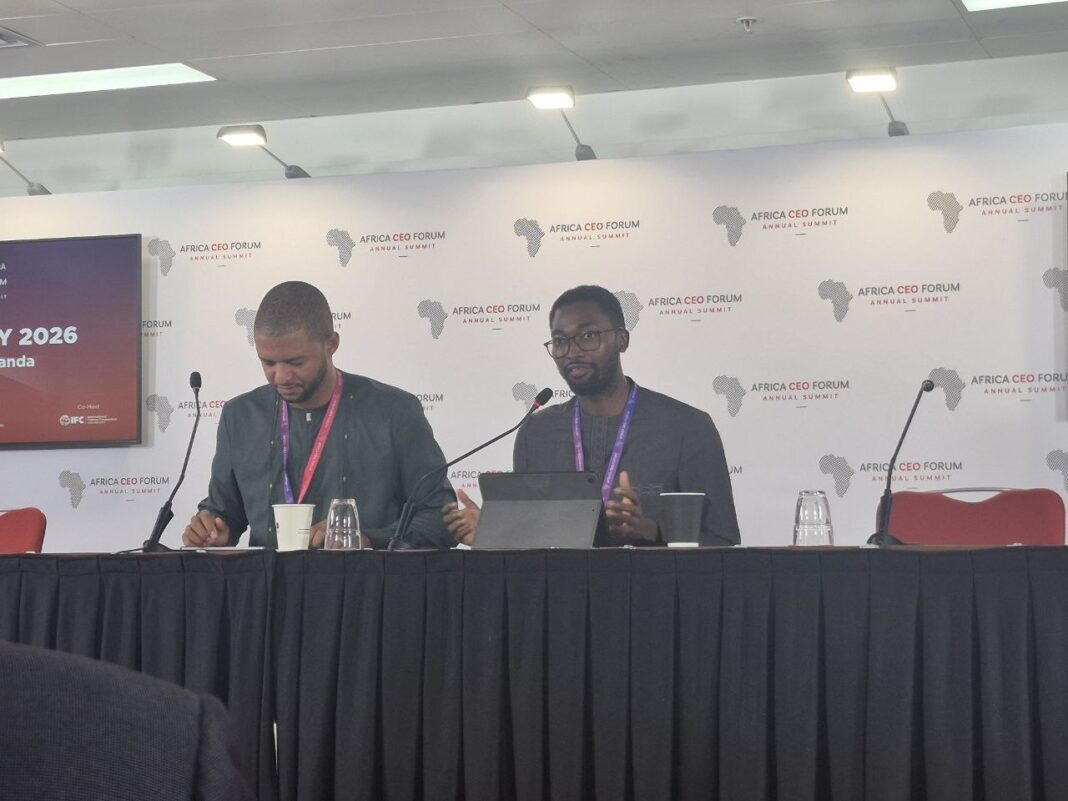
Africa Re has urged African governments to place insurance at the centre of their economic and development strategies, warning that low coverage across the continent is limiting growth, weakening fiscal resilience, and exposing economies to climate shocks.The call comes in a new white paper released on May 15 in Kigali, titled “Unlocking Africa’s Growth Potential: The Strategic Role of Insurance and Reinsurance,”
which argues that insurance should be treated as a core policy tool alongside banking, capital markets, and industrial policy.Insurance gap and growth divergenceThe report highlights a widening economic gap between Africa and emerging Asia, linking it in part to differences in insurance market development.In the early 2000s, both regions had comparable GDP per capita levels.
Two decades later, emerging Asia has nearly tripled its per capita income, while Africa’s growth has been significantly slower. Over the same period, non-life insurance penetration in emerging Asia rose to about 1.7 percent of GDP, while Africa’s declined slightly to around 0.8 percent.According to Africa Re, this disparity reflects more than economic output; it underscores how risk is managed. Countries with stronger insurance systems provide more predictable environments for investment and long-term planning.Climate risks and fiscal pressureThe white paper warns that Africa faces one of the world’s largest natural catastrophe protection gaps.
Only 6 to 7 percent of disaster-related losses on the continent are insured, leaving governments, businesses, and households to absorb more than 90 percent of the costs.This lack of coverage often turns climate events into fiscal crises. Governments are forced into emergency spending, budget reallocations, or increased borrowing, placing additional strain on public finances.Citing studies from the Bank for International Settlements and the European Central Bank, the report notes that economies with higher levels of insured losses tend to experience milder downturns and faster recoveries following disasters.
African case studiesAfrica Re points to several African countries where insurance has been successfully integrated into public policy.Kenya has incorporated disaster risk financing into its public financial management system, using a mix of parametric insurance, contingency funds, and contingent credit to manage climate shocks.Morocco has established a national catastrophe coverage scheme combining mandatory insurance extensions with a solidarity fund to protect uninsured citizens, supported by reinsurance and capital market instruments.
In Nigeria, a partnership between the International Finance Corporation (IFC) and Africa Re has expanded agricultural insurance, reaching more than 1.47 million farmers through index-based products.These examples, the report notes, demonstrate that tailored solutions such as microinsurance and parametric products can scale rapidly when supported by effective reinsurance structures.Financing development and infrastructureBeyond risk protection, the report emphasizes the role of insurance in mobilizing long-term domestic capital.In countries including South Africa, Namibia, Mauritius, and Morocco, insurance assets exceed 35 percent of GDP, enabling insurers to invest in infrastructure, government bonds, and real estate.With Africa’s annual infrastructure financing needs estimated at between 130 billion and 170 billion US dollars, and current public investment around 80 billion dollars,
Africa Re argues that the insurance sector could help bridge the annual financing gap of up to 90 billion dollars.“Africa lacks neither talent, nor resources, nor ambition. What it lacks is a risk management framework capable of meeting its challenges,” said Dr. Corneille Karekezi, Group Managing Director and CEO of Africa Re. “Insurance and reinsurance must be recognized as a strategic instrument for development.”
Policy recommendationsThe white paper outlines a roadmap for policymakers to strengthen insurance markets across the continent. Key recommendations include modernizing regulatory frameworks, strengthening supervisory institutions, expanding microinsurance and financial literacy, and integrating insurance into national disaster risk and fiscal strategies.It also calls for reforms to encourage innovation, attract investment, and enable insurers to play a greater role in financing long-term development, particularly infrastructure.
Africa Re concludes that the development of insurance markets requires deliberate policy action, strong institutions, and coordinated partnerships between governments, the private sector, and development partners.The corporation, headquartered in Lagos and owned by a mix of African states, institutions, and global investors, positions insurance as a critical but underutilized lever for accelerating Africa’s economic transformation.