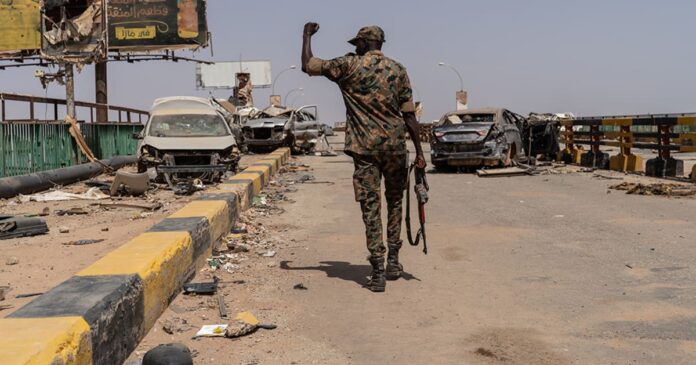
As Sudan marks exactly three years since it plunged into chaos and civil conflict on April 15, the United Nations has issued a powerful statement criticizing the international community’s response to the crisis. Speaking at a high-level donor conference in Berlin, UN Emergency Relief Coordinator Tom Fletcher warned that the international community is “failing the test” even as Sudan remains the country with the world’s largest humanitarian hunger and displacement crisis.
The power struggle that began in 2023 between the Sudanese Armed Forces (SAF) and the Rapid Support Forces (RSF) has turned into a massive catastrophe. Today, nearly 34 million people—approximately 65 percent of the country’s population—are in need of urgent humanitarian assistance.
The scale of displacement is unprecedented in modern history. About 14 million people have been displaced from their homes. While nine million remain internally displaced in temporary shelters or ruined public buildings, another 4.4 million have fled across borders into Chad, Egypt, and South Sudan.
According to the United Nations High Commissioner for Refugees (UNHCR), these host countries have now reached the “limit of their carrying capacity.” The influx of refugees is straining already weak local resources and posing a threat that could destabilize the entire Horn of Africa region.
Even those attempting to return to their homes find the situation dire, discovering broken water lines, destruction, and a lack of basic shelter and health services, according to Zoe Brennan of the International Organization for Migration (IOM).
The humanitarian crisis is being characterized by hunger and gender-based violence. The World Food Programme (WFP) has confirmed that areas in Darfur and Kordofan have been ravaged by famine for two years.
This situation has been further exacerbated by regional instability in the Middle East; the war involving Iran has disrupted Red Sea trade routes, causing the price of fuel and fertilizer to increase by more than 24 percent.
Most heartbreaking of all is the report from UN Women, which has labeled the conflict a “war on women.” The organization estimates that 12.7 million people, mostly women and girls, need support for gender-related violence—a fourfold increase since the start of the war.
United Nations officials state that sexual violence is not an accidental byproduct of the war but is being used as a deliberate “blueprint” to terrorize the community.
The third anniversary of the war also shows a change in warfare methods. Children are becoming victims of new technological warfare. UNICEF reports that drone strikes are responsible for 80 percent of child deaths and injuries in the country. In the first three months of 2026 alone, 245 child injuries were recorded, showing a significant increase compared to the previous year.