
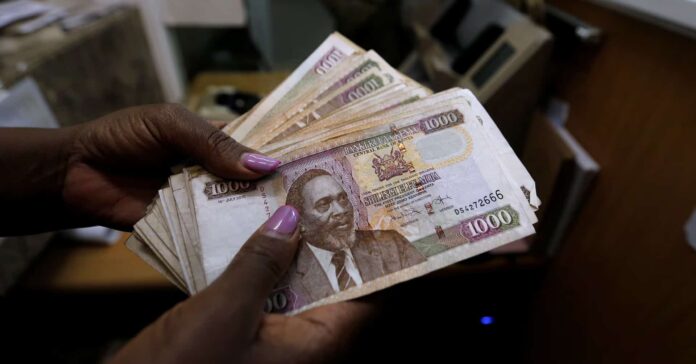
The Kenyan Shilling demonstrated remarkable resilience this week, posting marginal gains against the U.S. Dollar despite a darkening cloud of global economic uncertainty. While the currency’s stability offers a brief reprieve for importers and the manufacturing sector, the Central Bank of Kenya (CBK) has issued a sobering projection: inflation is expected to climb to 6.2% by July 2026, driven almost exclusively by a volatile international energy market.
According to the CBK’s latest weekly bulletin, the Shilling exchanged at 129.53 per U.S. Dollar on April 9, a slight appreciation from the 129.99 recorded at the start of the month. Policymakers attribute this “modest but vital” stability to diversified foreign exchange inflows and a robust cushion of reserves.
Currently, Kenya’s foreign exchange reserves stand at USD 13,316 million, representing 5.7 months of import cover—comfortably above the statutory four-month requirement. This fiscal buffer has allowed the Shilling to remain “broadly stable” even as other emerging market currencies falter under the weight of a strengthening Greenback.
However, the Central Bank’s Monetary Policy Committee (MPC) warned that this stability is being tested by external shocks that remain outside of domestic control.
The primary threat to Kenya’s price stability is the escalating conflict in the Middle East. The recent expansion of the U.S.-Israel-Iran war and the subsequent closure of the Strait of Hormuz have sent shockwaves through global oil supply chains.
The impact at the pump is already being felt; Murban crude prices surged to USD 90.33 per barrel this week, a sharp contrast to the USD 60.60 lows seen in late 2025. With Tuesday’s upcoming fuel price review by the Energy and Petroleum Regulatory Authority (EPRA), Kenyans are bracing for a significant hike in petrol and diesel costs.
While Kenya’s headline inflation remained relatively tame in March at 4.4%, the CBK’s internal modeling suggests a looming peak. Without the current oil price shock, the bank estimates inflation would have stayed anchored between 4.5% and 5.0%.
Instead, the “second-round effects” of expensive energy are expected to push the rate to 6.2% by mid-year. The MPC noted in its post-meeting brief that international oil prices have risen sharply and remained volatile due to supply disruptions and elevated uncertainties, emphasizing a critical need to monitor how these costs feed into broader price pressures across the economy.
For the average Kenyan, the Shilling’s strength against the dollar is a technical victory that may soon be overshadowed by the rising cost of living. If fuel prices continue to climb, the cost of transport and electricity will inevitably follow, trickling down to food prices despite the current favorable weather conditions cited by the CBK. As the government moves to balance its inflation target band, all eyes remain on the Middle East. For now, the Shilling is holding its ground, but the true test of Kenya’s economic endurance will arrive with the July heat.