
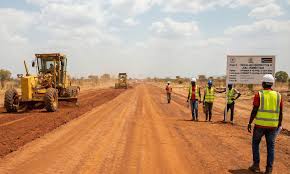
The South Sudan Council of Ministers held extensive discussions last Friday regarding a new road construction agreement tied to the country’s natural resources. This move indicates that the government is refocusing on the controversial “natural resources for infrastructure” swap model.
Presided over by President Salva Kiir Mayardit, the meeting focused on a proposal for a series of major road projects to be executed by an unnamed company.
This step comes just a month after the administration officially announced a grand $2 billion “Gold-for-Roads” initiative, suggesting the government is accelerating its strategy of using direct resource exchange to bypass chronic cash financing challenges.
South Sudan remains one of the least connected countries in the world. During the annual rainy season, vast areas of the country become inaccessible, hindering trade and isolating rural communities.
While the cabinet described these new discussions as a preliminary step toward creating national integration, the lack of transparency regarding the identity of the contracting company and the specific natural resources to be exchanged has raised concerns among economic observers.
An official statement from the President’s office noted that ministers “exchanged views” on the matter—a phrasing that suggests a lack of full consensus within the cabinet.
However, some officials view this alternative as the only viable path for large-scale construction, given the country’s limited cash supply and the difficulty of accessing international credit markets
The new agreement is haunted by memories of the previous “Oil-for-Roads” initiative. Although that program aimed to build thousands of kilometers of roads, it was criticized following reports of high inflation, opaque contracts, and construction delays.
“The government is mortgaging the country’s mineral future,” said a regional political analyst. “Without a clear valuation framework or a public bidding process, these deals risk repeating past mistakes where the country’s wealth is exported, but the promised asphalt never arrives.”
The current proposal notably lacks a valuation framework and payment terms, raising questions about how many tons of minerals or barrels of oil will be required for the new construction.
Friday’s meeting adjourned without a final decision. The session was cut short to allow cabinet members to attend the funeral service for Nicholas Haysom, the late Special Representative of the UN Secretary-General in South Sudan.