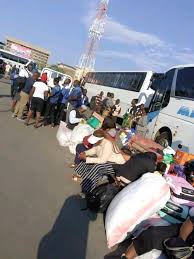
The strike at the Arqin crossing on the Sudan-Egypt border was temporarily lifted on Friday, allowing the movement of people to return to normal.
The national public transport bus association ended the strike after hundreds of Sudanese returnees were stranded at the border and subjected to severe hardship due to a newly imposed high tax increase.
The strike, which had closed this vital border crossing, was sparked by a protest against disproportionate tax hikes imposed by the government on passenger vehicles.
According to owners, following the country’s new budget, the tax per bus skyrocketed from 200,000 Sudanese pounds to a staggering 1,350,000 pounds. Although it was later reduced to 850,000 pounds, bus owners argue the increase remains “unjustified” and unbearable.
Gariballah al-Badri Taha, head of the national public transport bus association, stated that the decision to temporarily suspend the strike was made to alleviate the pressure on families returning home through various voluntary repatriation programs.
Sudan Tribune, citing its sources, quoted him saying, “We decided to resolve the issue temporarily as a precondition for a critical meeting we will hold this coming Sunday with the Director General of the Tax Division.
The crossing currently handles between 1,200 and 1,800 returnees per day. For those stranded due to the dispute, the resumption of travel is a huge relief. Tax authorities had previously mandated an additional 34,000 pounds on top of the ticket price for returnees traveling to Khartoum, with similar surcharges for those heading to Atbara and Dongola.
The tax dispute, coupled with soaring operating costs, has further aggravated the situation. Ibrahim Mustafa, Secretary-General of the association, noted that fuel prices have doubled, rising from 2,600 pounds to 5,018 pounds per liter. Mustafa explained, “The recent 30 percent increase in ticket prices only accounted for the rise in fuel costs. This new tax hike, however, completely halted bus operations and related services.”
Yasir Mohammed Osman, Director of Border Crossings, clarified that the controversial fees originated from the Wadi Halfa tax office rather than the crossing’s direct administration.