Egypt has officially pledged to provide financial support and mobilize funding sources for water-related infrastructure projects in Uganda. This announcement, made during the high-level “2+2” ministerial consultations held in Cairo, marks the beginning of a development-based diplomacy within the Nile Basin.
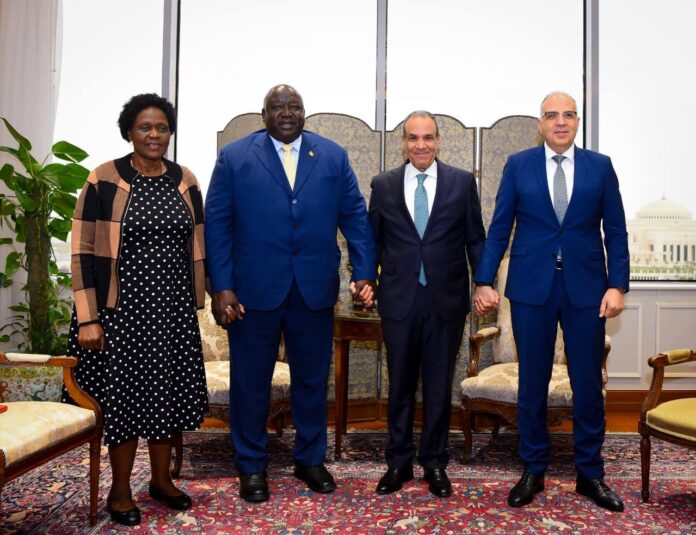
The consultations were attended by Egypt’s Foreign Minister Badr Abdelatty and Minister of Water Resources and Irrigation Hani Sewilam, alongside Uganda’s Minister of State for International Affairs Okello Henry Oryem and Minister of State for Water Beatrice Atim Anywar. The discussions were conducted under the direct guidance of President Abdel Fattah El-Sisi and President Yoweri Museveni, demonstrating the strategic priority both nations place on the Nile River as a shared “lifeline.”
A central element of the agreement is a joint communique expressing Egypt’s commitment to using its own financing mechanisms to support Uganda’s water infrastructure. While the specific locations for these projects are still being finalized, the focus is expected to be on integrated water resource management, the drilling of groundwater wells, and flood protection systems.
Most importantly, the joint statement emphasized that these projects will adhere to the principle of “avoiding significant harm,” which is a technical and legal cornerstone of international water law. By adopting a “development-first” approach, Egypt aims to create a cooperative atmosphere that balances Uganda’s upstream needs with Cairo’s downstream water security concerns. As one official noted during the talks, “This is about moving from a framework of competition to a framework of mutual prosperity.”
While water was the primary focus of the discussions, the “2+2” meeting quickly expanded into a roadmap for broader economic integration. Following President Museveni’s visit to Egypt in August 2025, both sides discussed the immediate implementation of Memorandums of Understanding (MoUs) signed in various sectors.
These include enhancing food security through joint farming ventures and livestock management in agriculture; establishing pharmaceutical hubs in Uganda by leveraging Egypt’s WHO-recognized drug manufacturing expertise; and exploring cooperation in the petrochemical and mineral extraction industries.
Additionally, both nations agreed to strengthen intelligence sharing and diplomatic coordination to ensure regional stability through counter-terrorism efforts.
The talks also addressed the complex security situations in the Horn of Africa, the Red Sea, and the Great Lakes region. Both countries reaffirmed their commitment to the sovereignty and territorial integrity of African states, in line with the African Union’s Agenda 2063. This bilateral effort aligns with Egypt’s previously announced $500 billion “Team Africa” initiative, which aims to bridge the continent’s infrastructure gap. By becoming a major financial supporter for its neighbors, Egypt is consolidating its leadership role in sustainable continental development.