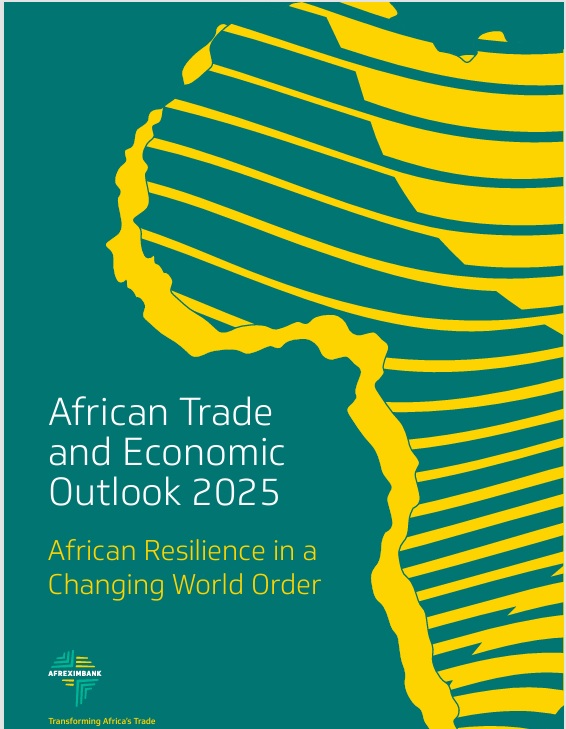
The Horn of Africa is emerging as one of the continent’s more resilient economic corridors, with Ethiopia standing out as a key growth engine in a region still exposed to inflation, debt pressures, climate shocks and fragile trade routes, according to Afreximbank’s African Trade and Economic Outlook 2025.
The report says Eastern Africa was Africa’s best-performing region in 2024, growing by 4.4 per cent, and identifies Ethiopia as one of the strongest contributors with growth of 6.6 per cent. That performance, it says, places the Horn of Africa in a relatively stronger position than many other parts of the continent, even as structural vulnerabilities remain.
For the Horn, the outlook is shaped by both opportunity and exposure. The region sits at the crossroads of Red Sea trade, global shipping routes and inland logistics corridors linking Ethiopia, Djibouti, Somalia, Eritrea and South Sudan to wider markets. That makes trade performance highly sensitive to external shocks, including shipping disruptions, commodity volatility and geopolitical tension.
Afreximbank projects Africa’s overall GDP growth at 4.0 per cent in 2025, rising to 4.2 per cent by 2027, and says the continent’s trade could reach about US$1.5 trillion in 2025. It notes that intra-African trade increased by 7.7 per cent in 2024, underscoring the importance of regional integration and stronger trade corridors for economies in the Horn.
For Ethiopia, the report points to the need to convert growth into broader regional connectivity. As the Horn’s largest economy, Ethiopia’s performance has implications for neighboring markets that rely on its demand, transit traffic and cross-border commerce. The outlook also highlights the importance of logistics, infrastructure investment and value-added production if the region is to reduce dependence on imports and vulnerable commodity exports.
The publication warns, however, that inflation, fiscal deficits and debt remain pressing concerns across Africa, including in Eastern Africa. It adds that external pressures such as weak global demand, climate-related disruptions and rising borrowing costs could slow progress unless governments continue reforms and improve macroeconomic management.
Climate risk is a particularly important issue for the Horn of Africa, where droughts, floods and food insecurity continue to affect livelihoods and trade flows. The report argues that resilience will depend not only on growth rates, but also on investment in agriculture, transport networks, human capital and regional trade systems that can withstand repeated shocks.
Still, Afreximbank’s broader message is cautiously optimistic. It says Africa remains resilient despite global uncertainty, and that Eastern Africa’s momentum shows how regional economies can outperform when supported by domestic demand, services growth and continued reform. For the Horn of Africa, the challenge now is to turn that resilience into a more stable and integrated growth path.