Uganda and Russia have signed a roadmap setting out cooperation in the peaceful uses of nuclear energy, marking a significant step toward the development of a nuclear power plant in the East African nation.
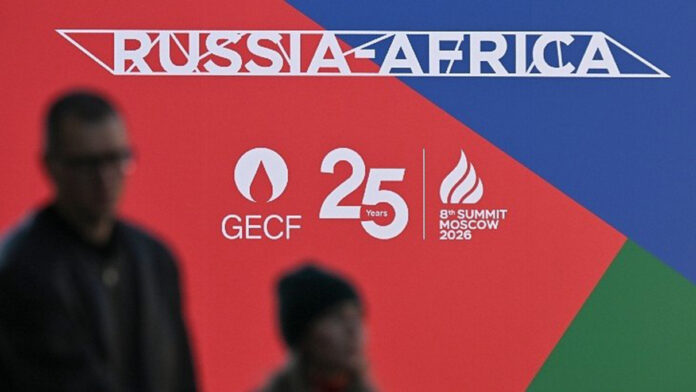
The document, signed on the sidelines of the Russia-Africa Summit in Moscow on Monday, 2 November 2026, allows for the creation of a dedicated working group to study the current state of Uganda’s national nuclear infrastructure. It also aims to “identify joint steps that will lead to the negotiation of a contract for engineering surveys to select a site for the planned Nakasongola Nuclear Power Plant in the country.”
Alexey Likhachev, Director General of Russia’s state nuclear corporation Rosatom, said: “Together with our Ugandan partners, we intend to assess the state of the national nuclear infrastructure and determine next steps to move forward with contract negotiations for engineering surveys to select the Nakasongola NPP site.
“It is important for us that this work be accompanied by training of national personnel and the development of the competencies necessary for Uganda to develop its own nuclear programme.”
The agreement was signed by Nikolai Spassky, Rosatom Deputy Director General and Director of International Activities, and Irene Batebe, Permanent Secretary of Uganda’s Ministry of Energy and Mineral Resources.
Uganda’s Atomic Energy Bill came into effect in 2008, to regulate the use of ionising radiation and provide a framework to develop nuclear power generation. The government then signed an agreement with the International Atomic Energy Agency to initiate moves in that direction. The Uganda Vision 2040 roadmap launched in April 2013 incorporates the development of significant nuclear capacity as part of the country’s future energy mix. Under the roadmap, Uganda plans to build six pressurised water reactors with a capacity of 8,400 MWe by 2040 in the Buyende region.
According to the Ugandan energy ministry, eight potential sites were identified in Buyende, Nakasongola, Kassanda, Kiruhura and Lamwo Districts. These were then ranked using ranking criteria to arrive at a candidate nuclear power plant site. The proposed site for the first nuclear power plant project is in Kasaato Village, Kidera Subcounty, Buyende District, with alternative sites in Nakasongola and Kiruhura Districts.
In August 2023, President Museveni announced that Russia and South Korea had been selected to build two nuclear power plants in Uganda with a combined capacity of 15 GWe with a goal of 24 GW of nuclear capacity by 2040.
According to World Nuclear Association’s 2026 World Nuclear Output Report, Uganda’s nuclear roadmap comprises four plants – Buyende (six reactors of 1,400 MWe), Nakasongola (6×1,200 MWe), Kiruhura (4×1,200 MWe) and Lamwo (4×1,000 MWe). Buyende would be first, and last year Korea Hydro & Nuclear Power was contracted by Uganda’s Ministry of Energy and Mineral Development to carry out an evaluation at a proposed site in the Buyende region.
The latest agreement with Rosatom signals Uganda’s continued pursuit of a diversified international partnership strategy as it works to establish its nuclear energy programme, balancing cooperation with both Russia and South Korea. The working group established under the roadmap is expected to lay the groundwork for more concrete contractual arrangements in the coming months, including the engineering surveys that would precede site selection for the Nakasongola plant.
The signing ceremony was held during the Russia-Africa Summit, underscoring Moscow’s broader push to deepen energy ties with African nations. For Uganda, the deal represents another milestone in a nuclear journey that stretches back more than a decade, as the country seeks to harness atomic power to meet its growing electricity demand and support industrial development under its Vision 2040 framework.