Ethiopia will conduct a full-scale health emergency simulation on November 2, one day before Addis Ababa hosts the seventh World Health Organization (WHO) Emergency Medical Teams (EMT) Global Meeting, which will bring together nearly 800 participants from 100 countries. The three-day meeting, scheduled for November 3–5 at the Ethiopian Skylight Hotel, marks a historic milestone as the first time the global gathering will be held in Africa, making Ethiopia the continent’s inaugural host country.
The simulation exercise, jointly organized by the Ethiopian Public Health Institute (EPHI), the Ministry of Health, and the WHO, will take place at Afro Center Hospital in Bole Bulbula, Addis Ababa. It is designed to rigorously assess the nation’s emergency response coordination and operational capacity, identify operational gaps, and strengthen preparedness ahead of potential health crises.
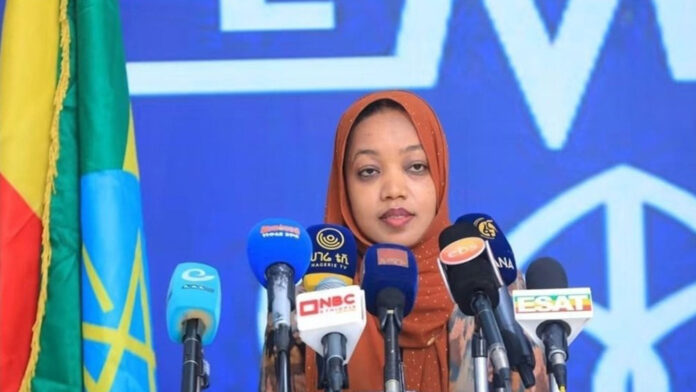
Speaking at a press briefing, Neima Zeynu, Director of the Public Health Preparedness Directorate at EPHI, emphasized that field exercises are critical to evaluating the readiness of response systems before disasters occur. “This exercise is a critical milestone to test our national coordination and operational performance systems on the ground, identify gaps in advance, and build a strong readiness capacity,” Neima said, noting that disease outbreaks and natural disasters continuously pressure health systems and threaten public safety. Appropriately trained, equipped, and coordinated emergency medical teams are vital to saving lives swiftly at disaster sites, Neima added.
The upcoming global summit follows closely on the heels of the Ethiopian National Emergency Medical Team receiving international WHO classification as a civilian emergency medical team, marking a major leap forward in the country’s institutional health security framework.
Professor Thierno Balde, Head of the Emergency Programme at the WHO Ethiopia Country Office, highlighted the profound significance of convening emergency medical teams across Africa for the first time. He emphasized that effective response demands a robust combination of medical expertise, logistical muscle, and operational efficiency across civilian and military structures.
The high-level gathering will draw policymakers, emergency response planners, practitioners, and researchers representing over 100 international emergency medical teams. Attendees will exchange best practices, review evolving standards of care, and reinforce collective capabilities to assist vulnerable populations facing health crises worldwide.
The WHO EMT initiative itself was born in the wake of the devastating 2010 Haiti earthquake—which exposed severe coordination flaws in international medical assistance—with the core mission of standardizing and optimizing emergency medical deployments. The sixth global meeting was previously held in Abu Dhabi, United Arab Emirates, in November 2024.
Ethiopia’s hosting of the global meeting and its pre-summit simulation underscore the country’s growing role in continental and global health security, positioning Addis Ababa as a hub for emergency medical coordination in Africa.