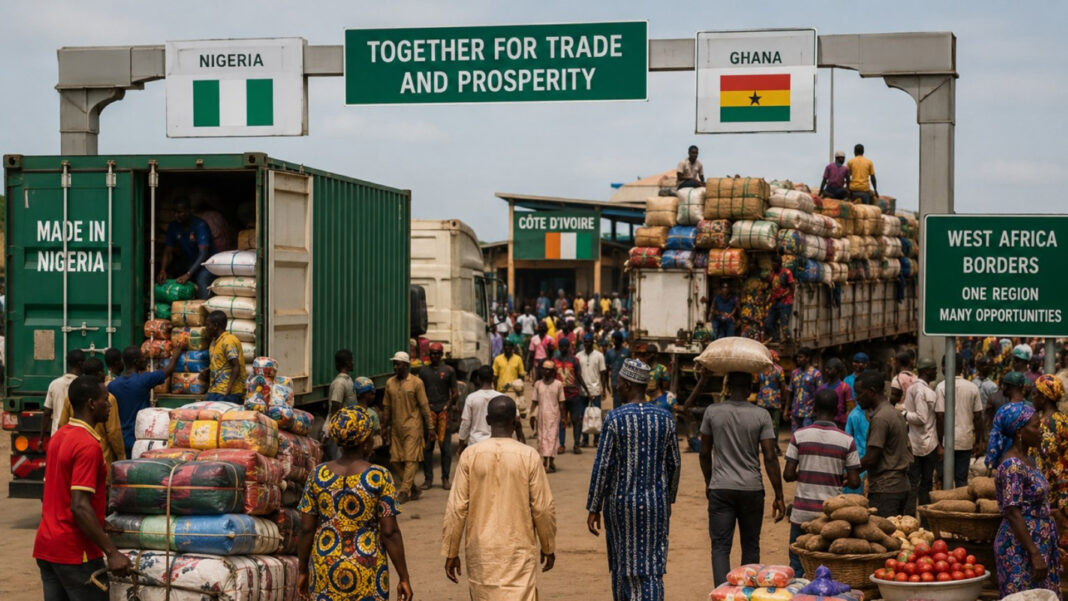
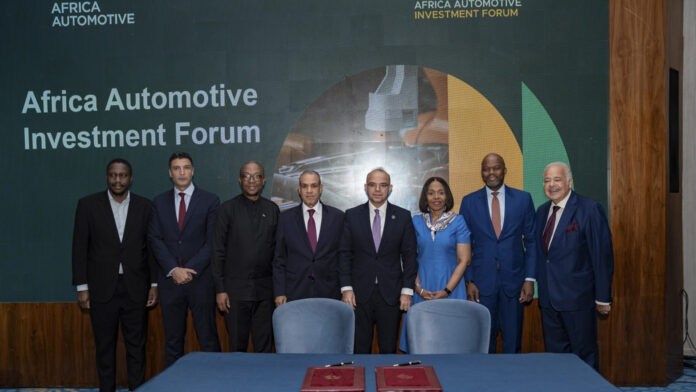
The African Continental Free Trade Area (AfCFTA) Secretariat and the African Association of Automotive Manufacturers (AAAM) have entered into a historic Memorandum of Understanding (MoU) to build a unified, pan-African automotive manufacturing sector.
The agreement was signed during the two-day Africa Automotive Investment Forum, held on the sidelines of the Alamein Africa Forum in El Alamein, Egypt. Hosted jointly by the African Export-Import Bank (Afreximbank), AAAM, the AfCFTA Secretariat, Egypt’s Ministry of Trade and Investment, and South Africa’s Department of Trade and Industry, the gathering brought together key African automotive policymakers, original equipment manufacturers (OEMs), and regional component suppliers.
The newly established partnership creates a comprehensive framework aimed at executing the continent’s overarching Strategy for the African Automotive Sector under the AfCFTA. The MoU spans several critical operational domains, including automotive Rules of Origin, streamlined customs and trade facilitation, standardized regulatory policies, local capacity building, and investment mobilization. Furthermore, the coalition focuses heavily on mineral beneficiation and the integration of emerging automotive technologies, such as new energy vehicles (NEVs).
H.E. Wamkele Mene, Secretary-General of the AfCFTA Secretariat, outlined three core imperatives for advancing the continental strategy: developing investment-ready projects in competitive locations, strengthening regional supplier networks to deepen localization, and establishing commercially viable regional production hubs.
“Investors are not looking at 54 separate African markets. They are looking at one integrated opportunity,” emphasized Tarek Mosaad, President of AAAM. He noted that with the Rules of Origin now agreed upon, the industry must turn ambition into action by building factories, expanding ecosystems, and creating jobs.
A primary highlight of the forum was Afreximbank’s commitment of US$1 billion to finance Africa’s automotive ecosystem. According to Mrs. Kanayo Awani, Executive Vice President of Intra-African Trade and Export Development at Afreximbank, supporting auto manufacturing serves as a catalyst for economic diversification and structural transformation. She emphasized that investing in component production using Africa’s vast natural reserves—including lithium, cobalt, nickel, manganese, copper, iron, and steel—will significantly reduce the continent’s reliance on vehicle imports while creating high-skilled technical and engineering jobs for Africa’s expanding youth population.
Illustrating the momentum of cross-border collaboration, the forum hosted the signing of a major commercial joint venture between South Africa’s Malben Engineering and Egypt’s El Araby Group. The joint enterprise merges El Araby’s industrial and engineering infrastructure with Malben’s 50-year expertise in forming metal automotive components to supply North, South, and broader African markets.
Additionally, the establishment of a joint Egypt-South Africa Business Council was unveiled to spearhead bilateral trade and investment projects in key areas such as automotive, mining, renewable energy, and transport infrastructure—utilizing major ports and the Suez Canal to bridge trade corridors between northern and southern Africa.
Delegates concluded the forum by moving from boardroom negotiations to physical industry evaluations. Tours conducted at production facilities in 6th of October City—including Nissan Motor Corporation, General Motors Egypt, Al Mansour Automotive, and components maker Mobica—demonstrated Egypt’s active capabilities in vehicle assembly, local supplier networks, and technology transfer.