The latest 2026 global passport power index has delivered a sobering assessment of international travel mobility, placing the Ethiopian passport among the lowest-ranked travel documents in the world. The report highlights deep-seated structural challenges, severe vetting protocols, and ongoing barriers that continue to isolate domestic citizens from seamless global mobility.
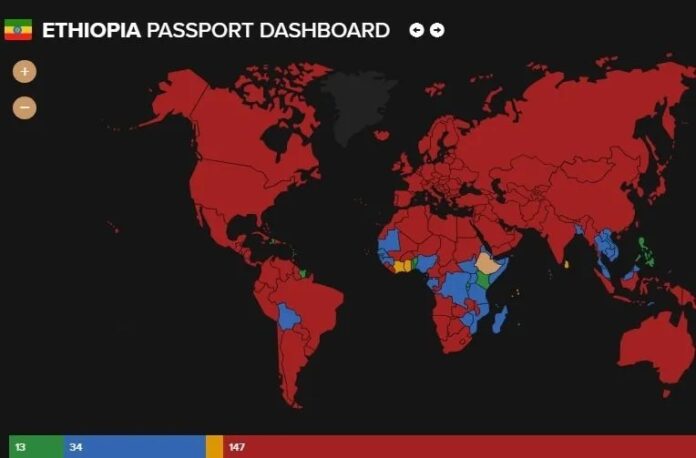
Placing in the 90th rank, the Ethiopian passport shares its tier with nations severely impacted by protracted conflicts and deep political crises, including Somalia, Yemen, Syria, and Afghanistan. According to the updated global index data, Ethiopian passport holders enjoy completely visa-free entry into a mere 17 countries worldwide. An additional 33 international destinations offer visa-on-arrival access, bringing the total number of accessible nations with minimal preliminary friction to 50.
A closer look at regional travel within Africa reveals a similarly restrictive landscape. Across the 54 member states of the African Union—an institution headquartered in Ethiopia’s capital—only five nations extend full visa-free travel privileges to Ethiopian citizens: Kenya, Benin, Gambia, Rwanda, and Togo. Globally, only 10 countries hold a lower passport power score than Ethiopia, underscoring a critical gap in continental and international integration.
Foreign governments formulate their visa policies based on a complex matrix of economic indicators, security stability, and irregular migration risks. For Ethiopia, a combination of these elements has resulted in stringent, advance embassy vetting protocols. Persistent domestic instability and broader regional security concerns across the Horn of Africa have led foreign states to adopt highly cautious stances.
Furthermore, analysts point to a persistent reciprocity deficit. Ethiopia’s historical diplomatic strategy has largely prioritized regional infrastructure development, continental policy frameworks, and diplomatic hosting over aggressive bilateral negotiations for mutual visa-waiver agreements.
The consequences of this weak passport standing extend far beyond tourism, casting a long shadow over national trade, foreign investment, and international business relations. Ethiopian entrepreneurs, corporate executives, and innovators face an uphill battle when trying to participate in the global economy. Common obstacles include prolonged bureaucratic processing delays, extensive financial and personal documentation requirements, and high visa rejection rates. These barriers frequently prevent local business leaders from attending international trade expos, securing partnerships, or engaging in face-to-face negotiations.
This creates a starkly asymmetric commercial environment. While foreign investors can enter Ethiopia with relative ease through e-Visas or visas on arrival, domestic firms and professionals struggle immensely to secure basic travel permissions to leave the country.
Beyond commerce, these travel bottlenecks produce secondary ripple effects across society. Academic collaborations are hindered, cultural exchange programs are restricted, and outward commercial expansion for home-grown enterprises is stifled. As Ethiopia navigates its economic future, experts emphasize that bridging the passport mobility gap will require concerted diplomatic efforts, enhanced security frameworks, and a renewed focus on reciprocal international partnerships.