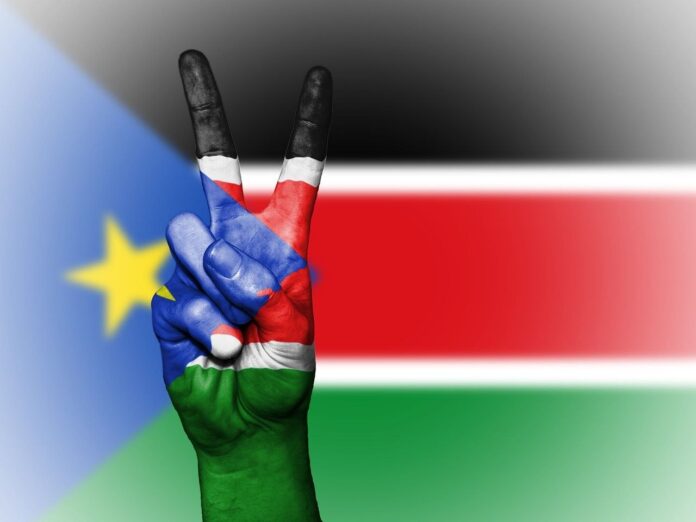
South Sudan has crossed a critical political milestone in its long-delayed democratic transition. President Salva Kiir officially assented to the Transitional Constitution of the Republic of South Sudan, 2011 (Amendment No. 13) Act, 2026, clearing the final domestic legal bottlenecks standing in the way of the country’s scheduled general elections.
The presidential assent comes immediately after the Transitional National Legislature overwhelmingly passed the amendment bill. At the core of the newly enacted legislation is a profound restructuring of the country’s electoral prerequisites: the amendment formally delinks the upcoming national polls from the finalization of a permanent constitution and the execution of a national population and housing census.
Under the terms of the 2018 revitalized peace agreement, both the permanent constitution-making process and a nationwide census were originally stipulated as mandatory preconditions before any democratic polls could take place. However, repeated logistical, financial, and political delays meant that completing these exhaustive tasks before the targeted timeline was virtually impossible.
By pushing through Amendment No. 13, the government has legally isolated the electoral roadmap from those time-consuming prerequisites. According to the revised framework of the Transitional Constitution, responsibility for executing a national population and housing census has now been officially deferred to the incoming elected government that will emerge from the ballot box. Furthermore, the preamble and text of the constitution have been adjusted to explicitly guarantee that the December general elections will proceed under the current transitional framework.
The newly signed legislation provides vital procedural muscle to the National Elections Commission (NEC). Under amended provisions such as Article 197A (9), the NEC is explicitly directed to organize and execute the general elections ahead of the transition’s conclusion. The law further mandates the commission to ensure absolute transparency, setting a strict framework that includes publishing the official voters’ register three months prior to polling day.
The fast-tracking of the bill through parliament and the executive branch signals an intensified push by Juba to prove its commitment to holding the vote. South Sudan has faced multiple postponements since gaining independence in 2011, with the previous major timeline adjustment moving the goalposts to December 2026.
While the presidential endorsement has been welcomed by ruling factions as an indispensable victory for state sovereignty and democracy, the path forward remains laden with immense challenges.
Civil society organizations, international partners, and opposition figures have repeatedly emphasized that amending text on paper is only half the battle. Substantial logistical obstacles—including securing adequate operational funding for the electoral commission, establishing robust security protocols across volatile regions, and guaranteeing an open civic and political space—still loom large.
Parliamentary debates leading up to the bill’s passage also highlighted underlying political friction. While legislators agreed unanimously on the necessity of removing election hurdles, they rejected several auxiliary proposals submitted by the cabinet that sought to alter the structural composition and size of the national legislature. Lawmakers successfully defended existing parliamentary quotas, arguing that tinkering with legislative seats was unnecessary for the immediate goal of holding elections.
With the constitutional framework now aligned for a December vote, focus shifts entirely to the operational readiness of the country’s electoral bodies. As Juba enters this unprecedented phase, the international community and South Sudanese citizens alike will be watching closely to see whether the newly cleared legal path translates into a credible, peaceful, and inclusive election.