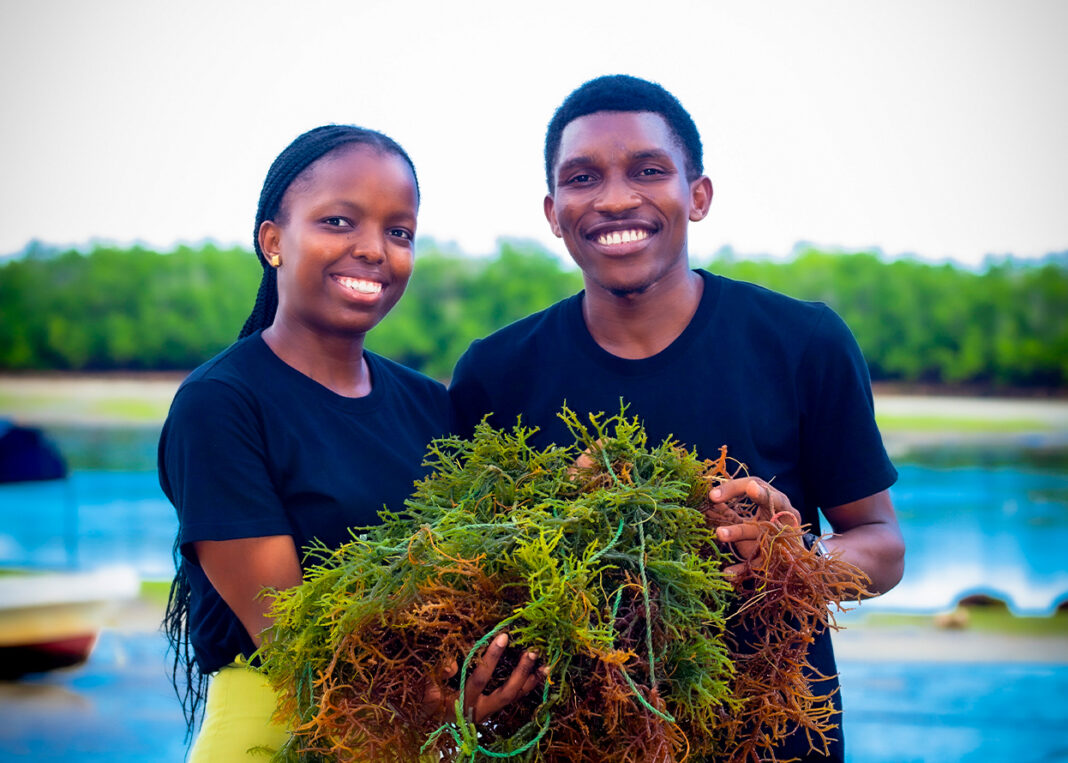
For years, Peterson Mwadau regarded the stalks and other plant residue left after his cotton harvest as little more than a disposal problem.
Mwadau grows cotton on 18 acres in Kilifi County on Kenya’s coast. Once the crop has been picked, a considerable amount of plant material remains in his fields. Now, instead of burning or discarding all of it, he sells some of the residue to local businesses.
“I plant cotton on 18 acres, so a lot of waste is produced after harvest,” Mwadau said. “Selling it to small local companies brings immediate extra income into my household.”
Collectors buy the residue and supply enterprises that convert agricultural biomass into charcoal briquettes. The briquettes are then sold to hotels, schools and other institutions for cooking.
Mwadau’s experience points to an emerging economic opportunity across Kenya’s cotton-growing counties. Cotton stalks, gin trash and factory offcuts – materials that were frequently burned, dumped or sent into municipal waste streams – are beginning to supply small community enterprises and established manufacturers.
These materials should not, however, be treated as a single form of “cotton waste”. Cotton stalks and other crop residue remain on farms after harvesting. Gin trash and short fibres are produced when cotton is cleaned and separated at ginneries. Yarn sweepings and fabric offcuts come from spinning, weaving and clothing factories.
Each material requires a different collection and processing system and produces different end products.
Turning stalks into fuel
In cotton-growing areas such as Kilifi, Kitui, Makueni and Lamu counties, much of the residue left after harvesting has traditionally been burned or abandoned.
“We usually set this waste ablaze or dump it. We see no economic value in it,” said John Katuve, a small-scale cotton farmer.
Burning crop residue can contribute to air pollution and greenhouse-gas emissions, while repeated burning may affect soil health. The environmental case for finding alternative uses for cotton waste is therefore significant.
“When a farmer burns cotton stalks to clear the field for the next planting season, they are literally burning potential revenue,” said Jeremiah Njuguna, a well known agronomist who specializes in value addition.
The Kenya Agricultural and Livestock Research Organisation, or KALRO, has been training farmers in agricultural value addition through the National Agricultural Value Chain Development Project.
According to Dr Patrick Ketiem, cotton stalks can be shredded, carbonised and compressed to produce briquettes.
“Farmers can choose either to sell them, expand their businesses or use them within their homesteads,” Ketiem said.
The KALRO training program educates farmers on value addition. They further train them on the stages of value addition from scratch to finish.
The briquettes can also be sold to hotels, restaurants and schools as an alternative to conventional wood charcoal.
Women-led self-help groups in Wote, Makueni County, are among the community enterprises experimenting with this model.
“We carbonise the raw biomass in kilns, using the cotton stalks and gin trash that we collect,” said Itetani Women group member Mwikali Katuku.
The carbonised material is mixed with organic binders and compressed into dense briquettes. Katuku said the briquettes burn for longer than wood charcoal and produce less smoke.
Mary Mutua, chairperson of the 28-member women’s cooperative in Makueni, said the business had reduced members’ dependence on income from rain-fed farming.
“Before we started collecting and carbonising cotton stalks, we depended entirely on rain-fed crop yields,” Mutua said. “Now waste collection gives us a year-round source of income.”
She said members use the money to pay school fees, obtain health insurance and contribute to savings groups. The cooperative has also introduced a bank account, collection schedules and quality-control standards as it moves from an informal association towards a community enterprise.
Recovering fibre from factories and ginneries
A separate value chain is developing around short cotton fibres, yarn sweepings and textile offcuts.
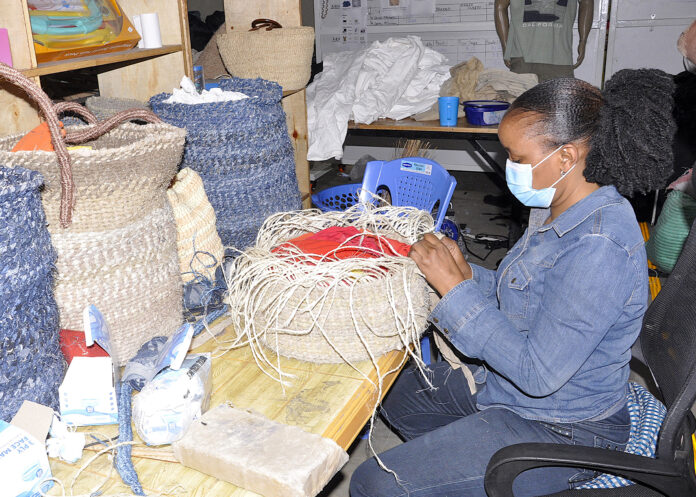
Manufacturers can clean, sort and card these materials before converting them into mattress and cushion filling, cleaning cloths, floor mops, rugs, blankets and, in some cases, regenerated yarn.
Milan Shah, managing director of Bobmil Ltd in Nairobi, said lower-grade cotton waste they buy and carded fibre could be used as filling for mattresses, cushions, vehicle seats and pillows.
Africa Collect, a Nairobi-based circular-economy enterprise, is also processing different types of discarded material into consumer products.
“We make high-quality products such as blankets, mops and kitchen-cleaning towels,” said Alex Musembi, its general manager and one of its founders.
In cities including Nairobi, Mombasa, Eldoret and Kisumu, textile offcuts and broken threads can be collected from cutting rooms and factories before being sorted and reprocessed.
Without organised collection, some of this material enters municipal waste streams or is dumped. David Ongare who is the Director of Compliance at the National Environmental Management Authority (NEMA) confirms.
“Well documented collection points that are well planned are vital in saving our wetlands. Compliance is a challenge”, he said on telephone.
A regional supply chain
Despite Kenya’s emerging waste-processing enterprises, local manufacturers still rely on imported cotton waste and yarn sweepings.
At the Namanga border post between Kenya and Tanzania, trucks transport baled materials into Kenya under East African Community trade arrangements. Some consignments have already been sorted or carded in Tanzania, while others enter as raw fibre waste for processing in Kenyan factories.
The material is transported to manufacturing centres such as Nairobi’s Industrial Area, Ruiru and Thika.
According to the Observatory of Economic Complexity trade data, Kenya imported between US$600,000 and US$1 million worth of cotton waste and related material in 2024, with Tanzania reportedly accounting for about 60% of the supply.
Tanzania’s supply has an advantage because the material can arrive in large, pregraded bales with relatively consistent fibre quality and pricing. Kenya’s domestic supply is more fragmented: small quantities are spread across farms, ginneries and workshops, making collection and transport expensive
This is according to different reports from Kenya National Cotton Textile and Apparel (CTA) and Kenya Institute for Public Policy Research and Analysis (KIPPRA).
The missing link is an aggregation system that can collect, sort and compress material close to where it is produced. Regional centres equipped with hydraulic balers could reduce transport costs and give manufacturers a more predictable domestic supply.
From scattered projects to an industry
Kenya’s Cabinet Secretary for Agriculture and Livestock Development Mutahi Kagwe has identified value addition as an alternative to exporting unprocessed agricultural commodities.
“Value addition is the best alternative for the country,” Kagwe said. “It is environmentally safe and also creates jobs and reliable income.”
He said that the government will work together with banks to ease the approval of loans
Kenya also offers a range of investment incentives for qualifying businesses. Some of these incentives are tax deductions, tax holidays, and VAT exemptions on green technology imports.
Commercial banks including Equity Bank, Co-operative Bank of Kenya, Absa and KCB provide agricultural and small-business financing, but the draft does not yet establish whether they have facilities designed specifically for cotton-waste enterprises.
“The door is wide open for anyone with a good idea,” Equity Group chief executive James Mwangi said. “We have been giving loans for agricultural value addition, including cotton.”
The opportunity is visible. Kenya has farmers willing to sell residue, community groups producing briquettes and companies finding new uses for discarded fibre. Now it needs to grow it coordinated system connecting these suppliers to reliable buyers.
For Mwadau, the emerging industry already means earning something from material that once had little perceived value. He hopes to expand his business one day and begin to be an exporter.