The pursuit of international food security through large-scale land acquisitions has left a trail of unfulfilled promises and severe local hardships, exemplified by the multi-billion-dollar Saudi Star agricultural project in Ethiopia.
Promoted as a marquee initiative under the King Abdullah Initiative for Saudi Agricultural Investment Abroad, Saudi Star Agricultural Development Plc secured a massive 14,020-hectare land portfolio across the Gambella and Benishangul-Gumuz regions. Backed by Saudi-Ethiopian billionaire Sheikh Mohammed Al-Amoudi, the venture was launched during the late-2000s global food price panic, when Gulf nations scrambled to establish secure agricultural breadbaskets overseas. To attract this capital, the Ethiopian federal government established a centralized land bank, making vast tracts of indigenous land available to foreign corporations under the banner of rapid national development.
Corporate blueprints for Saudi Star promised an injection of up to $3 billion in foreign direct investment, thousands of secure jobs, and an annual harvest of 1 million tons of export-grade rice. More than 15 years later, however, an on-the-ground investigation reveals a stark contrast: the majority of the concession fields remain completely idle, millions of dollars in advanced machinery rust in the open air, and local indigenous communities face acute food insecurity alongside the loss of their ancestral territories.
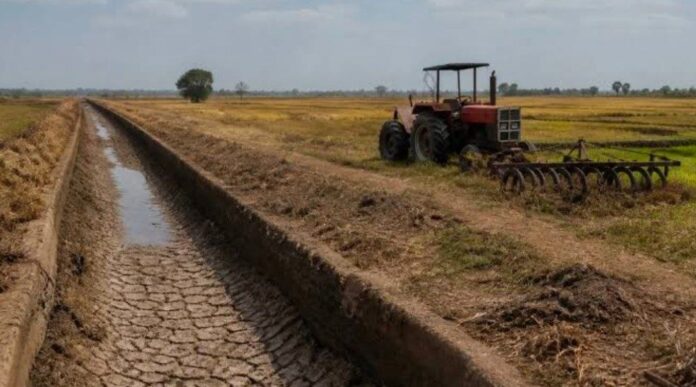
Operational failures heavily contributed to the project’s stagnation. The company’s core strategy relied on expanding a Soviet-era canal network to divert 22 cubic meters of water per second from the Abobo reservoir dam along the Alwero River. Although Saudi Star cleared land and built roughly 35 kilometers of secondary channels, engineering flaws and poor maintenance left much of the multi-million-dollar irrigation network dry and functionally useless.
Leadership at MIDROC Investment Group, which owns Saudi Star, later conceded that fundamental errors plagued their initial feasibility studies. Executives admitted that baseline environmental models failed to account for Gambella’s complex ecological realities. Unforeseen challenges quickly mounted: moisture shortages crippled crops during the critical “milking stage,” erratic and unseasonal rains ruined harvesting schedules, and massive flocks of migrating birds decimated yields during the dry season.
The human cost of these miscalculations has fallen heavily on indigenous groups like the Anuak and Nuer agrarian populations. Systematically relocated from their ancestral homelands, local communities lost access to traditional forests, fishing grounds, and the Alwero River. Promised infrastructure—such as paved roads, modern schools, and localized wealth—largely failed to materialize.
For the few locals who managed to find work on the farm, employment conditions proved deeply exploitative. Investigations indicated a high rate of occupational injuries among field laborers, with a significant percentage working entirely without personal protective equipment (PPE). Over 92 percent of local staff were hired on short-term, casual day-labor contracts offering no long-term security or health coverage, often earning meager daily wages that barely covered basic family meals. High-paying technical and managerial positions, meanwhile, were predominantly reserved for foreign specialists brought in from abroad.
Faced with mounting environmental setbacks, unfulfilled economic contributions, and the risk of localized unrest, regional authorities have begun pushing back against the stagnation. Investment and business reform officials have openly criticized the project’s glacial pace, emphasizing that letting prime agricultural land sit idle is no longer socially or politically acceptable. As regulatory bodies demand immediate productivity and periodic environmental reviews, the future of Saudi Star’s vast concession underscores the profound risks of uncritical land leasing and mismanaged mega-investments in fragile frontier regions.