Somalia’s fragile security landscape faces a monumental test as Uganda evaluates a potential August 1, 2027, deadline to withdraw its troops from the country. This looming exit, coupled with severe cuts to international financial support, threatens to unravel years of painstaking progress in stabilizing the Horn of Africa nation just as local forces attempt to assume full ownership of their national defense.
The financial crisis gripping the peacekeeping framework stems directly from shifts in foreign assistance. Washington has recently criticized Somalia’s pace in absorbing full security responsibilities following decades of international backing, prompting a sharp tightening of the purse strings. Because missions like the African Union Support and Stabilization Mission in Somalia (AUSSOM)—which replaced the African Union Transition Mission in Somalia (ATMIS) in January 2025—rely heavily on American funding for critical logistical support, the financial squeeze has sent shockwaves through diplomatic circles. The Institute for Security Studies has warned that the U.S. decision could trigger severe operational consequences, leaving peacekeepers stranded without the necessary resources to sustain combat and supply lines against active insurgent threats.
This institutional anxiety unfolds against a backdrop of Somalia’s firm push for self-reliance. President Hassan Sheikh Mohamud has consistently advocated for foreign troops to eventually depart, maintaining that the nation cannot indefinitely outsource its sovereignty to international forces. Highlighting this vision during recent discourse, President Mohamud remarked, “We should give the foreign troops a beautiful bouquet and send them home.”
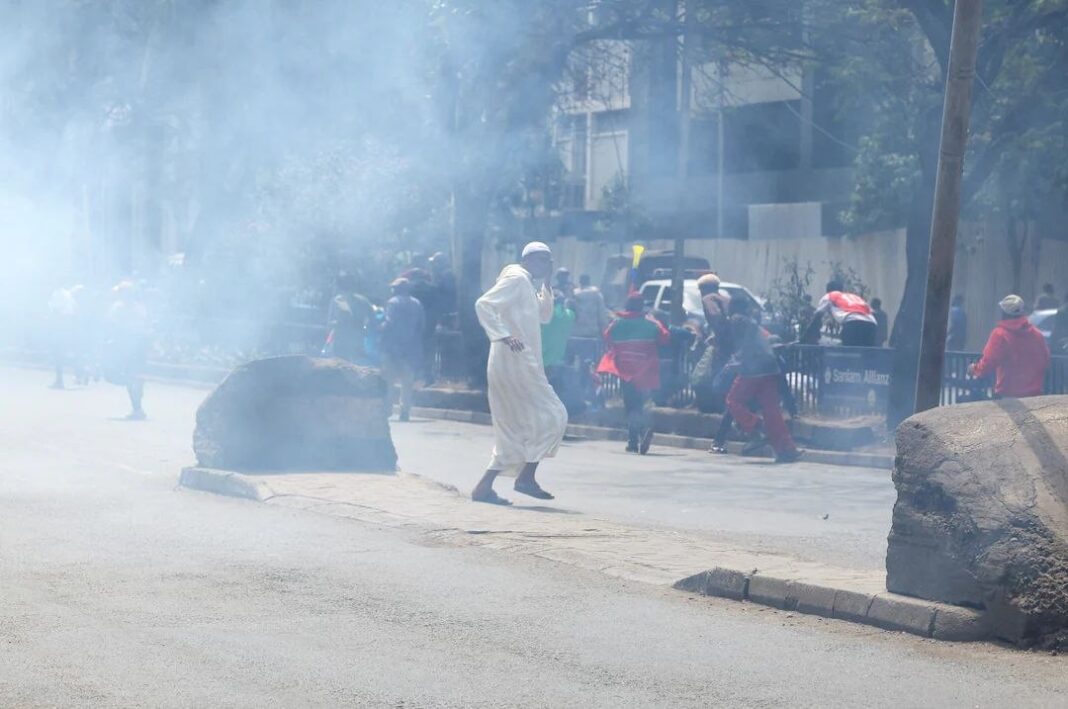
Yet, translating this ambition into reality remains an uphill battle. Al-Shabaab continues to maintain a potent operational footprint, launching persistent attacks across parts of southern and central Somalia. The transition relies on a delicate balance between drawing down international protection and building up domestic security capabilities, a process complicated immensely by the sudden withdrawal of vital financial lifelines.
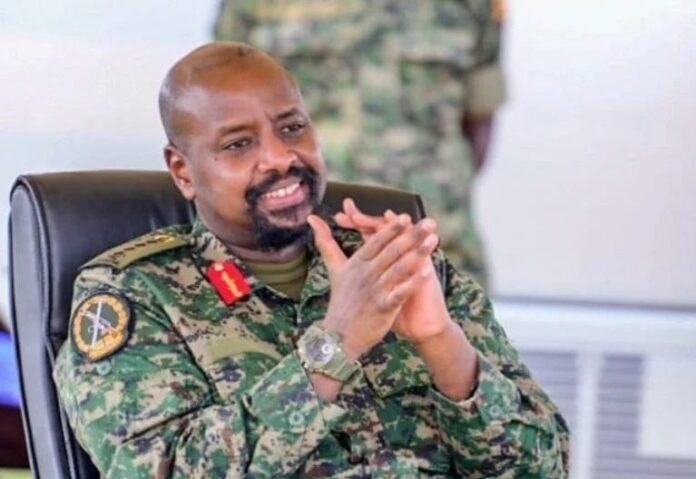
Adding another layer of regional volatility to Uganda’s security calculus are the increasingly combative public statements and political maneuvers of Uganda’s Chief of Defence Forces, General Muhoozi Kainerugaba. In a series of provocative social media posts, Kainerugaba made extreme claims regarding his military record, boasting of killing over 100,000 soldiers in battle and expressing a desire for further combat engagements, notably targeting the Rapid Support Forces (RSF) in Sudan. Invoking classical mythology, he warned potential adversaries that Uganda would respond with ancient fury, quoting the warrior Achilles to caution that threats would be met with swift and brutal retaliation.
These battlefield claims have not been independently verified, but they underscore Kainerugaba’s mounting prominence and volatility within the region. Beyond his military posturing, Kainerugaba has firmly stepped into the political arena, announcing his intention to seek the Ugandan presidency in the 2031 elections. While the People Daily reported his declaration, incumbent President Yoweri Museveni has yet to clarify whether he intends to contest for another term, leaving Uganda’s long-term domestic political succession unclear.
For Kampala, a complete military exit from Somalia would mark the definitive conclusion of one of its longest-running and most significant overseas deployments. For AUSSOM, losing one of its principal troop-contributing countries during an acute financial crisis threatens to leave a vacuum that neither regional bodies nor local forces are currently equipped to fill. As the shadow of August 2027 draws closer, the convergence of shifting foreign aid, stubborn insurgency, and internal political posturing leaves the future of Somali stability hanging in a precarious balance.