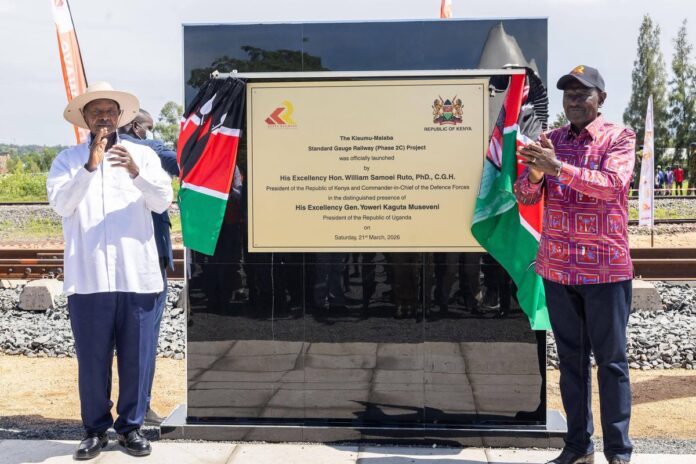
In a significant move expected to transform trade in East Africa, Kenyan President William Ruto and Ugandan President Yoweri Museveni met Saturday near their shared border to officially resume the construction of the Standard Gauge Railway (SGR).
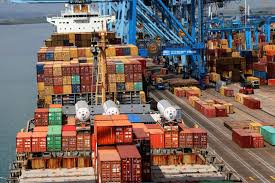
Although this multi-billion dollar project had been stalled for years due to funding shortages, it has now been restarted with the goal of connecting Kenya’s coastal ports to neighboring landlocked countries and strengthening regional integration.
This historic meeting in Kisumu serves as a strategic solution for the railway line that currently terminates in Naivasha; it aims to extend the tracks to the Ugandan border town of Malaba, creating an efficient transport corridor stretching from the Port of Mombasa to the heart of the continent.
This new project, costing an estimated $3.9 billion, follows a different financial strategy than the previous phase.
Since the first phase was constructed using heavy Chinese loans—leaving Kenya with a significant debt burden where it now spends nearly one billion dollars annually just to service that debt—the government has stated it is shifting its approach. Instead of accumulating more debt through direct loans from Beijing, Kenya is reportedly borrowing against future cargo tax revenues to fund the construction.
While direct lending from Chinese banks has decreased, Kenya maintains its professional partnership with Chinese engineering firms that possess high-level technical expertise in railway construction.
During the recent groundbreaking of the next phase in Narok County, President William Ruto emphasized that the project goes beyond basic infrastructure, as it will accelerate regional economic growth and position Kenya as a primary logistics hub in East Africa.
The construction is believed to reduce road congestion and lower the cost of doing business while creating extensive job opportunities for citizens.
According to the plan, the railway line is expected to reach Kisumu by June 2027 and will eventually extend to Malaba to connect with the Ugandan rail system.
For Uganda, Rwanda, South Sudan, and the Democratic Republic of Congo, this railway extension serves as a vital trade lifeline to the global market. By replacing the current reliance on trucks with a high-speed railway, it is possible to significantly reduce both freight costs and transit time.
Furthermore, it will enhance intra-African trade by creating favorable conditions for exporting mineral and agricultural products. Despite previous concerns regarding the high cost and debt associated with the project, the meeting between the two leaders reaffirmed that Kenya and Uganda will work together on this railway as a cornerstone for regional economic integration.