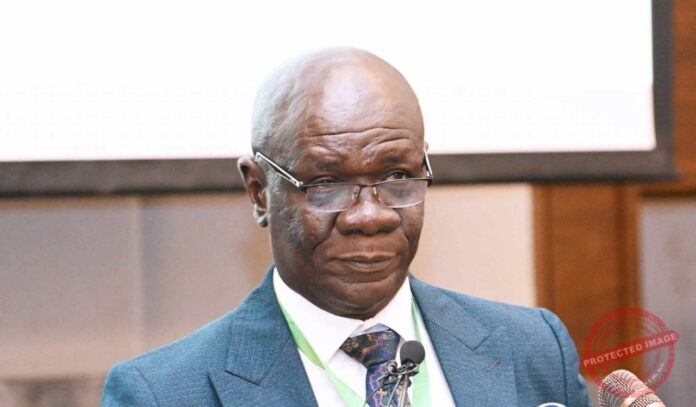
South Sudan’s Minister of Transport, Rizik Zacharia Hassan, announced an ambitious roadmap to transition the nation from a landlocked country into a thriving regional logistics hub.
Addressing delegates at the 7th Global Logistics Convention in Juba, Hassan revealed that the government has officially tabled a comprehensive policy framework alongside five critical transport bills. The initiative aims to overhaul national trade infrastructure, tackle chronic regulatory gaps, and seamlessly integrate South Sudan into wider East African trade corridors.
”For South Sudan, transport is not merely a sector of government; transport is the bloodstream of our economy,” Hassan told the gathering of roughly 1,000 regional stakeholders, trade leaders, and logistics experts.
While acknowledging past public criticisms regarding institutional shortcomings in the transport sector, Hassan emphasized that concrete legislative foundations are finally taking shape. Currently, the civil aviation sector is governed by just one operational law, while five major bills covering railways, river transport, road safety, airport administration, and accident investigation await formal enactment by the Transitional National Legislative Assembly.
The newly proposed framework spans 27 chapters and ten vital areas, ranging from environmental protection and gender inclusion to advanced financing mechanisms. Crucially, the policy introduces modern technological solutions to the nation’s transit challenges, opening the door for hybrid and electric vehicles, autonomous transit units, and innovative cable transport systems.
The push comes at a critical time for South Sudanese trade. The country’s primary economic lifelines—such as the deteriorating Juba-Nimule highway linking South Sudan to Kenya and Uganda—have long suffered from neglect, driving up the cost of essential goods and stalling the movement of freight.
To bypass these domestic bottlenecks, South Sudan is actively expanding its international connectivity. The government is formalizing multi-nation agreements under the Lamu Port-South Sudan-Ethiopia Transport (LAPSSET) corridor and the Northern Corridor network. Furthermore, a strategic port diversification deal with Djibouti provides Juba with vital geopolitical flexibility, reducing over-reliance on traditional routes through Kenya and Sudan.
Closing his address, Minister Hassan issued a direct challenge to the private sector, urging investors to fund modern logistics parks, upgrade freight fleets, and introduce advanced digital warehousing systems.
”Trade agreements open markets; transport sectors connect them,” Hassan stated, stressing that the convention must move beyond rhetoric to foster concrete partnerships, infrastructure investments, and technology transfers. As South Sudan pursues these bold reforms, substantial capital investment and rapid regulatory implementation will prove essential to turning this ambitious vision into an economic reality.