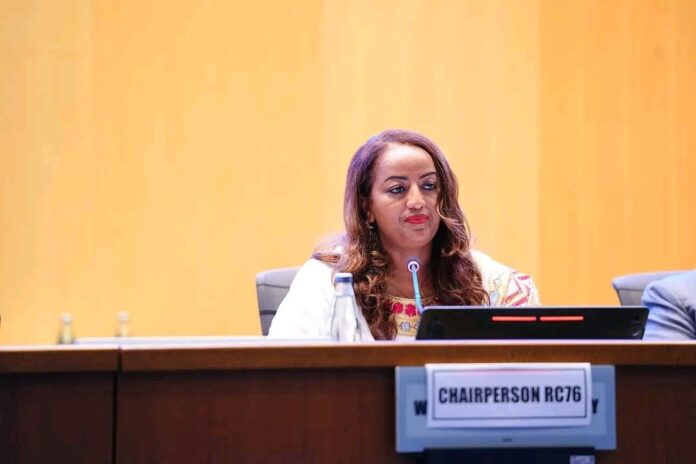
Ethiopia has officially taken over the leadership of the World Health Organization (WHO) Regional Committee for Africa. Dr. Mekdes Daba, Minister of Health of the Federal Democratic Republic of Ethiopia, has been elected and installed as the Chairperson of the prestigious continental body.
The high-profile transition took place during the opening proceedings of the landmark 76th Session of the WHO Regional Committee for Africa (RC76), which convened in Ethiopia’s capital, Addis Ababa. Dr. Mekdes officially assumed the chairpersonship from her predecessor, Colonel Assa Badiallo Touré, Minister of Health and Social Development of Mali.
To ensure robust governance and balanced representation throughout the week-long deliberations, the assembly also formalized its broader executive bureau. During the opening day’s session, two vice-chairpersons were successfully elected and approved to support the newly minted chairperson.
Dr. Garba Hakimi, the Public Health, Population, and Social Affairs Minister of Niger, along with Dr. Douglas Mombeshora, Zimbabwe’s Minister of Health and Child Care, were officially endorsed as the vice-chairpersons of the 76th regional session. Together, the executive leadership team is tasked with guiding the high-level delegates through a dense agenda addressing the most critical health bottlenecks facing the African continent.
The five-day regional committee meeting serves as the primary governing platform for setting health priorities across Africa’s 47 member states. Central to the discussions in Addis Ababa is the imperative pursuit of long-term financial resilience for the health sector.
A comprehensive strategic document targeting sustainable health financing across Africa by the year 2035 was tabled for rigorous deliberation. Delegates noted that achieving health security requires innovative domestic resource mobilization and a structural shift away from heavy reliance on external aid.
Parallel to financing, the committee heavily emphasized the chronic constraints plaguing the continent’s medical workforce. Discussions centered on the comprehensive Africa Health Workforce Agenda, which explicitly highlights the urgency of scaling up targeted professional training, retention strategies, and capacity-building initiatives to bridge critical human resource deficits by 2035.
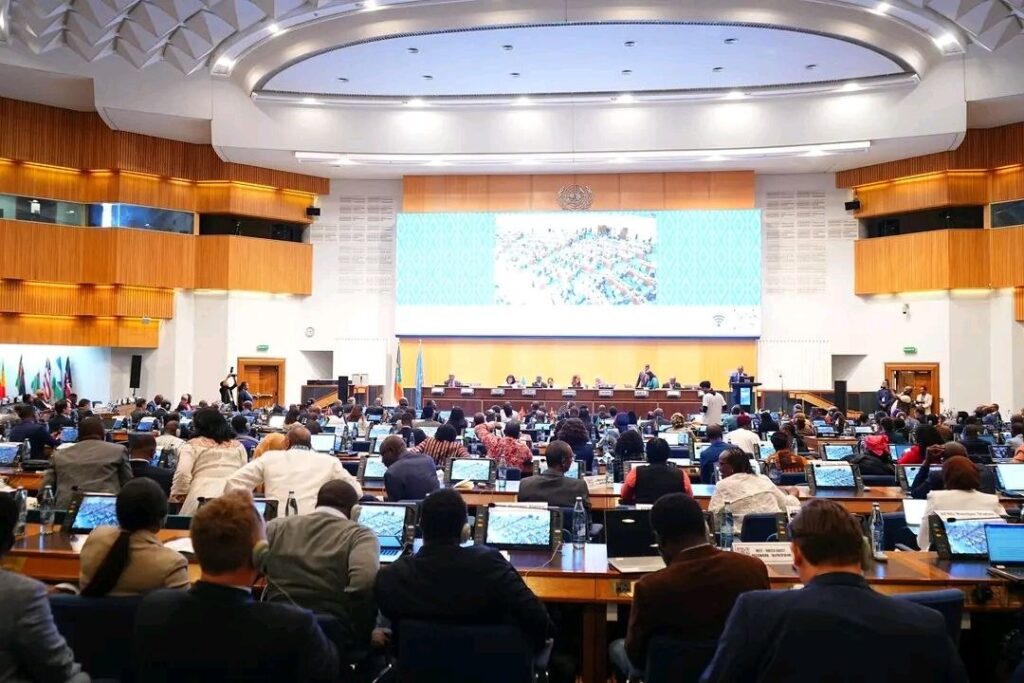
Furthermore , the official progress report of the WHO Regional Director for Africa was presented to the floor, triggering extensive dialogue regarding regional disease surveillance, outbreak readiness, and the ongoing implementation of Universal Health Coverage (UHC) frameworks.
Dr. Mekdes’s ascension to the regional helm underscores Ethiopia’s proactive stance in continental health diplomacy. Observers note that her leadership comes at a critical juncture when African nations are increasingly asserting health sovereignty through localized vaccine manufacturing, digital health transformation, and cross-border solidarity.
As the RC76 sessions progress under her gavel, expectations remain high that the committee will move beyond high-level declarations to forge actionable, inclusive solutions.