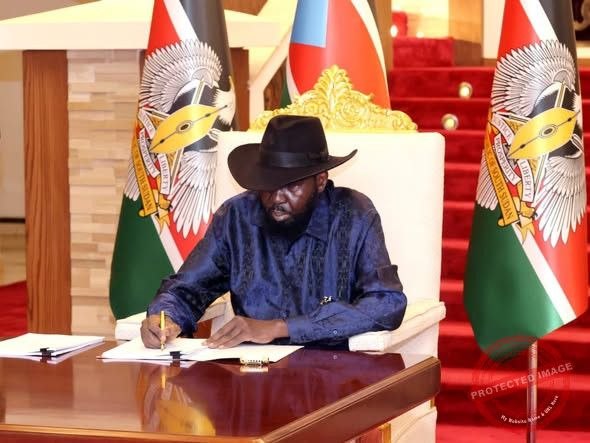
South Sudanese President Salva Kiir Mayardit has initiated a massive overhaul of the Upper Nile State government. Broadcast through a series of official Republican decrees, the sweeping changes target virtually every level of local and regional governance, displacing numerous incumbents across the executive office, regional cabinet, county structures, independent panels, and the State Legislative Assembly.
This widespread leadership transition underlines a strategic effort by the national administration to recalibrate political stability and improve administrative efficiency within the strategically vital, oil-producing region.
The presidential mandates enacted immediate dismissals of top regional officials. The sweeping removal list included two senior state advisers, nine cabinet ministers, six county commissioners, and three representatives from independent state commissions.
Concurrently, the regional legislature underwent a profound structural reset. President Kiir officially nullified the appointment of the pre-designated Speaker of the Upper Nile State Legislative Assembly, alongside six incumbent assembly members. To restore operational continuity, the President appointed Rt. Hon. Philip Akol Amon as the new legislative Speaker, accompanied by six newly installed members to fill the vacant assembly seats.
To fill the leadership void, President Kiir introduced a refreshed team tasked with managing regional security, fiscal health, and public service delivery.
Advisory Appointments: Joseph Aban Odong takes over as the State Adviser for Peace and Security, while Dok Guot Ngor assumes the role of State Adviser for Economic Affairs. Cabinet Expansion: A newly formulated ministerial roster was brought in to helm core sectors, including Finance and Planning, Local Government, Health, Information, Agriculture, Trade and Commerce, General Education, Labour and Public Services, and Culture, Youth and Sports.
County Administrations: Fresh leadership was designated for six pivotal counties—Nasir, Renk, Melut, Maiwut, Longochuk, and Maban. These commissioners are expected to spearhead grassroots security, local infrastructure development, and community peace-building initiatives.
The sweeping government shakeup was executed under established legal provisions, specifically invoking Article 106A(2)(a) of the Transitional Constitution of the Republic of South Sudan, 2011 (as amended), alongside Section 38(1) of the Interpretation of Laws and General Provisions Act, 2006.
Regional observers note that such targeted executive measures are frequently deployed in South Sudan to navigate complex political alliances, overcome bureaucratic blockages, and address regional grievances in vital states like Upper Nile.