The member states of the African Minerals and Earth Sciences Centre (AMGC) have unanimously elected Sudan as the new Chair of the Centre’s Board of Directors. Sudan steps into this prestigious role, succeeding Ethiopia, in a transition that highlights Khartoum’s expanding influence and active leadership profile within regional geosciences and mining forums.
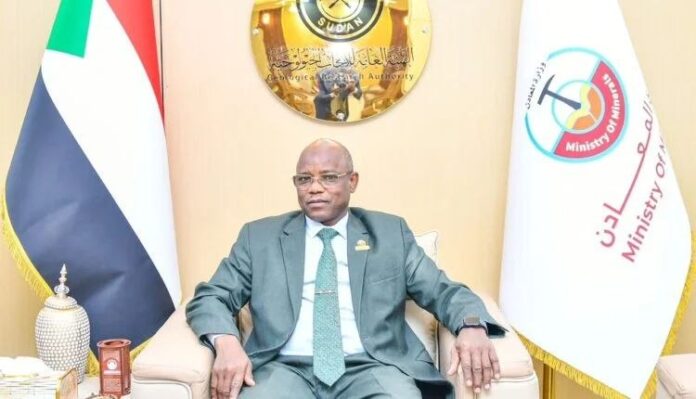
The high-level official meeting took place on Tuesday in Tanzania, drawing key delegates and regional stakeholders. The Sudanese delegation was spearheaded by Ahmed Haroun Al-Toumi, the Director General of the General Authority for Geological Research, who also serves as Sudan’s official representative on the AMGC Board. During the sessions, Al-Toumi assumed the chairmanship of the board meetings, guiding comprehensive discussions centered on optimizing the Centre’s operational performance, charting its future strategic trajectories, and upgrading its technical and scientific frameworks.
Headquartered in Dar es Salaam, Tanzania, the AMGC stands as one of the premier regional institutions dedicated to advancing earth and mineral sciences across the African continent. The organization traces its origins back to 1977, when it was initially established under the auspices of the United Nations Economic Commission for Africa (UNECA). Over the decades, the institution broadened its regional footprint, expanding its member roster and officially adopting its current name in 2015.
Today, the AMGC comprises nine diverse African member states: Sudan, Ethiopia, Tanzania, Mozambique, Uganda, Angola, Comoros, Kenya, and South Sudan. Together, these nations utilize the platform to pool resources, streamline technical approaches, and address common challenges within the mining landscape.
The Centre serves as a vital technical backbone for its member countries, offering an array of high-value services designed to maximize the potential of Africa’s subterranean wealth. Its core offerings include advanced laboratory testing and chemical-environmental analyses, specialized geological research, technical consultations, and intensive capacity-building programs.
Furthermore, the AMGC provides critical expertise in modern geological mapping, geographic information systems (GIS), remote sensing applications, and comprehensive ore processing. Its technical scope also extends to niche sectors such as industrial minerals, gemstone evaluation and value addition, and rigorous environmental monitoring tailored to mitigate the ecological footprint of regional mining activities.
Sudan’s ascension to the head of the Board underscores the increasingly vital role played by the country’s Ministry of Minerals and the General Authority for Geological Research. By taking the reins, Sudan has signaled its firm commitment to championing regional cooperation, facilitating the cross-border exchange of expert knowledge, and fostering initiatives aimed at modernizing the broader African mining sector.
Observers note that effective leadership within the AMGC is crucial for unlocking sustainable economic growth across member states. Through structured collaboration, shared technical expertise, and optimal resource management, Sudan’s tenure as Chair is expected to propel strategic initiatives that ensure Africa’s vast mineral wealth translates into long-term, equitable prosperity for its people.