The expected oil revenues in Uganda could provide an important source of financing for the country’s Energy Transition Plan, but experts warn that they will not be sufficient on their own to fund the investments required to transform the energy sector and achieve broader development goals. This warning emerged during a dialogue on energy transition financing and the management of petroleum revenues held in Kampala.
Funded by the Natural Resources Governance Institute, the dialogue brought together government officials and civil society actors under the Civil Society Coalition on Oil and Gas to examine whether proceeds from Uganda’s Petroleum Fund can support the country’s shift toward cleaner and more sustainable energy systems.
Through the Energy Transition Plan developed by the Ministry of Energy and international partners, the government set five goals to enable Uganda to transition to the use of modern energy. These include providing universal access to electricity and cleaner cooking, modernizing and diversifying Uganda’s energy mix to support industrial growth and poverty reduction, ensuring a secure and affordable energy supply, mitigating energy emissions by twenty percent by 2030 in line with climate commitments, and positioning Uganda as an energy hub for the East African region.
According to National Planning Authority estimates, implementing the short-term goals over the next five years will require approximately eight hundred and fifty million dollars annually, but overall, the grand scale of the transition demands a staggering three hundred and twenty-five billion dollars, leaving the country facing a projected shortfall of at least one hundred billion dollars.
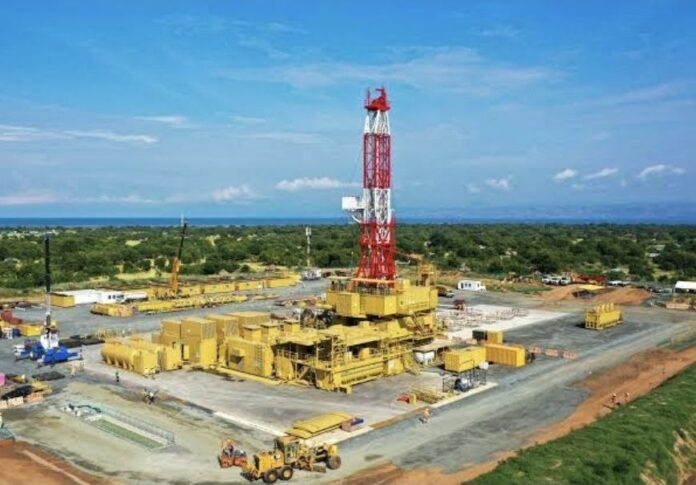
Presenting an analysis of projected petroleum revenues, Magara Siraji Luyima, the Extractive Industries Coordinator at Oxfam Uganda, noted that Uganda’s recoverable oil reserves of about six and a half billion barrels could generate between one and a half billion and two and a half billion dollars annually once commercial production begins.
Although the government has already projected approximately one point forty-four trillion shillings in oil and gas revenues in the current financial year, Magara cautioned that Uganda should not rely solely on contributions from the oil and gas sector to fund green energy initiatives, stating that even if all the money from oil were committed to the energy transition, it would still not raise the required funds. Furthermore, under Uganda’s fiscal framework, part of the money is transferred to the Consolidated Fund to support general government expenditure, while the remainder is saved in the Petroleum Revenue Investment Reserve for future generations.
Beyond funding, the country continues to face major challenges in transmitting and distributing power to consumers. Aron Werikhe, a planner at the National Planning Authority, explained that Uganda has made significant progress in expanding access to electricity, with national access rising from twenty-four percent in 2021 to over fifty-one percent today, driven heavily by investments like the six-hundred-megawatt Karuma Hydropower Project. However, he noted that the issue is not what is being generated, as Uganda has enough power, but rather that some of it is lying idle because of underinvestment in transmission infrastructure, which limits the country’s ability to evacuate electricity and connect more households and businesses to the grid.
Consequently, analysts argue that Uganda will require a broader financing strategy that combines petroleum revenues with domestic resource mobilization, private-sector investment, development finance, and international climate funding. Participants at the dialogue also pointed to lessons from the mining sector, particularly the gold industry, where export earnings have surged but government revenues have remained relatively low due to unpaid export levies and weak oversight.