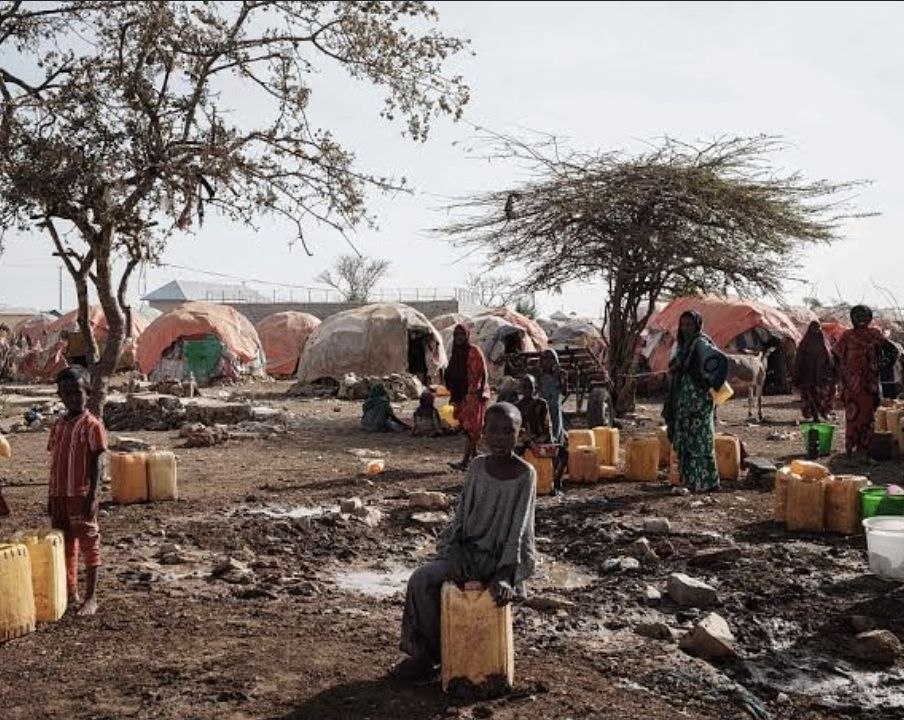
The International Organization for Migration (IOM) announced in a new report released on Monday that the number of internally displaced persons in Sudan has fallen to 8.8 million. The organization stated that this decline was driven by a significant increase in the number of displaced people returning to their home areas and original residences in large numbers. The current figure represents a 24 percent decrease from the peak of 11,585,384 displaced individuals recorded in January 2025. The United Nations migration agency attributed this reduction in displacement to rising return rates following the Sudanese army’s recapture of Khartoum, Sennar, and Al Jazirah states, which improved stability in those regions.
According to the IOM report, Sudan’s internally displaced population now stands at exactly 8,805,506 people, representing 1,766,946 families. Meanwhile, the number of returnees has climbed to 4,441,570 individuals across 886,508 families. Since the internal conflict erupted in the country, the agency has documented 847 incidents triggering nationwide displacement. These contributing factors include armed combat between military forces, tribal clashes, severe floods, and accidental fires.
The Darfur region continues to host the highest concentration of displaced people in the country, accounting for 64 percent of the total nationwide displacement. Within this region, South Darfur accommodates ,763,672 displaced persons, while North Darfur is home to 1,688,737 individuals, and Central Darfur shelters 992,555 people, with the remainder scattered across eastern and western areas of Darfur.
The Tawila locality in North Darfur, which is controlled by the Sudan Liberation Movement faction led by Abdel Wahid Mohamed Nur, remains one of the most heavily congested areas, sheltering 707,000 displaced persons. Despite the overall downward trend in displacement recorded this year, the IOM noted that 59,742 people were recently forced to flee their homes in the Blue Nile region following attacks perpetrated by a coalition comprising the Rapid Support Forces and the Sudan People’s Liberation Movement-North.
Data from the report shows that 38 percent of the displaced population, totaling 678,861 families, are currently living with host families, while 507,455 families reside in temporary gathering sites and informal camps. Urban areas shelter 59 percent of the displaced population, compared to 41 percent who reside in rural zones.
In Red Sea State, 97 percent of displaced persons are concentrated in cities due to the better availability of essential services and necessary documentation. Conversely, rural areas house the majority of the displaced populations in other regions, accounting for 75 percent in Northern State, 73 percent in North Darfur, and 73 percent in West Kordofan.
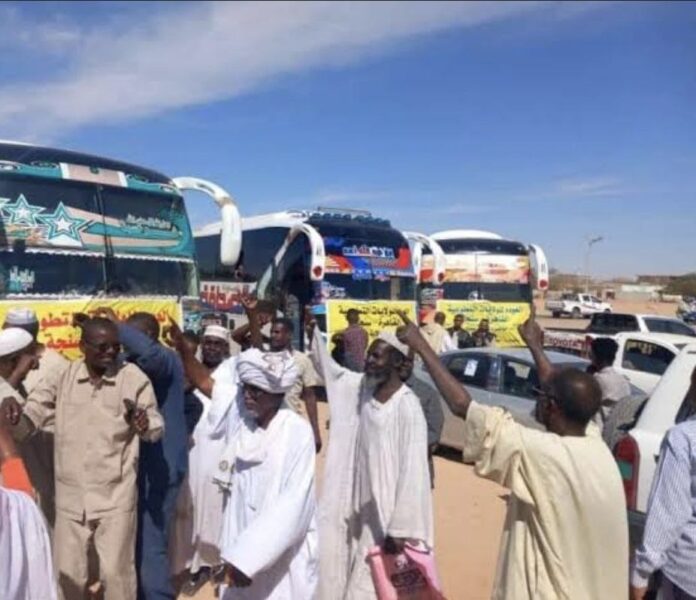
The report tracked the 4,441,570 returnees across 74 localities in nine of Sudan’s 18 states. Khartoum received the highest number of returnees, reaching 2,114,372 people, followed by Gezira with 1,210,590 returnees. North Darfur and Sennar recorded 263,311 and 240,923 returnees, respectively. The vast majority of these returnees, totaling 3,665,829 people or 83 percent, moved back from other locations within Sudan, while 775,741 individuals returned from abroad. Egypt accounted for 46 percent of these cross-border returnees. Since the war erupted in April 2023, some 1.5 million of the 4.6 million people who fled Sudan crossed the border into Egypt, while other returnees arrived from South Sudan, Libya, the Gulf states, Chad, and Uganda.
Improved security conditions were cited by 87 percent of returning families as the primary motivation for their decision to move back. The remaining families linked their return to the depletion of their financial resources in the areas of displacement or a desire for family reunification.
However, motivations varied significantly by state, as improved security prompted over 95 percent of returns to Al Jazirah, Blue Nile, River Nile, and Sennar states. In stark contrast, all 263,311 returnees to North Darfur cited the complete exhaustion of their financial resources as their sole driver for returning. Finally, the IOM stated that 93 percent of returning families moved back into their original homes, even though 60 percent of those properties had sustained physical damage during the conflict, highlighting the highly challenging living conditions facing the returnees.