The Modjo Dry Port, which handles the lion’s share of Ethiopia’s import and export trade, is currently undergoing extensive expansion and modernization work. This expansion project has significantly increased the speed of goods movement and is playing a major role in reducing logistics costs for businesses. This, in turn, is contributing to national and local job creation and accelerating economic growth.
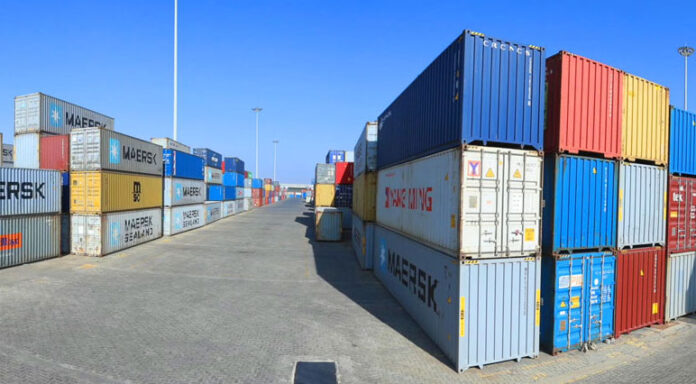
In the outskirts of Modjo town, roughly an hour’s drive from Addis Ababa, it is common to see thousands of shipping containers stacked in orderly lines and ready for movement. Currently, the port is being built with modern infrastructure, incorporating new open yards, state-of-the-art warehouses, and dedicated truck lanes. This structural shift is clear proof that Ethiopia’s logistics system is transforming.
For many years, the Modjo Dry Port served as the primary gateway for goods entering the country from the Port of Djibouti. However, as the country’s trade volume grew over time, the demand on the port outpaced its capacity, leading to severe congestion, delays, and additional expenses. This placed a heavy burden directly on the commercial enterprises that rely on the port’s services.
Elizabeth Getahun, General Director of Panafric—a freight forwarding company based in Addis Ababa—explains: “Efficient logistics is about planning and coordination; it enables goods to move at the lowest cost and at the right time.” However, when coordination between operations weakens, delays occur. Every delay carries its own financial cost. A missing document or a container staying in the port yard longer than necessary incurs additional fees, and these costs ultimately impact consumers directly through the rising prices of goods.
To address these persistent challenges, the Government of Ethiopia, with support from the World Bank, undertook the expansion of the Modjo Dry Port. The new infrastructure built at the site has vastly improved the port’s cargo-handling efficiency. The preparation of larger container storage areas, expanded warehouses, and dedicated entry and exit gates has reduced the waiting time for cargo trucks. As a result, the inspection and clearance process for goods has become faster, dropping from 60 days to just 15 days in some sectors—a 70 percent reduction in processing time.
For importers, this improvement ensures that raw materials reach them quickly and without disruption, helping transport products rapidly from the port to factories and markets. This helps businesses plan their operations with greater predictability and efficiency. Ultimately, an efficient port builds strong businesses, which serve as a major foundation for domestic job growth.
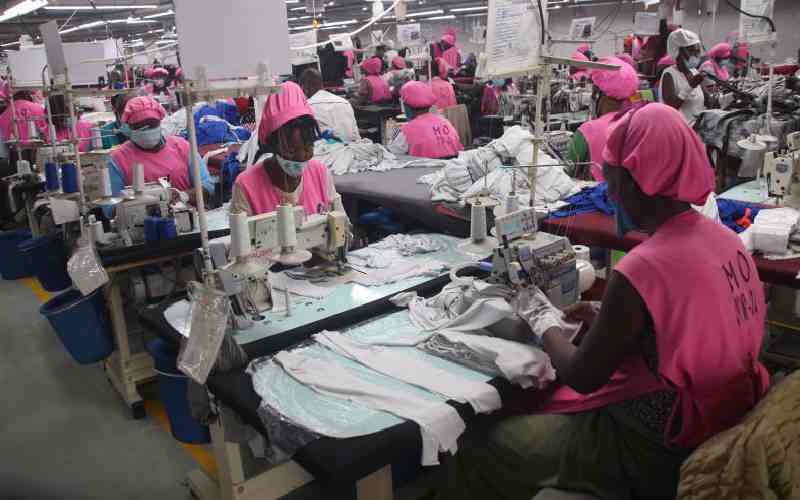
Furthermore, the role of the dry port is shifting from merely supporting imports to driving the government’s export strategy. This strategy focuses on boosting export sectors such as textiles, leather and leather products, agro-processing, and coffee. Today, containers are being heavily utilized not just for imports, but also for outgoing international trade.
The service delivery system is also undergoing a shift. Private companies like Panafric have officially begun operating within the Modjo Dry Port, marking a transition toward a multi-user system. The entry of private operators has opened the door for expanding modern services like cold chain management and cargo coordination. Digital systems are also being introduced to improve information sharing and enable easy tracking of shipments.
However, it must not be forgotten that the Modjo Dry Port is only one component of a broader logistics network. To achieve complete success, road conditions along the Djibouti corridor, coordination between institutions, and day-to-day port operations must harmonize with one another. As Ms. Elizabeth noted, “Even if the port is open, if one part of the overall system is not working, the entire movement stops.” Therefore, smoothing operations across the entire corridor requires continuous focus.