Uganda has reached a significant milestone in its journey to becoming an oil-producing nation, with the government and the Uganda National Oil Company (UNOC) officially confirming that the first production of oil (First Oil) will begin in August 2026. This historic event, awaited for decades, marks the transition of this East African nation from an oil importer to a regional energy power.
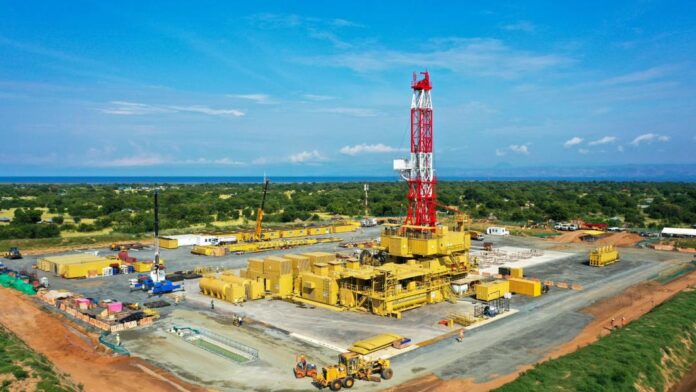
During a recent UNOC Supplier Development Workshop in Kampala, officials stated that the countdown to production is no longer based on speculation but is guided by a carefully planned industrial schedule. This announcement comes at a time when major projects, such as the Tilenga and Kingfisher drilling sites and the massive East African Crude Oil Pipeline (EACOP), have reached advanced stages of construction.
One of the key points highlighted at the workshop was the extent of local company participation. To date, contracts worth over $2 billion have been awarded to Ugandan companies. This “National Content” strategy is designed to ensure that the benefits of oil wealth circulate within the domestic economy long before the first barrel of oil reaches the international market.
UNOC reports show that the sector has already become a major source of employment for citizens, with over 15,000 Ugandans directly employed in oil-related projects and more than 14,000 citizens receiving specialized technical training that meets international industry standards. Remarkably, 90 percent of the total workforce in the sector consists of Ugandan nationals, an achievement that exceeds initial expectations.
A UNOC representative noted that this project is not just about the oil underground, but about building the capacity of the people, as skills gained today in high-level welding, civil engineering, and logistics will serve Uganda for many generations.
The roadmap to August 2026 is based on several “mega-projects.” The EACOP, which will transport Uganda’s crude oil 1,443 kilometers to the port of Tanga in Tanzania, is currently reported to be 82 percent complete.
Meanwhile, the Kabalega Industrial Park in Hoima is preparing to host a $4 billion oil refinery. This refinery aims to ensure energy security by converting crude oil into petrol, diesel, and jet fuel for both domestic and regional markets. The timing of the first oil production aligns with the government’s “Tenfold Growth Strategy.”
The Ministry of Finance predicts that commercial oil production will increase Uganda’s Gross Domestic Product (GDP) to $80.8 billion in the 2026/27 fiscal year. In the proposed 84.2 trillion shilling budget for the 2026/27 fiscal year, the government has already planned to use oil revenues for critical infrastructure in education and health. This financial shift is expected to reduce Uganda’s dependence on foreign debt and create significant capacity for domestic investment.
Although the situation is promising, the journey to 2026 is not without challenges. The government continues to face criticism regarding environmental protection and social impacts.