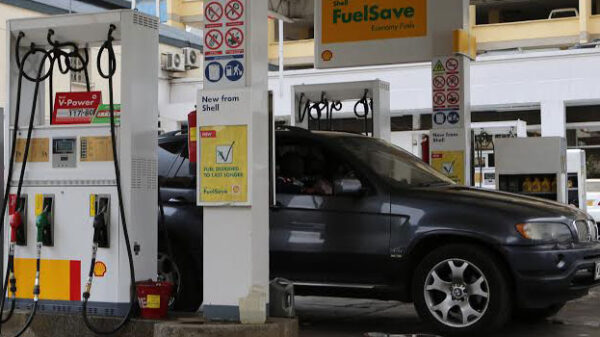
Kenyan motorists and businesses are bracing for a significant financial impact as the government is forced to undertake high-cost emergency fuel imports following a diplomatic and logistical standoff within the East African energy corridor.
This measure, taken to prevent a looming national fuel shortage, comes after neighboring Uganda rejected a request to allow Kenya temporary access to petroleum reserves stored within the Kenya Pipeline Company (KPC) network. This shift is expected to trigger a price hike of up to Sh14 per litre, threatening to further exacerbate inflationary pressures across the country.
The crisis reached a critical point in early April 2026 when Kenya’s petrol stocks plummeted to just 124.39 million litres a volume sufficient to sustain the country for only 16 days. Faced with the prospect of dry pumps, Nairobi sought access to Uganda’s strategic reserves held within the KPC system.
However, Uganda officially declined the request, citing extreme volatility in global energy markets and escalating geopolitical tensions in the Middle East—specifically disruptions linked to the closure of the Strait of Hormuz. Ugandan officials opted to prioritize their own national energy security over regional intervention.
This episode has highlighted the complex power dynamics within the regional fuel ecosystem. Uganda is not merely a transit customer; it holds a 20.15% stake in KPC following a Sh20 billion share acquisition, granting it significant leverage and governance rights over the pipeline network.
To prevent a total shutdown of the transport sector, Kenya’s Ministry of Energy invited emergency bids on March 18. Contracts were subsequently awarded to One Petroleum and Oryx’s Energies, who quoted $290 and $253 per metric tonne, respectively, to supply a combined 162.6 million litres of petrol.
While these imports secured the immediate supply, they arrived at a staggering premium. Internal estimates suggest that emergency fuel sourced under these conditions costs roughly Sh198,000 per metric tonne, representing a 41% increase compared to the Sh140,000 typically seen under standard long-term supply agreements with partners like Saudi Aramco. The fallout has already resulted in leadership changes, with senior officials at KPC and regulatory bodies exiting their positions amid investigations into the procurement process. The probe focuses on data integrity, pricing decisions, and why existing long-term contracts failed to buffer the country against predictable external shocks.