The fourteenth Conference on Climate Change and Development in Africa (CCDA-14) concluded its landmark three-day summit in the Ethiopian capital with a resounding, unified demand: Africa must pivot away from its historical role as a sidelined participant in global climate negotiations and transition decisively into a position of full climate agency.
The conference, hosted under the umbrella of the Climate for Development in Africa (ClimDev-Africa) Programme, brought together policymakers, environmental experts, and continental leaders to establish rigorous strategic priorities leading toward COP31 in Antalya and the momentous upcoming African-hosted COP32 in Addis Ababa in 2027. Yet, beneath the forward-looking ambition of the summit lay a stark and urgent economic reality that dominated plenary discussions from opening remarks to the final gavel.
At the heart of the conference’s deliberations was a glaring funding discrepancy that delegates argued threatens to derail the continent’s sustainable development. While Africa is responsible for less than four percent of global greenhouse gas emissions, it bears a disproportionate burden of the climate crisis. According to data highlighted during the sessions, the continent requires approximately USD 277 billion annually through 2030 to fulfill its Nationally Determined Contributions (NDCs) under the Paris Agreement.
However, current international financial flows cover a paltry 11 percent of that essential requirement. This chronic underfunding has left many African nations trapped in a vicious cycle of climate shocks, debt accumulation, and constrained developmental capacity.
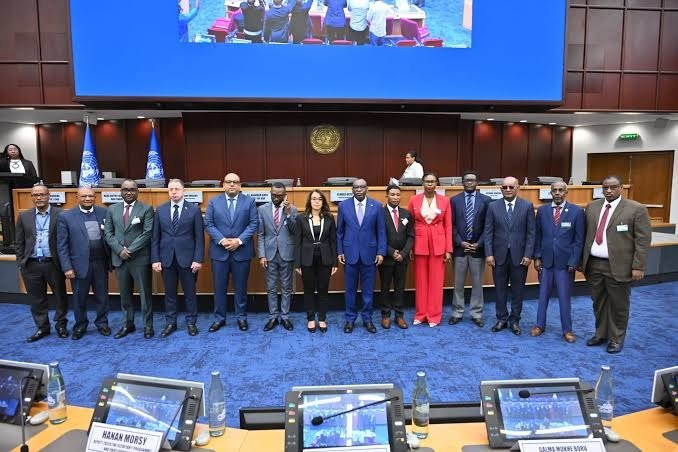
Addressing the assembly during the closing ceremonies, Hanan Morsy, Deputy Executive Secretary of the United Nations Economic Commission for Africa (ECA), emphasized that the continent’s overarching climate narrative must fundamentally evolve. Morsy stressed that Africa can no longer afford to define itself solely through the lens of vulnerability. Instead, the narrative must pivot toward actionable, African-led solutions underpinned by predictable, non-debt-creating finance that empowers local economies rather than encumbering them with unsustainable sovereign debt.
To bridge the chasm between ambition and implementation, CCDA-14 adopted a comprehensive set of strategic outcomes prioritizing global governance, structural reform, and local resilience. Delegates issued a direct call to national parliaments across the continent to translate sweeping international climate pledges into binding domestic legislation, dedicated national budgets, and rigorous, accountable oversight frameworks.
On the critical fronts of transformative finance and carbon markets, the assembly urged developed nations to finally honor their long-standing Paris Agreement commitments. Simultaneously, African nations were encouraged to proactively construct high-integrity carbon pricing mechanisms designed to channel capital directly into local clean technology initiatives and domestic job creation, ensuring that the economic benefits of green transitions remain within the communities most affected by environmental degradation.
Building climate resilience also took center stage, with particular emphasis placed on safeguarding vulnerable populations against extreme weather events. The assembly prioritized the rapid scaling of integrated early warning systems, rallying behind the Addis Ababa Call to Action to secure expanded international and domestic support for National Meteorological and Hydrological Services.
Furthermore, the conference addressed the complex intersections of economic transformation, resource governance, and regional stability. A newly outlined roadmap emphasizes a just transition for Africa’s critical minerals, urging mineral-producing nations to capture local value and domestic processing under the frameworks of the Africa Mining Vision and the African Continental Free Trade Area (AfCFTA). The framework additionally integrates circular economy strategies and urban leadership to support burgeoning cities grappling with climate-induced displacement, while asserting that agrifood systems and the mitigation of climate-conflict risks must remain central pillars of national adaptation planning.
To ensure accountability and prevent these strategic priorities from dissolving into empty rhetoric, CCDA-14 officially established six technical working committees. These bodies will be tasked with tracking ongoing progress, monitoring financial flows, and delivering a comprehensive climate finance report at the upcoming CCDA-XV summit, setting the stage for a fully mobilized African front as the continent prepares to host COP32.