Kenya Airways is searching for new leadership once again following the sudden resignation of Acting Group Managing Director and CEO George Kamal. The announcement, which came down after less than nine months at the helm, marks another chapter of executive transition for the national carrier as it navigates a complex multi-year turnaround strategy.
Kamal officially stepped down for personal reasons, bringing an abrupt close to a tenure that began on December 16, 2025. He originally took over the top post following the departure of his predecessor, Allan Kilavuka. Prior to stepping into the chief executive role, Kamal spent three years establishing himself as the airline’s Chief Operating Officer, where he played a hands-on role in stabilizing day-to-day operations and managing flight reliability issues.
Rather than exiting immediately, Kamal will remain with Kenya Airways through a 30-day transition period to ensure operational continuity, with his formal departure scheduled for September 30, 2026. The airline praised his tenure in a public statement, noting that he “served with commitment, dedication, honor and diligence” during a demanding period for the carrier.
To fill the immediate leadership void, the Kenya Airways board has tapped Habil Waswani to take over as Acting Group Managing Director and CEO, effective September 15. Waswani is a familiar face within the organization, currently serving as the airline’s Company Secretary, Director of Legal Services, and Head of Regulatory Compliance. With five years at Kenya Airways and a broader 24-year career spanning corporate and commercial law, aviation, banking, and insurance, Waswani brings a heavy compliance and legal background to the executive suite. He holds a law degree from the University of Nairobi alongside a Global Executive MBA earned through a joint program between United States International University and Columbia Business School.
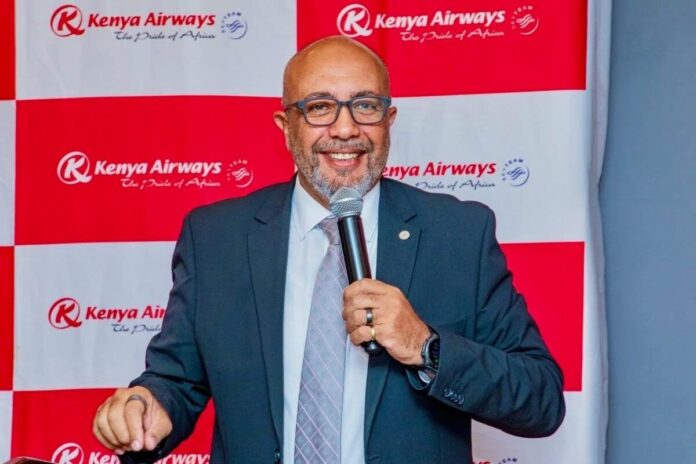
The leadership shuffle comes at a critical juncture for Kenya Airways. The carrier has been locked in an aggressive financial and operational turnaround effort aimed at clearing legacy debts, optimizing its route network, and improving fleet reliability. Kamal had been actively spearheading these public communications regarding the recovery strategy; as recently as August 19, he fronted an editors’ roundtable in Nairobi to outline the airline’s medium-term roadmap and financial performance goals.
Despite these ongoing recovery measures, the airline industry at large continues to face severe headwinds, ranging from volatile global fuel costs and supply chain constraints to aircraft delivery delays. Kenya Airways is not immune to these external pressures as it tries to position itself for long-term commercial viability across the African continent and international markets.
In response to the vacancy, the airline’s board has already initiated a formal, competitive recruitment process to identify and appoint a permanent successor to lead the carrier into its next phase of growth. Meanwhile, the upcoming weeks will rely heavily on the handover period between Kamal and incoming interim chief Waswani to keep the airline’s strategic objectives firmly on track.