The Kenyan government has officially retired the board members of 65 State agencies. This sweeping administrative action follows the enactment and immediate enforcement of the Government-Owned Enterprises (GOE) Act, 2025, which seeks to transform how State corporations are governed, managed, and held accountable.
This move marks the most significant attempt in over a decade to professionalize the management of State-owned enterprises. For years, these boards have been frequently criticized as being havens for political appointees, leading to long-standing issues of mismanagement, the misuse of public funds, and deep-seated political interference.
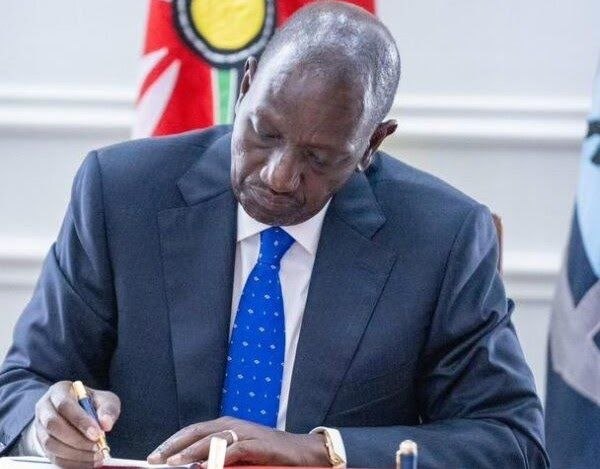
The cornerstone of the new legislation is the transition from political appointment to a meritocratic, competitive recruitment process. According to President William Ruto, the government has spent the last 15 years struggling to insulate State boards from political pressure. By codifying these reforms into law, the administration aims to ensure that these crucial institutions are led by qualified professionals rather than political loyalists.
We have been grappling for the last 15 years on making sure that those who serve in boards of government agencies are competitively recruited so that we minimize political influence, President Ruto stated during a recent address.
Under the provisions of the GOE Act, each State-owned enterprise will now be managed by a board consisting of nine members, each serving a term of three years, renewable only once. This structure is designed to foster continuity while preventing the stagnation that often accompanies long-term, entrenched board memberships.
One of the most contentious and transformative aspects of the new law is the strict disqualification criteria. Section 12 of the Act explicitly bars anyone who has been involved in active politics within the last five years from seeking an appointment to these boards.
The law defines affiliated with as having an official connection to a political party, serving on its governing body, or having identified with a political party for the purposes of vying for a political office. By instituting this five-year cooling-off period, the government hopes to create a firewall between political parties and the operational decision-making of State corporations.
To replace the former opaque appointment methods, the new law mandates a transparent, structured selection process overseen by an independent search panel. This panel will be appointed by the National Treasury Cabinet Secretary.
The new board composition will be strictly regulated to ensure diverse expertise. It will include one chairperson (an independent director), six independent directors, one representative from the National Treasury, and one public officer nominated by the relevant parent ministry.
These reforms trace their roots back to the 2013 Presidential Task Force on Parastatal Reforms, which had long recommended a shift toward competitive hiring to curb the rampant inefficiency and corruption plaguing State entities. The new Act applies to both existing and future government-owned enterprises, including major entities such as the Kenya Airports Authority, the Postal Corporation of Kenya, and the Agricultural Finance Corporation.
By forcing a clean slate for all 65 agencies, the government is signaling a clear departure from the status quo. As these agencies begin the transition to the new governance structure, the public and investors alike will be watching closely to see if this infusion of professional management can finally turn around the performance of Kenya’s State-owned enterprises.