
The renewable energy sector across Sub-Saharan Africa is undergoing a critical paradigm shift, pivoting from basic rural electrification toward comprehensive economic empowerment. Clean energy is increasingly evaluated not merely by grid connectivity rates, but by its capacity to catalyze industrial growth, generate sustainable employment, and scale commercial opportunities. Facing high financial barriers to technology adoption, 19 private sector enterprises across Kenya, Nigeria, and Ethiopia have secured US$1.5 million in strategic funding. This capital injection aims to subsidize the capital expenditure of productive-use solar machinery, allowing small and medium enterprises (SMEs) to expand operations, increase labor capacity, and accelerate regional green economic transitions.
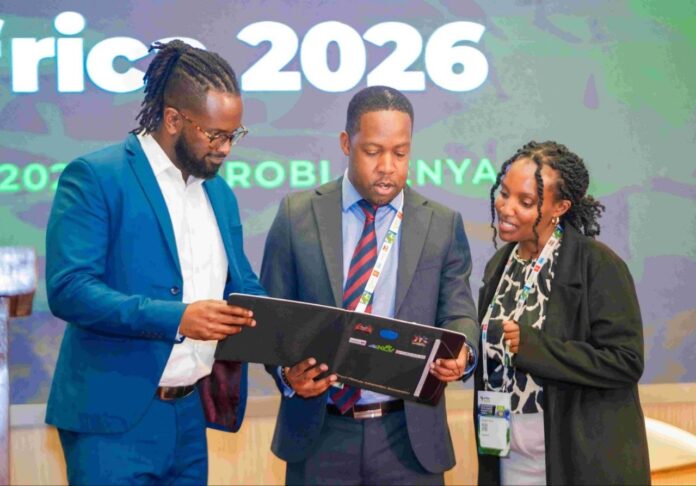
The funding round was formally announced by CLASP, an international energy efficiency and access organization, during the Adaptation Investment Summit 2026 in Nairobi. Distributed through the Product Use Financing Facility (PUFF), the capital targets the deployment of energy-efficient appliances designed for commercial and agricultural utility. By financing productive-use equipment (PUE), the initiative addresses a structural deficit in regional development infrastructure, lowering procurement costs for local businesses to drive decentralized economic growth.
This deployment phase targets the distribution of approximately 3,800 PUE units, which project developers estimate will support over 3,000 green jobs across the three participating economies. The facility distributes risk across a vetted cohort of 19 enterprises, leveraging existing private sector supply chains to scale hardware availability. The selected corporate beneficiaries represent a balanced mix of manufacturing, distribution, and engineering expertise across the target regions.
In Ethiopia, five pioneering firms were chosen to lead the local deployment, including Awdi Negesti Special Purpose Machinery Manufacturing, the Center for Applied Manufacturing Service & Engineering, Green Scene Energy PLC, Inter Ethiopia, and Zicon Trading. Kenya’s clean energy sector is represented by six firms, which include Agsol Limited, Epicenter Africa Limited, Plexus Energy Limited, Suncool Storage, SunCulture Kenya Limited, and Sunspot Energy Kenya.
Nigeria features the largest contingent with eight companies, comprising Asolar System Nigeria Limited, Ceesolar Energy Limited, Cloud Energy Photoelectric, Consistent Energy Ltd, D@ech Nig Ltd, Ecotutu, Sosai Renewable Energies, and GreenPower Overseas Limited.
While macro-level electrification frameworks such as the World Bank and African Development Bank’s Mission 300 initiative continue to expand base grid access, a significant utility gap persists. Millions of entrepreneurs lack the financial capacity to purchase industrial-grade equipment capable of converting raw power into sustainable revenue. High-capacity solar irrigation pumps, agro-processing mills, and cold-chain refrigeration units remain largely inaccessible due to high upfront procurement costs and the low operational efficiency of legacy, diesel-dependent alternatives.
Managed by CLASP with institutional backing from the Global Energy Alliance for People and Planet (GEAPP), PUFF mitigates this market failure through supply-side financial subsidies. The facility lowers production and distribution costs for the selected 19 companies, feeding directly into reduced retail prices for end-users. This mechanism lowers entry barriers for smallholder farmers and commercial merchants, allowing them to scale daily output, hedge against inflationary operational costs, and build local supply chain resilience.
From a market perspective, the productive-use appliance sector currently penetrates less than one percent of its total addressable market in Africa. According to comprehensive data from CLASP, scaling access to these technologies over the next decade could unlock an estimated US$16 billion in annual income and generate up to 50 million new green jobs across the continent. Providing affordable capital remains the primary mechanism required to transform this unserved market potential into a tangible economic reality.
Emmanuel Aziebor, Senior Director for Africa at CLASP, stated that Africa’s economic trajectory depends on shifting the energy conversation from basic access to productive utility. He noted that the requisite hardware is already commercially viable, and the bottleneck rests entirely on affordability for liquidity-constrained entrepreneurs. Through PUFF, the organization is bridging this capital gap to allow local enterprises to scale, invest, and de-risk regional economic development.
Carol Koech, Vice President for Africa at GEAPP, emphasized the role of targeted financial engineering in climate adaptation strategies. She explained that creating access to affordable, low-cost capital is a prerequisite for accelerating renewable technology adoption. The institutional objective is to equip African entrepreneurs by aligning structured finance, technology transfer, and local market policies to deliver an equitable energy transition.
William Mulehi, Senior Manager at CLASP, noted that baseline consumer demand for these income-generating systems remains robust, minimizing market creation risks for suppliers. He explained that data from previous funding cycles indicates that the market is structurally ready. The primary systemic hurdle remains the upfront capital expenditure, and this second funding round intervenes precisely at that point, enabling suppliers to de-risk their inventory, reach unserved demographics, and expand logistical footprints into new regional markets.
This US1.5 million deployment builds on the facility’s initial funding cycle from 2022 to 2024. During that period, US2.7 million in targeted capital subsidized the sale of nearly 16,000 productive appliances across African markets, directly impacting over 53,000 individuals. As regional governments face compounding climate and employment pressures, structured initiatives like PUFF demonstrate that clean-tech integration serves as a primary driver of macroeconomic stabilization, enterprise development, and long-term labor market resilience across Sub-Saharan Africa.