More than three years into a devastating civil war, the United Kingdom has delivered a searing assessment of the catastrophe in Sudan, declaring it the worst humanitarian crisis of the century.
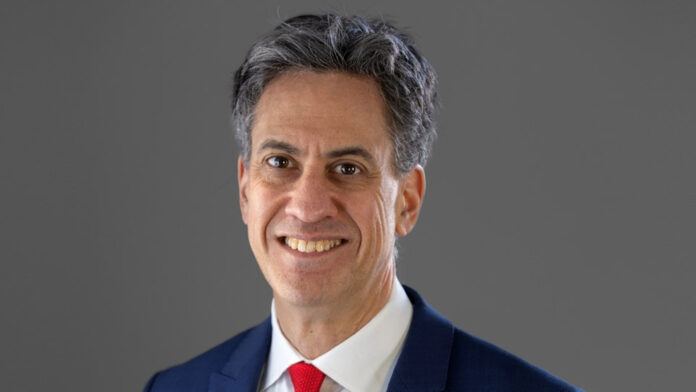
Speaking at the United Nations General Assembly High-Level Week, British Foreign Secretary Ed Miliband issued an urgent call to action, demanding that the international community move past hollow expressions of concern and confront the escalating lethality of the conflict. Addressing world leaders, Miliband laid bare a staggering human toll: over 33 million people in Sudan currently require urgent humanitarian assistance—a population greater than the combined cities of London, New York, and Paris. Compounding this catastrophe, the unfolding El Niño weather pattern is projected to supercharge severe food insecurity, driving starvation figures to unprecedented heights.
To arrest the downward spiral, the Foreign Secretary outlined a three-pronged framework for the international community: a diplomatic push for a ceasefire and a transition to civilian government, concerted operational efforts to force open humanitarian supply corridors, and rigorous civilian protection paired with accountability measures to tackle impunity. Miliband cautioned that the conflict is morphing into a more lethal phase driven by an exponential surge in aerial warfare.
In the first five months of the year alone, reported drone strikes claimed the lives of over 1,000 civilians, systematically battering hospitals, municipal markets, power stations, fuel depots, and vital supply arteries. Already recognized as one of the most hazardous environments on earth for aid workers, Sudan has been made exponentially more perilous by these unmanned aerial vehicles, with Miliband denouncing warring factions for deliberately sabotaging relief operations like a recent World Food Programme convoy attack.
The Foreign Secretary forcefully dismissed the viability of a military resolution, warning that no amount of new weaponry, technology, or external support can end the war. Pointing to a recent United Nations Fact-Finding Mission report, Miliband stressed that these advanced military capabilities are procured, financed, and sustained through external state networks outside Sudan. Consequently, the UK signaled strong support for tightening the UN sanctions regime and expanding the existing Darfur arms embargo nationwide, insisting that a routine rollover of sanctions is entirely insufficient.
On the ground, the humanitarian response faces bureaucratic blockades, leading Miliband to demand an immediate end to arbitrary work permit restrictions, complex visa demands, and predatory taxation levied by both sides, alongside the permanent opening of vital cross-border supply lines such as the Adré border crossing and routes into El Obeid and El Fasher.
Warning that the people of Sudan cannot afford another year of bloodshed, Miliband urged the international community to transition from words to concrete, practical measures.